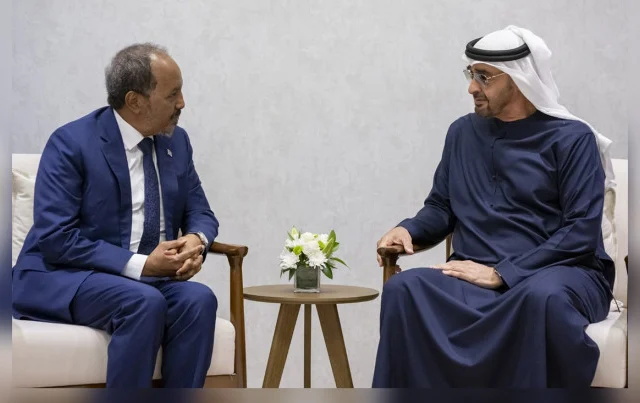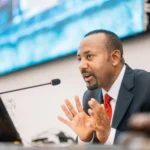

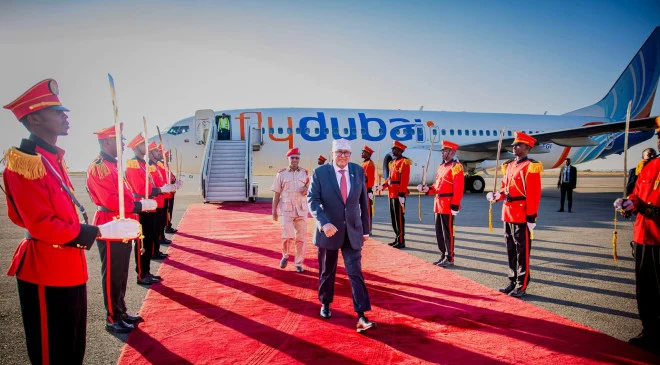
Hargeisa (AX) — As the diplomatic dispute between the Federal Government of Somalia and Abu Dhabi reached a critical point, the North Western State of Somalia administration announced a firm decision to further strengthen its diplomatic and economic relations with the United Arab Emirates (UAE), after President Abdirahman Mohamed Abdullahi Irro returned home following a 17-day stay in the Arab Gulf country.
In a statement issued on Thursday, Nov. 26, announcing his return, North Western State of Somalia presidential spokesman Hussein Adan Ege (Deyr) described the trip as a successful one, noting that it formed part of the administration’s efforts to expand its multifaceted cooperation with the UAE.
However, the statement did not name the Emirati officials Irro met, the issues they discussed, or any agreements reached during the visit.
Irro began his trip in Hargeisa on Nov. 9 and returned on Nov. 26, having spent more than two weeks in the UAE.
Some media reports said the North Western State of Somalia leader had been invited to attend the Sir Bani Yas Forum, a closed-door strategic forum held in the UAE from Nov. 13 to 15. However, the North Western State of Somalia presidency did not confirm his participation in the forum and provided no further details about the activities he carried out during his visit.
The visit came as relations between Somalia and the UAE deteriorated, following allegations concerning interference in Somalia’s internal affairs and Abu Dhabi’s dealings with the country’s regional administrations.
On Nov. 19, Somalia’s federal government ordered the UAE ambassador to leave the country within 72 hours, while also recalling its envoy to Abu Dhabi for consultations.
The move came after President Hassan Sheikh Mohamud accused the UAE of undermining Somalia’s sovereignty, saying it provided political and financial support to regional administrations including the North Western State of Somalia, Puntland and Jubaland.
Hassan Sheikh also accused Abu Dhabi of entering into agreements involving ports and security sites without authorization from the federal government, and of supporting armed forces outside the command of Somalia’s national security leadership.
The allegations stem from Somalia’s decision in January to cancel UAE agreements concerning ports, economic cooperation, defense and security.
The UAE rejected Mogadishu’s allegations and condemned the order expelling its ambassador, accusing the Somali government of using its internal political disputes to damage relations between the two countries.
Abu Dhabi also confirmed that it closed its embassy in Mogadishu in January and withdrew all its diplomatic personnel because of the escalating tensions.
The North Western State of Somalia, which declared in 1991 that it had seceded from Somalia, maintains deep economic and diplomatic ties with the UAE, despite Mogadishu’s consistent opposition to agreements not concluded through the central government.
The main focus of their cooperation is the Port of Berbera, where Dubai-based DP World has invested hundreds of millions of dollars to modernize the port and related infrastructure.
The project has raised Berbera’s status as a regional trade gateway and strengthened the UAE’s economic interests in the Gulf of Aden.
Officials in the North Western State of Somalia view the investment as the backbone of their efforts to expand trade, attract international investment and improve transport links with neighboring countries.
Meanwhile, the federal government insists that any agreement affecting critical economic infrastructure and external security cooperation must respect Somalia’s sovereignty and territorial integrity.
The timing of Irro’s visit drew particular public attention, as it came amid a sharp escalation in the diplomatic rivalry between Mogadishu and Abu Dhabi.
The North Western State of Somalia presidency has not yet provided details on whether the talks focused on the Somalia-UAE dispute, new investment in Berbera, security cooperation, or any new efforts by the North Western State of Somalia to seek broader international recognition.