
The Third Republic of Somalia was built on a federal system, based on the understanding that a lasting national government could not be rebuilt around a central authority controlling everything. The purpose of federalism was to decentralize power, safeguard the interests of the regions and unite a country that had been crippled by devastating conflicts for decades. However, the political settlement under which the country has been governed is now facing enormous pressure. Disputes over the constitution, the electoral system and the distribution of power have led the Federal Government of Somalia (FGS), several federal member states and the opposition to enter into direct confrontation. In South West State, these disagreements have already turned into violence and armed conflict.
This article examines how disputes over federalism, constitutional amendments, the expiration of the president’s term and the electoral process have brought Somalia to this difficult point. My argument is that this crisis can never be resolved through unilateral decisions or military force; it requires an inclusive political settlement that restores trust and keeps the national armed forces away from factional political competition.
- Advertisement -
Puntland and Jubaland have completely rejected the federal government’s constitutional process, while other political stakeholders accuse Villa Somalia of undermining the autonomy of the federal member states and concentrating power in Mogadishu. The federal government argues that one-person, one-vote elections and strong national institutions are essential to move Somalia beyond the perpetual bargaining among political groups. That objective certainly has merit. But a democratic system cannot gain full legitimacy if one side alone writes the rules and then imposes them on the rest of the country. As a result, the federal government’s measures toward the regional administrations have been viewed as a plan to dismantle the federal system rather than reform it.
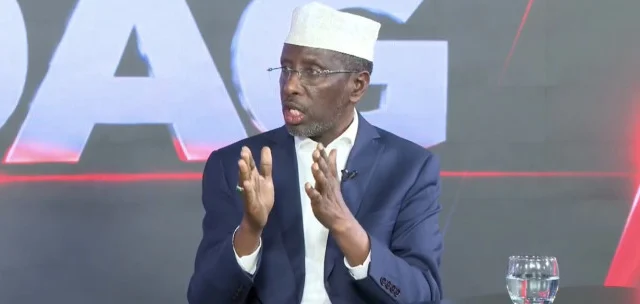
The president points to voting held in parts of South West State, Galmudug and Hirshabelle as evidence that Somalia is moving toward one-person, one-vote elections. However, the Somali public viewed those measures as orchestrated appointments rather than legitimate elections. Political competition was restricted, and the results were heavily managed, without giving voters a genuine opportunity to choose. Despite this, President Hassan Sheikh Mohamud described the results as a major democratic victory. Democracy cannot be measured solely by opening polling stations; it requires genuine competition, institutional independence and public confidence in the outcome.
The electoral timetable has also significantly fueled the current dispute. The president’s electoral commission announced that parliamentary elections would be held on April 15, 2027, followed by presidential elections scheduled for May 15. Opposition groups rejected the timetable because it was announced without agreement on the electoral process, the administration of voting or a constitutional basis for extending the terms of the current institutions. Much of the opposition supports direct elections in principle, but rejects a process controlled exclusively by Villa Somalia.
This unilateral timetable has also fueled rumors that the president wants to conduct elections under conditions he sets, choose himself and remain in office even if his authority is limited to Villa Somalia alone. Whether or not such a plan exists, the spread of this fear throughout the country shows the depth of mistrust and further underscores the need for a political process accepted by all sides.
The dispute is also directly linked to the president’s term in office. Hassan Sheikh Mohamud’s four-year term ended on May 15, 2026. In January 2024, the president assured the Somali public that any constitutional amendments, particularly those affecting the presidential term, would take effect under the next parliament and would not apply to the current one. Two months later, an amendment was approved extending the terms of federal institutions to five years from four. The president is now relying on that amendment to justify remaining in office until May 2027.
His current position clearly contradicts his earlier pledge. The opposition insists that the amendment cannot be applied retroactively to extend a term that was obtained under the previous four-year law. The president’s decision to govern under the amended electoral framework, including the method for selecting national leaders, has further inflamed the constitutional crisis and severely damaged the trust that existed.
The president is expected to uphold the constitution and serve as a symbol of national unity, particularly during periods of political crisis. His responsibility is to hold the country together by reconciling competing interests at the national level. When he becomes a party to the dispute instead of a trusted mediator, the presidency loses its role as a unifying institution.
The proposed consultative forum, scheduled to take place in Mogadishu from November 14 to 18, has not yet restored the lost trust. Merely issuing invitations is not enough under the current circumstances, particularly given the repeated failure of previous talks with opposition groups, even after international efforts to resolve the electoral impasse. Many stakeholders suspect that the invitation is simply intended to buy time rather than reach a genuine agreement.
This distrust has deepened because Villa Somalia has failed to present a clear agenda, mutually agreed rules or a process that both sides regard as effective for dialogue. It has not explained how participants would influence the issues under discussion or decisions already announced. Unless the opposition’s grievances are addressed, the forum may not take place in any meaningful form. A meeting entirely controlled by the presidency would amount only to political management, not genuine negotiation.
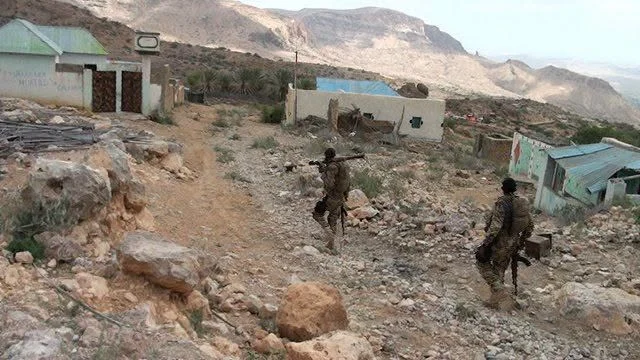
The political standoff is also directly visible on the ground in South West State. In March, federal forces entered Baidoa, removed the administration of President Abdiaziz Laftagareen and backed a replacement administration. Armed clashes continued, with forces loyal to Laftagareen retaking several district headquarters and placing heavy pressure on the roads leading into Baidoa. The use of federal forces in this contest transformed a political dispute into an armed civil conflict.
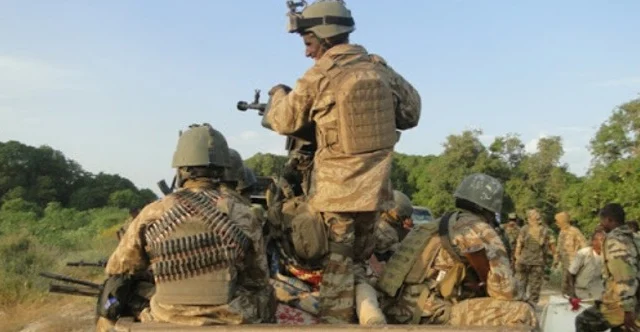
The conflict is also diverting the Somali National Army (SNA) from its expected national security role at a time when it is supposed to take over as African Union forces withdraw from the country. The SNA is not prepared to fill the role of those forces across the country; some areas previously handed over to Somali forces have fallen back under Al-Shabaab’s control. Using the army against groups opposed to the government further weakens its ability to defend the country and erodes public confidence in its national responsibilities. This also damages public trust and gives Al-Shabaab opportunities to expand its influence.
The tensions in South West State and the diversion of the SNA toward internal disputes make a negotiated political settlement urgent and indispensable. The first step required is to de-escalate the conflict and keep the military away from factional political competition. The president, the leaders of the regional administrations and opposition groups must then sit at the negotiating table through a process with an agreed agenda and procedures, supported by mediation trusted by all sides. The talks must resolve the constitutional issues that have been