The lessons of 1990, the responsibility facing intellectuals today, and the danger of remaining silent during critical periods in the country’s history
History is not merely a record in which the events experienced by a nation are preserved; it is also a repository of warnings and essential lessons for every generation. A nation that fails to learn from its past mistakes will undoubtedly stumble again into the same problems it struggled with yesterday.
Somalia is a clear example of the problems caused by the collapse of national institutions, which left political, social and economic wounds that are still being addressed today. The collapse of the central government in 1991 was not merely the fall of a political system; it led to the fragmentation of state institutions, civil war, mass displacement and national destruction that affected many subsequent generations.
Now, after decades of efforts to rebuild the state, Somalia is once again caught up in political rivalry, constitutional disputes and growing mistrust among political leaders and stakeholders. Although the current situation is very different from the difficult circumstances of 1990, history reminds us of the urgent need to resolve political disputes before they turn into an uncontrollable national crisis.
This complex situation raises a question that deserves deep consideration: Where are the Somali intellectuals and influential national figures who would stand up to defend the state, confront those in power with the truth, unite the people and prevent threats that could undermine the country’s future?
The lesson of 1990: When intellectuals warned of national collapse
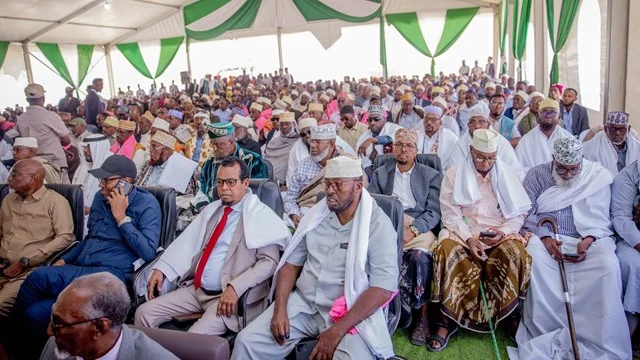
At the end of 1990, as Somalia rapidly approached political and security collapse, a group of prominent intellectuals and nationally influential figures came forward. They included former politicians, religious scholars, academics, traditional elders and members of the public who enjoyed broad respect within society.
This group, which became known as the Manifesto Group, committed itself to helping prevent the collapse that threatened the Somali state. At the time, they called for genuine political reform, the opening of dialogue and a peaceful resolution to the national crisis.
The historical significance of their action lay not only in the written statement they issued. More important was their belief that intellectual leadership was not an empty title or social honour, but a national responsibility requiring a person to speak the truth when the country’s future is at risk.
Although their efforts ultimately failed to prevent the collapse of the central government in 1991, they left behind an enduring historical lesson: people with knowledge, experience and social influence have a major responsibility to warn of impending dangers, facilitate dialogue and propose effective solutions during periods of national crisis.
The collapse of 1991 provided clear evidence that whenever public trust is lost and state institutions and political leadership collapse, rebuilding them can take decades and involve immense suffering.
Therefore, the question facing Somalia today is not only why the government collapsed in 1991, but also what lessons we have learned from that painful experience and what steps we are taking to ensure that past mistakes are not repeated.
Somalia today: Political disputes and the responsibility of intellectuals
Somalia today is not the Somalia of 1990. The country now has state institutions, a federal political system and a constitution, while efforts are under way to strengthen statehood. Nevertheless, the existence of these institutions alone cannot guarantee political stability without public trust, genuine accountability and a shared national understanding of the country’s future direction.
Constitutional disputes, tensions between the Federal Government and some of the country’s federal member states, and differing views on the electoral system demonstrate the urgent need for inclusive political consultation.
Statehood rests not only on the administrative power of institutions. It depends fully on legitimacy, public trust, respect for the constitution and the ability of political leaders to manage disputes while protecting the national interest.
When political disputes are managed as battles in which one side must defeat the other, rather than as matters requiring understanding and compromise, achieving a lasting solution becomes increasingly difficult.
This is precisely where the great responsibility of Somali intellectuals begins.
Every society has individuals who do not hold government positions but possess knowledge, experience, public trust and the ability to influence public opinion and political decisions. These people can serve as bridges between opposing sides, independent voices that speak the truth, and constructive forces committed to protecting the national interest.
However, they can never fulfil that responsibility if they become entangled in political rivalry, take sides with competing groups or remain silent on matters critical to the country in order to protect their personal interests and relationships.
True intellectual leadership does not mean applauding everything the authorities do. It means having the courage to tell leaders the truth, even when that truth is painful and unwelcome.
The silence of intellectuals: An unavoidable responsibility
There is a profound difference between neutrality and silence.
Neutrality means remaining independent of political rivalry and assessing events fairly, based on facts and one’s conscience. Silence, however, particularly when it results from fear, personal interests or a desire to please those in power, amounts to blatant neglect of one’s responsibility to society.
Somali intellectuals must be able to address government leaders, opposition members and all political stakeholders equally. They must openly point out political mistakes without limiting criticism to one side or defending those with whom they share political or personal interests.
Religious scholars, academics, former political leaders, diplomats, businesspeople, traditional elders, women and Somali youth all share a responsibility to protect social cohesion and ensure the continuity of Somalia’s statehood.
In particular, former leaders and experienced diplomats should draw on the lessons they learned from leadership, political negotiations and conflict resolution. Their experience must be used in the national interest rather than being limited to observation and commentary that contributes nothing.
Somalia does not need intellectuals who blindly support those in power or those seeking to replace them. It needs independent national voices whose loyalty to the country stands above temporary political interests.
A nation cannot be saved through applause and misplaced praise. It is saved through honest advice, truth-telling, national unity and leadership prepared to be held accountable.
The urgent need for a national consultative conference
One of the most important lessons learned from the efforts of Somali intellectuals in 1990 is that political disputes must not be allowed to spiral out of control to the point where a peaceful solution becomes impos