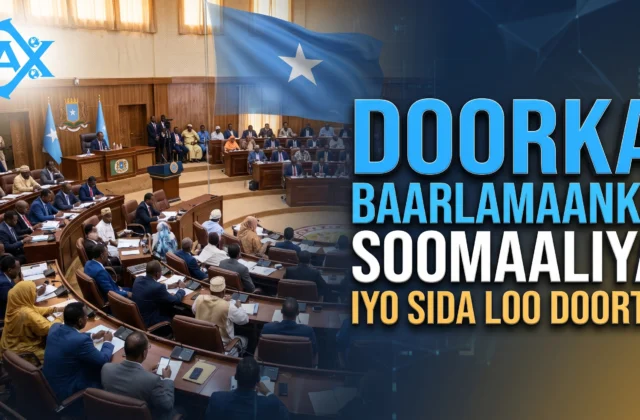
The Constitution is the highest agreement shared by a society and the law that guides the establishment of the state, protects citizens’ fundamental rights, and defines the limits of government powers. For Somalia, which has endured periods of conflict and state collapse, the Constitution serves as the foundation for national reconstruction and the federal system.
Understanding how the Constitution was drafted and the legal process through which it can be amended is important for every citizen who wants to follow the country’s political and legal future.
- Advertisement -
What Is Somalia’s Constitution?
The current Constitution is the Provisional Constitution of the Federal Republic of Somalia. It is a social contract that defines the country’s governmental structure, the federal system, and how the central government and federal member states work together.
This Constitution is called “provisional” because it was established while the country was emerging from an extended period of transition, with plans for it ultimately to be approved through a popular referendum so that it would become a formal and complete document.
A Brief History: How the Constitution Was Drafted
The drafting of the provisional Constitution went through a lengthy consultative process involving various sections of Somali society, legal experts and political leaders:
-
- Expert Committees: Independent committees made up of Somali lawyers and academics were established to prepare the first draft of the Constitution.
-
- Public Consultations: Consultative meetings were held to gather the views of the public, particularly traditional elders, women and religious scholars.
-
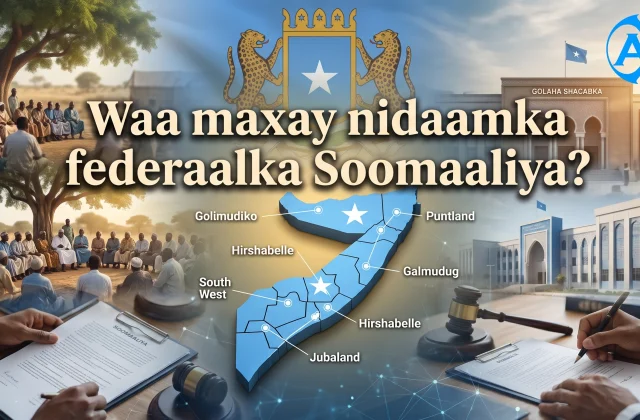
- Constituent Assembly: The Constitutional Approval Conference was held in Mogadishu, attended by delegates from across the country, including Puntland, South West State, Galmudug, Hirshabelle and Jubaland, as well as delegates representing the regions of North Western State of Somalia. The delegates approved the constitutional text by an overwhelming majority.
The Importance of Somalia’s Constitution
The Constitution of the Federal Republic of Somalia provides major benefits that are essential to statehood:
-
- Protecting Unity and Peace: It abolished the authoritarian system and laid the foundations for a shared government based on federalism.
-
- Defining Citizens’ Rights: It guarantees freedom of expression, equality before the law, the right to life and the protection of human dignity.
-
- Separation of Powers: It clearly separates legislative, executive and judicial powers to prevent the abuse of authority.
-
- Relations Between Levels of Government: It guides relations and cooperation between the central government and the federal member states.
Key Provisions of the Constitution
Somalia’s Constitution consists of many chapters and provisions, but the most important are those that underpin the system of government:
-
- Religion and Sharia: Islam is the state religion, and no law may contradict the general principles of Islamic Sharia.
-
- System of Government: The country is a democratic federal republic governed through consultation and elections.
-
- Bicameral Parliament: The federal Parliament consists of the House of the People and the Upper House, which represent the public and the federal member states.
-
- Independent Judiciary: The country’s courts have full independence to deliver justice to all residents.
How the Constitution Is Amended
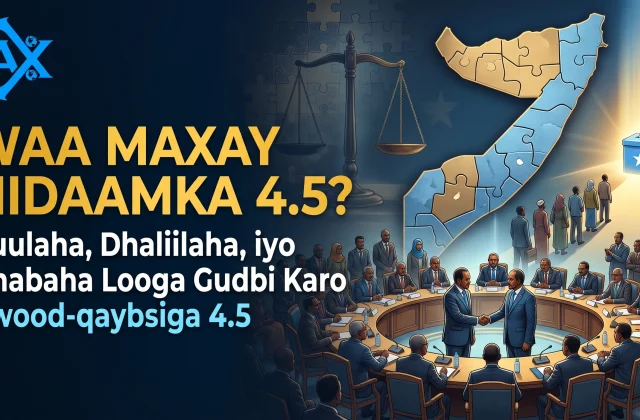
Since the Constitution is a provisional agreement that requires completion, it sets out a clear legally mandated process for its amendment or review:
-
- Proposing Amendments: A proposal may come from the Council of Ministers, members of either house of Parliament or a request from the federal member states.
-
- Constitutional Review Committee: There is an independent committee and a joint parliamentary committee responsible for studying, preparing and presenting provisions that require correction or amendment.
-
- Parliamentary Reading and Debate: Proposed provisions are presented to the Federal Parliament, where both houses hold extensive debates and analysis.
-
- Vote by Both Houses: To amend a constitutional provision, both houses of Parliament must approve it by the special majority defined by law, normally a two-thirds majority.
-
- Popular Referendum: For the Constitution to become a formal and permanent document, the final amendments and overall approval must be submitted to a popular referendum in which Somali citizens vote directly.
Frequently Asked Questions (FAQ)
1. Why is Somalia’s Constitution called provisional?
It is called provisional because it was not approved through a nationwide popular referendum due to the insecurity that existed at the time. It will remain in force until the public votes directly on the final agreement.
2. Can both houses of Parliament amend any provision in the Constitution?
Parliament has the authority to review and amend constitutional provisions when the legal procedure is followed. However, there are fundamental principles—such as Islam and the country’s independence—that cannot be changed.
3. What role do the federal member states play in constitutional amendments?
The federal member states play an important role in the consultative process. They have representatives in the Upper House of Parliament, and it is important to reach a political and constitutional agreement on issues concerning the division of powers and resources.
Conclusion
Somalia’s Constitution is not merely a legal document; it is the foundation for peaceful coexistence and the establishment of a just government. Completing the Constitution and understanding the procedures for amending it will help bring lasting stability and a strong legal system that serves all Somali citizens.