Somalia’s federal system is designed to administer the country after many years of conflict and state collapse. This structure distributes administrative authority between the central government and regional administrations, bringing basic services closer to communities while safeguarding national unity.
Understanding how the federal member states operate and the powers they hold is essential for anyone seeking to understand the country’s political and administrative system today.
What Are Somalia’s Federal Member States?
Federal member states are regional administrations established under the Provisional Constitution of the Federal Republic of Somalia. They consist of two or more regions that voluntarily joined together to establish a federal member state.
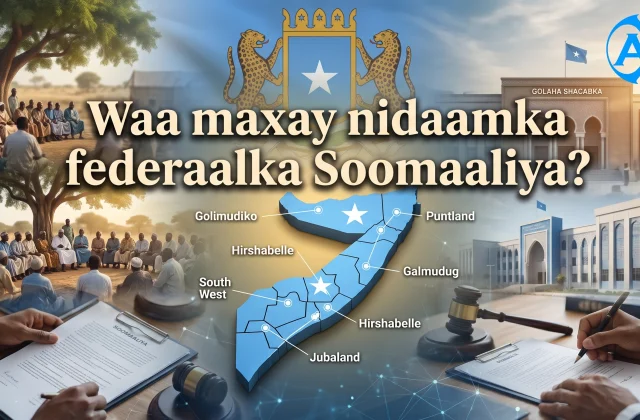
Somalia has several federal member states, including Puntland, Jubaland, Galmudug, Hirshabelle and South West State. The North Western State of Somalia is also part of the country’s broader administrative system, with cities such as Hargeisa and Zeila possessing a long history of decentralized administration.
Each administration has its own institutions, consisting of:
-
- Executive branch (Government): Led by a regional president and a council of ministers.
-
- Legislative branch (Regional Parliament): Establishes rules and laws applicable to that particular administration.
-
- Judiciary: Courts responsible for regional cases and upholding local law.
Legal Powers of Federal Member States
The country’s Constitution defines how powers are distributed. The central government, based in Mogadishu, retains national powers such as overall defense, foreign policy and the national currency, while federal member states have the authority to manage several areas:
-
- Local Security: Establishing and managing local police forces that maintain security in cities and villages.
-
- Social Services: Developing and managing healthcare, primary education and water services.
-
- Regional Taxes: Imposing and collecting local taxes to finance activities serving the public interest.
-
- Infrastructure Development: Building regional roads, local ports and commercial markets.
Importance of Federal Member States
The federal member state system has addressed many challenges that historically arose from the centralized administration that contributed to the country’s collapse. Their main importance includes:
-
- Devolution of Power: Citizens do not need to travel to Mogadishu to access basic services, as regional centers such as Garowe, Kismayo, Baidoa, Jowhar and Bosaso provide many services.
-
- Public Trust: Local communities play a greater role in choosing their leaders, making direct accountability easier.
-
- Conflict Resolution: Local problems are addressed at the community level before they develop into national crises.
Key Principles of the Federal System
For this system to function effectively, several fundamental principles guide relations between the central government and the country’s regional administrations:
-
- Regular Consultation: Major decisions of national importance require an understanding between federal and regional leaders.
-
- Resource Sharing: The country’s natural resources and international aid should be distributed fairly and in accordance with legal agreements.
-
- Preserving National Unity: Every federal member state is obligated to safeguard Somali national unity and the country’s territorial integrity.
Frequently Asked Questions
1. Can federal member states enter into international agreements?
The Constitution stipulates that foreign affairs and international agreements fall under the authority of the central government. However, the administrations may enter into limited trade or development agreements in consultation with, or while informing, the central government.
2. How is a new federal member state established?
As defined by law, two or more regions from those that existed before the collapse may voluntarily unite to establish a single federal member state, following the constitutional process and the wishes of local residents.
3. What happens if central government law conflicts with the law of a federal member state?
If a legal conflict arises concerning national matters, the Federal Constitution always takes precedence. Legal disputes are referred to the Supreme Court or the Constitutional Court for a final legal resolution.
Translated by Ali Musa
alimusa@axadletimes.com
Axadle media Group