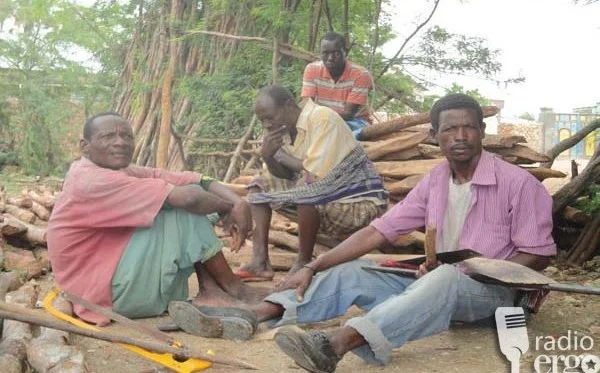
Hundreds of displaced workers in Baidoa have been forced out of work after Al-Shabaab imposed new payments on vehicles used to transport sand, leaving families without the income they relied on for food, water and school fees.
Jamal Hassan Mohamed, who supports a household of 10, said he has been unable to provide enough food for his family since July. He used to extract sand outside the city and transport it for construction projects, but says he cannot afford the newly imposed tax.
- Advertisement -
“Our living conditions are extremely difficult,” he said. “People in the areas outside the city have prohibited the work, and we’ve been forced to stay at home. Before, we had a source of income to support our household expenses, but now we are unemployed.”
Jamal, 50, earned between $7 and $10 a day, enough for the family’s sole breadwinner to provide three meals daily. Now, even water is difficult to obtain. At the Deg-umur IDP camp, where the family lives, a 20-litre container costs $0.25. Unable to pay, Jamal and his wife walk for an hour to a privately owned shallow well, where they ask for a single container.
“We used to cook three times a day, but now we only cook once,” he complained. “I go around the city asking people for help saying, brother please help me with one dollar or a kilogram of sugar or whatever you can.”
Jamal was unable to pay $30 in school and Koranic class fees, resulting in three of his children being expelled this month. He fears for their future without an education and says he has found no casual labour in the city.
His family fled Berdale in Bay region in 2022 after several consecutive drought seasons destroyed their five-hectare farm.
Nuradin Macalin Aadan, another sand excavator, is facing similar hardship while trying to support his family of eight. He walks through nearby neighbourhoods seeking assistance but receives little help and has even been forced to beg for water.
For four years, Nuradin earned $7 to $10 a day selling sand. He has no other skills with which to secure work. The family owes $35 in unpaid fees to a Koranic school and a regular school for two months, while a local shop has stopped allowing him to buy food on credit.
Nuradin has lived in Doygaab IDP camp for two years and said he can only wait and hope that conditions improve.
“What worries me most is how I will meet our household expenses and provide for our lives. Since we lost our jobs, we have accumulated many debts, and our children’s lives have become extremely difficult. We keep praying that God will make it possible for us to find work,” he said. “What is most important for us now is to be allowed to return to work.”
Some vehicle owners tried to continue moving sand quietly, but Al-Shabaab stopped the efforts by seizing three vehicles. The seizures have increased fears among other operators about their safety and property.
Nuradin’s family was displaced from Goof-gaduud Buurey, Baidoa, in 2024, after severe drought destroyed the four-hectare farm on which they depended.
Abdinasir Abdi Ali, a member of the transporters’ committee representing the workers, told Radio Ergo that the restrictions had severely affected families with no other source of income.
“We are currently facing serious challenges due to excessive payments that have been imposed on us, which we are unable to afford. There are now even vehicles being held by Al-Shabaab because of these payments and related issues. We are facing extremely serious difficulties as a result of these circumstances,” he told Radio Ergo.
Abdinasir said many poor displaced families relied on sand excavation and transportation to survive. According to him, operators were being required to pay $200 per vehicle each month, a cost they could not afford. He urged authorities to respond to the workers’ grievances urgently.