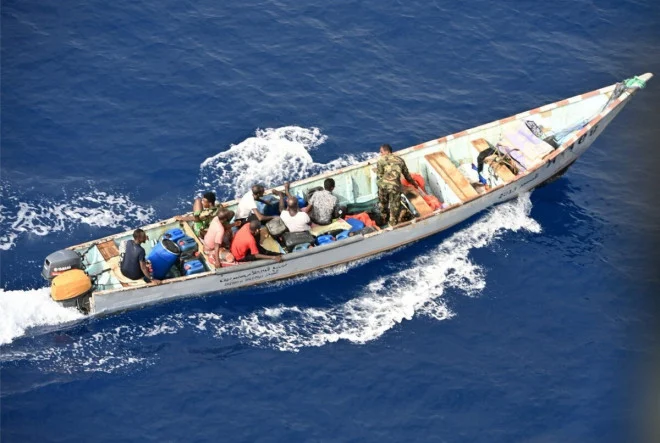
A Somali pirate skiff. Photo: Indian Navy
An armed group has seized a tanker off Yemen and is reportedly steering it toward Somalia, in the latest sign that piracy is returning with force to waters once considered substantially safer.
- Advertisement -
The United Kingdom Maritime Trade Operations (UKMTO) said six armed men boarded the tanker and diverted it toward Bosaso, Somalia.
The incident was reported at 08:25 UTC on 20 August, about 136 nautical miles east of Al Mukalla, Yemen. The British maritime security monitoring organisation said the tanker, Seamull, also known as SIBU 1, “broadcast a distress call on VHF 16 that they have been approached by an unauthorised vessel whilst travelling west in the Gulf of Aden.”
“The tanker has been boarded by six-armed persons who are now in control of the vessel and redirecting to Somalia,” UKMTO said. It added that “authorities are investigating” and advised ships to transit cautiously and report suspicious activity to the organisation.
The Eritrean-flagged tanker is reportedly managed by UAE-based Qatrat Alnada Almasi Ship Management. The vessel is under US sanctions after Washington accused it of operating within Iran’s “shadow fleet”, a network of ships used to circumvent American sanctions against the country.
Seamull is believed to regularly transport Iranian oil or petroleum products and has reportedly called several times at ports in Yemen controlled by the Houthis.
ABC News (US) reported that about 20 crew members were likely aboard when the tanker was seized. The crew reportedly included 16 Indian nationals, along with one Syrian, one Sudanese and one Iraqi national.
UKMTO has not released further information about the crew’s condition or provided additional updates on the incident.
The vessel’s AIS (Automatic Identification System) destination remains listed as “PIRATE ONBOARD HEL”.
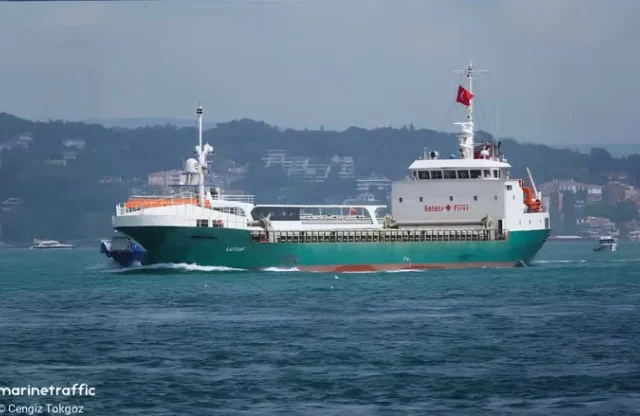
Piracy in the Western Indian Ocean had declined in recent years after sustained international efforts, but the seizure brings the number of vessels taken in the region this year to six. It came only days after a comparable attack resulted in the hijacking of the Cameroon-flagged cargo ship MV Lutuf off Somalia on 17 August.
Since April 2026, authorities have confirmed the seizure of at least four other commercial vessels in the Horn of Africa and Gulf of Aden. They are the Palau-flagged tanker Honour 25 on 21 April 2026; the Saint Kitts and Nevis-flagged cargo ship Sward on 26 April; the Togo-flagged tanker Eureka on 2 May; and the Tanzania-flagged tanker Asana on 17 July.
The renewed attacks come as the US-Israeli conflict with Iran and its proxies places additional pressure on regional and international maritime forces. Shipping traffic has also risen sharply in the Western Indian Ocean following the closure of the Strait of Hormuz and the heightened danger associated with passage through the Bab al-Mandab Strait.
Reuters reported at least 13 attacks on vessels off Somalia or in the Gulf of Aden so far this year, compared with five in 2025. Although the numbers remain well below the levels seen during the height of Somalia’s piracy crisis from 2008 to 2014, the sharp increase is raising concern over further disruption to already vulnerable global shipping and supply chains.
The resurgence has triggered a regional response. In late July and early August 2026, the Djibouti Code of Conduct/Jeddah Amendment (DCoC/JA) Steering Committee voted to examine the creation of a new Combined DCoC Task Force.
The proposed force is understood to draw heavily on West Africa’s Yaoundé Code of Conduct. Regional governments there have made major progress against piracy in the Gulf of Guinea, including through the creation and operational deployment of a Combined Maritime Task Force earlier this year.
After the DCoC/JA Steering Committee issued its recommendation, the DCoC National Focal Points endorsed the plan on 5 August. They assigned Working Group 3 on Operational Coordination and Cooperation at Sea to lead the development of the proposed regional force.
As the DCoC/JA works to improve regional maritime security and anti-piracy capabilities, the latest seizure underscores the urgency of confronting the area’s worsening challenges at sea.
International naval deployments and the widespread use of shipboard defensive measures had largely suppressed Somali piracy for more than a decade. The multiple hijackings reported this year, however, indicate that those gains are no longer secure.
With Seamull reportedly being taken toward Somalia, the Western Indian Ocean is again emerging as a major flashpoint for commercial shipping and maritime security authorities.