Photo Credit: United Nations Support Office in Somalia; https://masharikirpc.org/u-s-funding-withdrawal-to-united-nations-support-office-in-somalia-and-the-future-of-regional-stability/
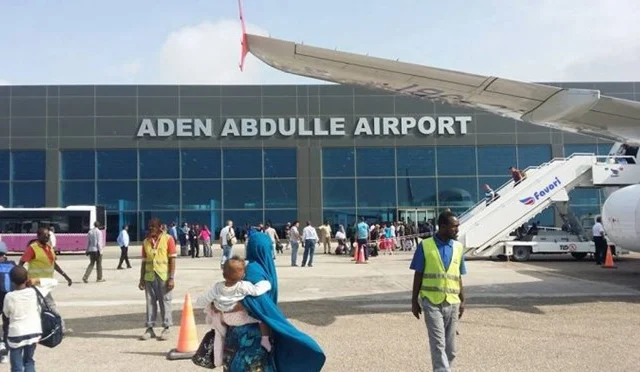
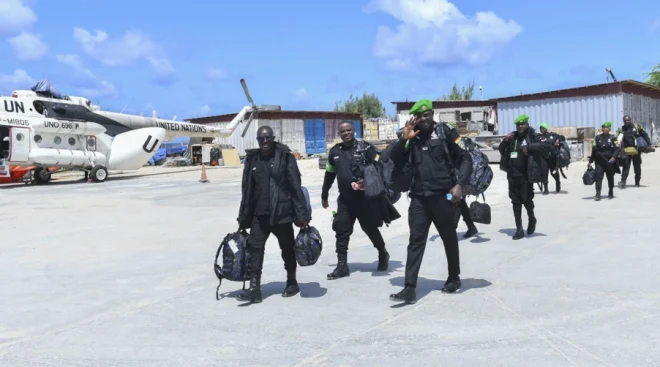
MOGADISHU — The United Nations’ logistical presence in Somalia is being dismantled inside the heavily fortified compound beside Mogadishu’s Aden Adde International Airport, marking what officials and analysts describe as an unprecedented operational drawdown.
- Advertisement -
Staff are receiving termination notices, procurement officials are preparing auction lists for heavy equipment, and regional security planners are assessing whether the Horn of Africa can preserve its fragile stability after the departure of its principal international support structure.
The UN’s retreat from Somalia—widely regarded as the logistical foundation for counter-terrorism operations and state-building—is no longer a distant possibility, according to detailed operational risk assessments by the Bloomsbury Intelligence and Security Institute (BISI). A decisive U.S. funding veto reported by France 24, mounting donor fatigue documented by Amani Africa, and Mogadishu’s demand for greater national ownership, highlighted by Reuters, are rapidly reducing the UN footprint. The withdrawal threatens the African Union Support and Stabilization Mission in Somalia (AUSSOM) and could leave regional defenses vulnerable to an Al-Shabaab resurgence.
Part I: The Anatomy of a Drawdown — Layoffs, Liquidation, and Mandate Erasure
The United Nations Support Office in Somalia (UNSOS) was created to provide life-support services, transportation, medical evacuation and engineering assistance to African Union peacekeepers and Somali security forces. That operational network is now being dismantled at speed, according to recent investigative reporting by The EastAfrican.
Civilian Redundancies and Bureaucratic Contraction
The consequences of the funding freeze are already visible in termination notices sent across the mission’s joint operations. Ten civilian employees working with the joint African Union-United Nations Information Support Team (AU-UN IST) were informed that their contracts would end on September 10, 2026. Internal communications and reporting by Caasimada Online indicate that the notices represent the first wave of broader layoffs expected across UNSOS civilian departments through the end of the year, a trend also reported by Somali Report.
“The scaffolding holding up international operations in Somalia is being dismantled piece by piece,” observed a senior humanitarian consultant based in Mogadishu, echoing analysis published by the Somali Guardian. “When you terminate the joint information and support teams, you eliminate the sensory network that coordinates peacekeeper logistics with civilian protection efforts.”
The Auctioning of Peacekeeping Infrastructure
At the same time, the UN has begun preparing to sell infrastructure accumulated through decades of intervention:
Auction Solicitations: On August 6, 2026, UNSOS issued a formal Expression of Interest (EOI) seeking commercial auction companies to organize the public sale of UN assets across Somalia, the Somali Guardian reported. The first disposal period is expected to last three months, with the possibility of extensions.
Liquidated Equipment: The proposed sales include heavy construction machinery, vehicle fleets, electricity generators, medical supply units, shipping containers, prefabricated shelter materials and specialized aviation-support equipment.
Operational Shift: Although asset sales can accompany ordinary inventory reviews, the breadth of this disposal points to an operational shutdown rather than routine maintenance, according to Radio Dalsan.
Political Footprint Downgrade
The logistical drawdown is taking place alongside a reduction in the UN’s political role. After the Federal Government of Somalia formally requested an end to UN political advisory missions, as reported by Reuters, the United Nations Transitional Assistance Mission in Somalia (UNTMIS) is scheduled to complete its transition into a standard UN country team by October 31, 2026. UNTMIS replaced UNSOM in October 2024, according to the Bloomsbury Intelligence and Security Institute (BISI). The change removes formal political mediation mechanisms at a time of heightened regional tension.
Part II: The Washington Veto and Financial Insolvency
The immediate cause of the accelerated retreat is financial. Somalia’s international operations have long depended on a combination of UN-assessed contributions, European Union support and U.S. logistical backing. That funding arrangement has now fractured, according to Africa Confidential.
The U.S. Logistical Veto
In July 2026, the United States told the UN Security Council that it would block any authorization permitting UNSOS to draw on UN-assessed contributions to support AUSSOM beyond December 31, 2026. Standard Media Group reported the decision, which was also highlighted on social media by Addis Standard.
The Security Council had approved approximately $481 million for UNSOS for the fiscal year ending June 30, 2027. But Washington’s position makes the latter half of that allocation unusable. As examined by the Mashariki Research and Policy Centre, the decision effectively limits the viability of the international peacekeeping logistics system to midnight on December 31, 2026.
The Math of Peacekeeping Insolvency
The scale of the financial challenge is reflected in several key figures:
Historical UNSOS Budget: In the previous fiscal period, UNSOS operated with a budget of more than $500 million to finance life-support services, strategic airlift, field hospitals, supply routes and bases spread across six sectors.
AUSSOM Operational Needs: The successor AU mission requires at least $190 million each year for troop allowances, equipment stipends and operational costs, according to The EastAfrican.
The Funding Gap: European Union priorities have shifted toward security in Eastern Europe, while the United States has retreated from open-ended multilateral commitments. AUSSOM is therefore heading into 2027 with a budget gap that The Organization for World Peace describes as insurmountable.
Part III: Mogadishu’s Push for Ownership vs. Regional Realities
The UN withdrawal is unfolding amid complicated domestic politics as the Federal Government of Somalia (FGS) presses to take greater control of national security operations.
The FGS Sovereignty Narrative
President Hassan Sheikh Mohamud’s administration has repeatedly said that international peacekeepers cannot remain in Somalia indefinitely. Mogadishu maintains that the Somali National Army (SNA) and affiliated security forces now have the capacity to defend major population centers and lead counter-insurgency campaigns against Al-Shabaab.
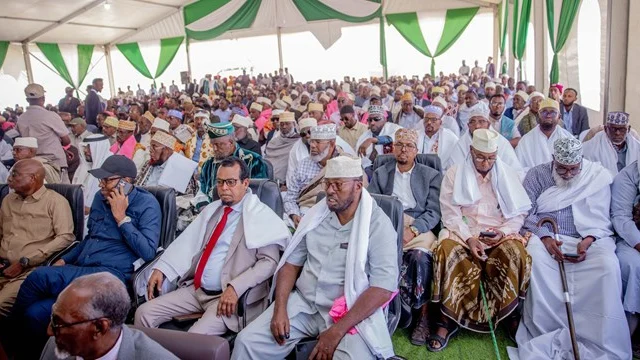
On August 16, 2026, President Mohamud attended the graduation of more than 3,000 national army recruits in the Galgaduud region. Caasimada Online described the group as the largest domestically trained cohort since the collapse of Somalia’s central government in 1991. Speaking at the ceremony in Xananbuure, Mohamud said Somalia had arrived at a decisive moment:
“We have reached a point where our forces can assume full responsibility for our national defense. It is time to honorably bid farewell to African Union forces, presenting them with flowers for their service as they return to their home nations.”
The Fragmented Front: Troop-Contributing Countries
Neighboring countries that supply troops to the African Union mission are far less confident about a rapid exit, according to a dynamic tracked by The EastAfrican.
Uganda
Kampala has adopted a firm position. Defense Minister Kiryowa Kiwanuka said Ugandan People’s Defence Forces (UPDF) troops would remain in Somalia regardless of AUSSOM’s broader status, relying if necessary on longstanding bilateral security agreements between Mogadishu and Kampala, Somali Report reported.
“The framework of our presence may evolve,” Kiwanuka noted, “but Uganda maintains explicit bilateral arrangements with Somalia. However, international partners must recognize that an orderly transition or continued presence requires sustainable financing.”
Regional Forces (Kenya, Ethiopia, Egypt)
Military officials in Nairobi and Addis Ababa are viewing the December 31 deadline with alarm. Reports say Kenya, Ethiopia and Egypt are considering diplomatic measures to keep forces in strategic border areas through 2027, with the aim of preventing Al-Shabaab from extending its operations beyond Somalia.
Yet if UNSOS ends its provision of fuel, food, field medical support and tactical air transport, troop-contributing countries (TCCs) would have to finance those services themselves—a cost that few regional economies could absorb.
Part IV: Security Risk — The Looming Vacuum and Al-Shabaab
The central fear surrounding an uncoordinated withdrawal is that it would give Al-Shabaab new room to maneuver. Over the past two decades, the militant group has repeatedly exploited security transitions and political fractures.
Vulnerability of the Forward Operating Bases (FOBs)
Somalia’s peacekeeping system depends on a network of linked Forward Operating Bases that guard rural trade routes and help protect key urban centers, including Mogadishu, Baidoa, Kismayo and Jowhar.
Without supply lines managed by UNSOS:
1. Isolated Garrisons: Forward bases could become cut-off outposts, unable to obtain essentials such as patrol fuel and replacement ammunition.2. Medical Evacuation Capacity: The loss of UN-contracted civilian helicopters would remove rapid combat medical evacuation, weakening troop morale and effectiveness.3. Tactical Mobility Loss: Without heavy transport and engineering assistance, frontline forces could be pushed into static positions, surrendering the initiative in rural areas to insurgents.
Regional Contagion Risks
Security analysts caution that a sudden collapse of the AUSSOM structure could undo advances recorded during Somalia’s 2022–2025 national offensives in Hirshabelle and Galmudug.
Should Al-Shabaab regain control of important supply routes, it could rebuild its taxation system, raise tens of millions of dollars and mount external attacks against neighboring countries, a danger emphasized by the Mashariki Research and Policy Centre.
Part V: Analytical Assessment — Scenarios for 2027
With the UN preparing to leave, analysts identify three principal strategic options for the Horn of Africa:
Scenario A: Sovereign Assumption and Accelerated Handover
Somalia takes complete control of its national security presence, with targeted bilateral training from partners including Turkey, the UAE and the U.S.
• The Risk: The danger of operational failure would be high. Although the Somali National Army has improved its light infantry capabilities, it still lacks the heavy logistics, logistics software, dependable procurement pipelines and combined-arms coordination needed to secure the entire country at once.Scenario B: Fragmented Bilateral Deployments
AUSSOM ceases to function as a unified, UN-backed mission and is replaced by separate bilateral deployments. Uganda secures Sector 1 in Lower Shabelle, Kenya maintains its position in Jubaland, and Ethiopia holds buffer areas along the borders in Gedo and Hiiraan.
• The Risk: The result could be severe strategic fragmentation. Without a central UN command and common logistics system, operations would become less coordinated, potentially aggravating political tensions between regional governments and Mogadishu.
Scenario C: Emergency Diplomatic Compromise
Confronted with the prospect of an immediate security breakdown, the UN Security Council, European Union and African Union negotiate a limited emergency logistics arrangement before December 31, 2026. The plan would finance a substantially reduced support network, as analyzed by Amani Africa.
• The Risk: Such an arrangement would depend heavily on U.S. non-interference and emergency financing from Gulf states or European partners. It would probably postpone, rather than solve, the mission’s underlying insolvency.
The Road Ahead
The UN’s physical presence in Somalia is shrinking by the day. As auction companies review expressions of interest for UNSOS equipment and civilian contractors prepare to leave, the era of multilateral nation-building in the Horn of Africa is drawing to an end.
Whether Somalia can turn its sovereignty argument into effective battlefield capability before December 31, 2026, will help shape regional security for the next decade. In the absence of a credible replacement for the UN’s logistical backbone, the prospect of a security vacuum remains substantial.
___________________________
About the AuthorProf. Abdinasir Ali Osman is a veteran Somali Senior Researcher and Consultant with more than 35 years of experience in Education, Humanitarian, Governance, and Institutional Development and Reform. His work has contributed to policy development across Somalia and the Horn of Africa.