Lebanese President Joseph Aoun made an unannounced visit to the country’s south, vowing to secure an Israeli withdrawal and lead reconstruction efforts after Israeli forces seized and demolished a nearby Hezbollah position.
Lebanon’s official media reported that Mr Aoun arrived in Nabatieh accompanied by senior security officials, including army chief Rodolphe Haykal.
- Advertisement -
The visit came one day after a senior US diplomatic official said a new round of US-brokered negotiations between Israel and Lebanon, originally planned for next week, had been postponed until October.
Footage aired by Lebanese media showed Mr Aoun greeting residents in Nabatieh and expressing his solidarity with the local population.
A funeral procession in Kfar Roummane, Nabatieh Governorate, Lebanon, earlier this week
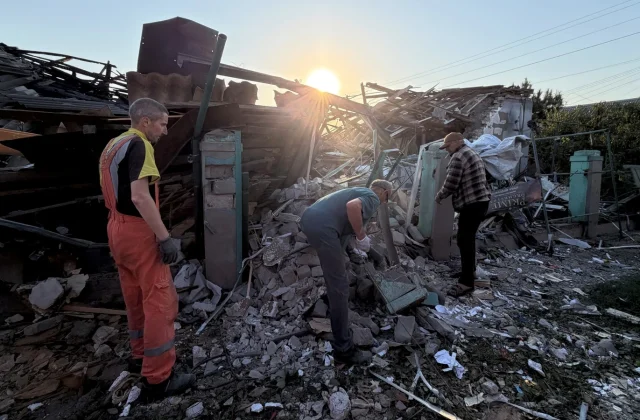
Much of Nabatieh’s government infrastructure and several major sites have been destroyed since fighting erupted between Israel and Hezbollah in March.
It was Mr Aoun’s first trip to southern Lebanon since the conflict began.
“We stand by your side, and we are looking into how to provide all the necessary services so that you can remain here safely,” he said, according to a statement issued by the presidency.
Violence between Israel and Hezbollah had largely subsided from late June until last week under a US-backed framework agreement between Israel and Lebanon, alongside a memorandum of understanding between the United States and Iran during the broader Middle East war.
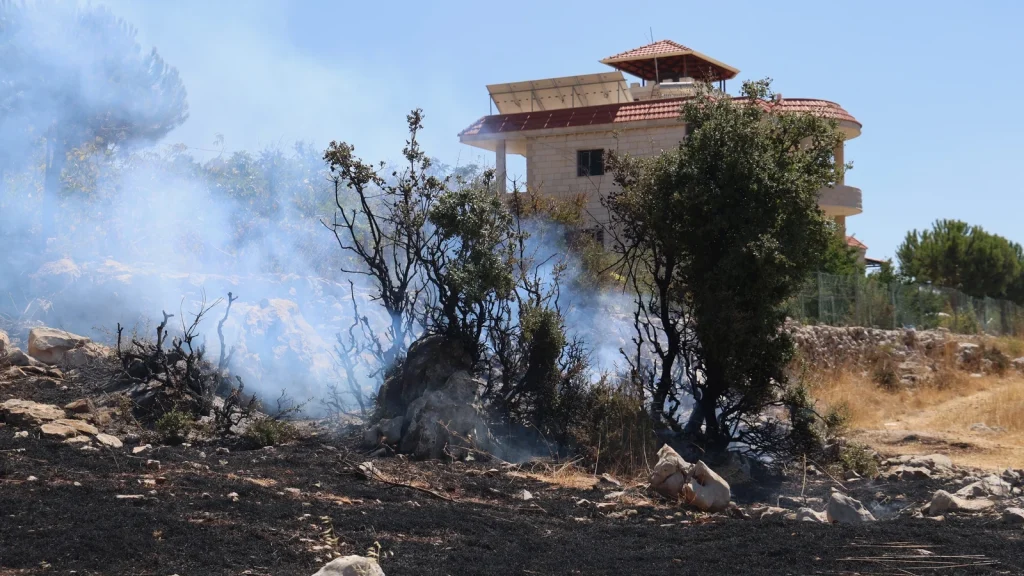
In recent days, however, the Israeli army has intensified its attacks, with the Nabatieh region emerging as a particular focus.
On Thursday, Israeli forces destroyed underground Hezbollah fortifications on the strategically important Ali al-Taher ridge after taking control of the site, located several kilometres from Nabatieh city.
The blast was powerful enough to cause a tremor recorded by seismic monitoring agencies.
At least 29 people have been killed in Israeli strikes across the area in recent days, including 12 members of one family.
The Lebanese army, which has deployed in Nabatieh city, warned on Wednesday that Israel’s actions could jeopardise the implementation of the framework agreement.
The deal calls for Hezbollah to disarm, Israeli forces to withdraw gradually from southern Lebanon and the Lebanese army to deploy across the region, beginning in designated test areas known as “pilot zones”.
“The withdrawal of Israel, the return of prisoners and displaced people, as well as reconstruction, are national constants that the state is committed to implementing,” Mr Aoun said.
Following his visit to Nabatieh, the president travelled to Zawtar al-Gharbiya, one of the pilot zones. There, he inspected Lebanese army units and viewed nearby Israeli military positions, according to the presidency.
A video released by the presidency showed Mr Aoun walking through the area, speaking with residents and meeting soldiers.
Israel-Lebanon talks in Rome delayed
A US official said the next round of Israel-Lebanon negotiations in Rome had been postponed until October.
The United States said last month that the talks in the Italian capital would take place early this month.
Although the Rome meeting will not proceed as scheduled, the Lebanese and Israeli ambassadors are due to meet at the State Department in Washington next week “to discuss ongoing developments and the continued implementation” of the framework deal reached in June, the official said. The official spoke on the customary condition of anonymity.
The so-called Trilateral Framework provides for Hezbollah’s disarmament, a phased Israeli withdrawal from southern Lebanon and the deployment of the Lebanese army, initially in areas designated as “pilot zones”.
The US official said the agreement “remains the only viable mechanism to restore Lebanon’s sovereignty and Israel’s security”.
After the US and Israel began their war against Iran in late February, Hezbollah drew Lebanon into the conflict by firing missiles at Israel.
Violence then eased following the understanding reached between Iran and the United States in June, followed by an agreement between Lebanon and Israel.
But the intensity of strikes has risen again in recent days.