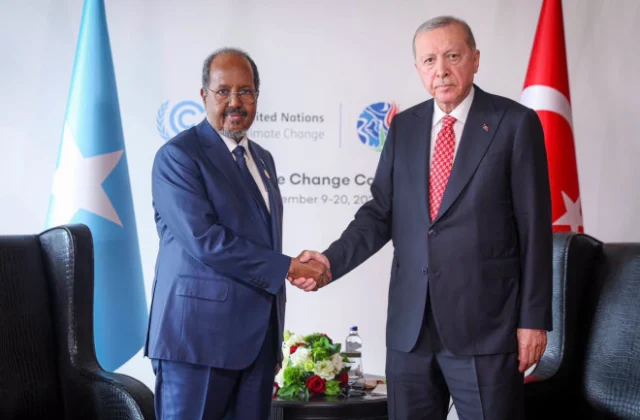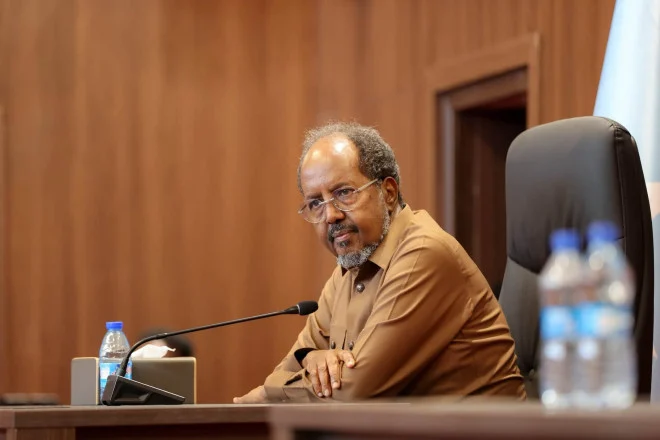
President Hassan Sheikh Mohamud’s traditional oath-taking and assumption of leadership of Somalia were fully grounded in the 2012 Provisional Constitution. The leadership under which he took charge of the country was based on a federal system comprising the Federal Government and the federal member states, whose pillars were political consensus, fair power-sharing and the strengthening of national unity.
Nevertheless, the reality today shows that Hassan Sheikh has reduced the federal system to a small group revolving around him, the national capital, a particular political party and an electoral process about which Jubaland, Puntland, South West State and the Hiiraan region know nothing, as these administrations have openly opposed the direction and process through which he is governing the country.
The state-building framework created through national consensus and broad agreement is now facing a serious threat. Political trust, the cooperation that formed the foundation of federalism and the principle that the country should be governed through consultation and agreement are steadily being lost. Somalia’s national cause and destiny cannot be abused by one leader or controlled by a single group while other parts of the country are excluded from decisions of national consequence.
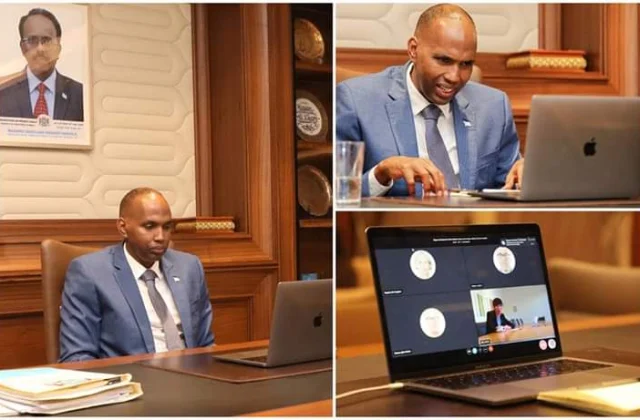
The situation is being further worsened by the way Hassan Sheikh is managing state power. It is increasingly apparent that the country’s decisions and policy advice have become concentrated among members of his immediate family. His daughters are said to be his most influential advisers, while his cousins are used to interfere in and obstruct opposition politicians. Meanwhile, constitutional officials who should be at the forefront of leading the government, such as Prime Minister Hamza Abdi Barre, the minister of interior and the minister of security, have become figures with no real authority or independent political decision-making power.
The question is: Is the state governed by constitutional institutions and written laws, or is it subject to the President’s wishes and will? If the country’s prime minister lacks the authority to fulfill his constitutional duties, ministers have no say in their ministries, and the federal member states have been excluded from decisions concerning the nation’s destiny, what then remains of the agreed federal system?
President Hassan Sheikh must understand that Somalia is not private property, and governing the country is not a power that one individual can exercise as he pleases. The President was elected to protect the country, the constitution and the unity of government institutions—not to divide society into those who support him and those who oppose him politically.
Somalia today urgently needs leadership that unites the nation, an inclusive political agreement, a consensual constitution and a federal system that distributes rights and responsibilities equally across all Somali territories.
May Allah save us from Hassan Sheikh’s actions pushing Somalia’s Third Republic into a dark abyss. The country is greater than any individual in office, and statehood will always stand above personal and factional interests.
___________________________
[email protected]