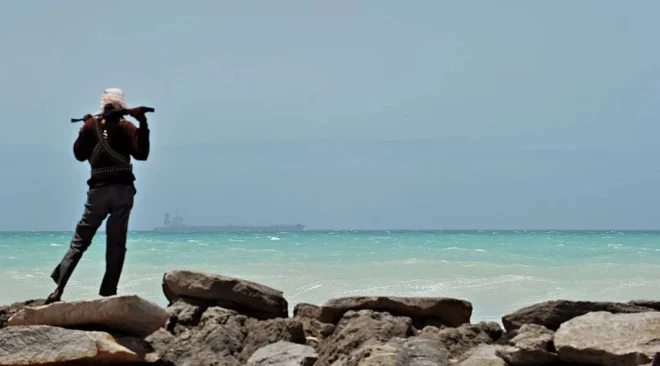
Somali pirates are boarding ships far from land before steering them toward the coast, exploiting a dangerous gap in maritime security
A fresh wave of piracy off Somalia is adding to the pressure on global shipping, already facing blockades and conflict linked to the US war with Iran.
- Advertisement -
Two cargo ships were captured in the Gulf of Aden within four days last week, bringing the number of vessels attacked since the beginning of the year to at least 13 and prompting unprecedented drone strikes against suspected pirate networks.
The surge marks the sharpest rise in hijackings in more than a decade and has revived fears over security in a corridor critical to international trade.
“Piracy is always a crime of opportunity,” says Omar Mahmood, a senior Somalia analyst for the International Crisis Group (ICG), “and right now the pirates see an opportunity.”
That opening has emerged as war disrupts waterways farther north.
Iran and the US are continuing their struggle for control of the strategic Strait of Hormuz.
In Yemen, Tehran’s Houthi allies have introduced a targeted blockade in the Bab el-Mandeb Strait, the gateway to the Red Sea. Although the measure is linked to a dispute with Saudi Arabia, it has made the route more hazardous for international shipping.
“I guess the pirates believe that with those two external events in Hormuz and Bab el-Mandeb, they believe that the international forces will be dedicated to those crises instead of looking for pirates,” says Vice-Admiral Ignacio Villanueva Serrano, operation commander for the European Union’s naval force that protects shipping off Somalia’s coast.
One of the vessels seized recently was the Cameroon-flagged MV Lutuf, attacked off Somalia’s semi-autonomous Puntland State region on 17 August. Several days later, pirates boarded the Eritrean-flagged oil products tanker MT Sibu 1 in waters near Yemen, on the opposite side of the Gulf of Aden.
The Lutuf seizure has set off a series of unexpected developments.
Thirteen men allegedly linked to a network supplying the pirates aboard the vessel have died in two drone strikes since 18 August. No party has claimed responsibility, while local officials have blamed Turkey and said the ship was transporting Turkish weapons.
The Lutuf is now one of six ships being held for ransom demands worth millions of dollars. Four of those vessels are anchored near Bander Beyla, a fishing town regarded as a piracy hotspot, the BBC has learned.
The current figures remain far below the peak reached 15 years ago, when Somali hijackings cost the global economy billions of dollars. In 2011, pirates carried out more than 200 attacks and held hundreds of crew members hostage.
A joint international naval operation, reinforced by private security teams aboard commercial vessels, brought the crisis under control and contained renewed activity in 2023 and 2024.
Yet experts say the pirate networks were never dismantled. The underlying economic hardship and insecurity in Somalia that sustain them have also gone largely unaddressed.
In Puntland State, the latest activity is being driven in part by anger over foreign trawlers accused of overfishing Somali waters and damaging the fishing economy on which local communities depend.
At the same time, the number of potential targets has grown, along with the value of what they may be carrying.
Instability across the region has pushed some ships south and closer to Somalia as operators seek to avoid the fighting farther north. With oil prices high, tankers offer pirates a particularly lucrative prize.
“You have that combined effect of less naval patrolling but more commercial shipping in these waters,” according to the analyst Mahmood, “and that signals an opportunity.
“And once you’ve had a successful attack, I think that spurs other units to do copycat type incidents as well.”
Mahmood and other researchers believe Somali pirates may be working with Yemeni partners, following the seizure of several vessels near Yemen’s coastline.
But Mahmood says any such cooperation would probably involve criminal groups rather than Iran’s Houthi allies. One of the ships captured last week, the MT Sibu 1, allegedly belonged to an Iranian “shadow fleet” used to move petroleum products while evading US sanctions.
“I don’t see something specifically Iran-directed,” he says.
Turkey, however, is reported to have an interest in the latest seizures.
Sources in Puntland State’s security services and a Somali government official told the BBC that the Lutuf was carrying weapons for a Turkish military training facility in Mogadishu. Ankara has an agreement with Somalia to improve maritime security, within a broader defence and economic partnership.
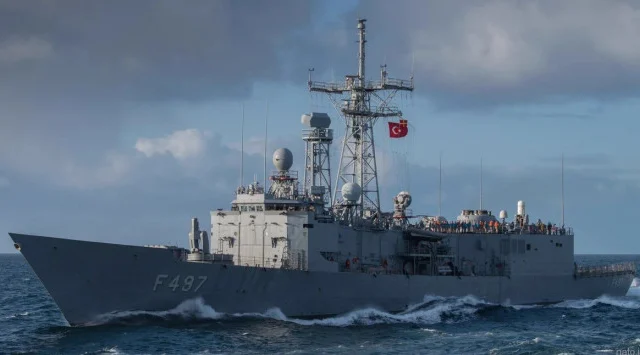
The security sources claim that six foreign warships are currently operating in waters near the Lutuf – two Turkish vessels and one each from Spain, Denmark, the US and India. The BBC has not independently verified the claim.
“There is military equipment on the [hijacked] ship meant for Turkey’s operations in Somalia,” the Somali government official said, speaking on condition of anonymity. He said the cargo also included satellite equipment for a space station Turkey is building north of the capital.
He alleged that Turkey carried out the second drone strike, which killed nine armed men on Sunday.
“The men who were killed were criminals and I don’t have sympathy for them,” he said, “but taking it to that level is escalating the situation even more.”
Turkey’s defence ministry said its forces were providing “necessary support” to Somali authorities over the hijacking in Somali territorial waters, under the countries’ security agreement. It did not directly respond to allegations that Turkish forces conducted the deadly drone attacks.
The government in Mogadishu has publicly said only that it knows about operations against pirate groups and will take steps to deal with them.
Puntland State officials have issued stronger statements.
Speaking to the BBC’s Somali Service, Deputy Minister of Security Abdirahman Yusuf said his administration had evidence that Turkey was behind the strikes. He cited information about Turkish activity around the vessel and along Puntland State’s coast.
The BBC has not independently verified those allegations.
The Puntland State security ministry also released a statement opposing “bombings by international warships targeting civilians”, saying the attacks “undermined co-operation… in combatting piracy” and calling for an immediate explanation.
Analysts say Puntland State is uneasy about Turkey’s close military ties with Somalia’s federal government. The incidents could further strain the long-running dispute between the semi-autonomous region and Mogadishu, complicating efforts to mount a united response to piracy.
The latest events do not yet amount to a full-scale revival of Somali piracy. But unless the US-Iran war ends or international deterrence is strengthened, attacks are likely to keep elevating the threat in a vital maritime corridor already under severe pressure.
Additional reporting by Mohamed Gabobe in Mogadishu and the BBC Somali Service