Kenya’s standing in the global peace rankings has fallen sharply, reflecting the combined weight of insecurity, regional conflict and mounting economic pressures. The country slid five positions, from 127th in 2025 to 132nd in the 2026 Global Peace Index.
Its overall score also deteriorated, rising from 2.392 to 2.447.
- Advertisement -
Kenya ranks 33rd out of 44 countries in sub-Saharan Africa, a region that the Institute for Economics and Peace (IEP), which publishes the index, says became less peaceful over the year.
The report placed Kenya within a much wider and increasingly interconnected security environment in the Horn of Africa, where conflicts in Sudan, Ethiopia, Eritrea, Somalia and South Sudan are no longer viewed as isolated crises.
“The Horn of Africa is no longer a set of separate conflicts,” the IEP said, noting that conflicts in Sudan, Ethiopia, Eritrea, South Sudan and Somalia “are now interlocked through every channel that causes conflicts to spread.”
According to the report, violence in the Horn is spreading through several channels simultaneously. These include refugee and displacement movements, the circulation of arms and combatants, illicit economies, rebel sanctuaries, cross-border ethnic ties, external state sponsorship and proxy warfare, transnational ideological networks, demonstrations and strategic emulation, as well as weak state capacity.
The report said the likelihood of a conflict crossing borders depends on the mechanisms set in motion, the strength of cross-border connections and the resilience of neighbouring states.
“Whether a given conflict spreads depends on which mechanisms are activated, on the density of cross-border ties, and on the institutional resilience of neighbouring states,” it stated.
Kenya is especially exposed because of its location and its security role in the region. The report identified the continuing conflict in Somalia as one of the main routes through which insecurity moves across the Horn.
Al-Shabaab, the al-Qaeda-affiliated armed group operating in Somalia, continues to launch cross-border operations into Kenya and Ethiopia. The report estimates that the group earns between US$100 million and US$150 million a year from charcoal exports, port taxation and extortion, allowing it to fund its activities independently of external sponsors.
For Kenya, the danger therefore extends beyond conventional military confrontation. The regional conflict system also enables people, money, weapons, fighters and ideology to move across borders.
The report also highlighted Kenya’s involvement beyond its immediate neighbourhood. Between 2020 and 2024, Kenya was among the countries engaged in the largest number of external conflicts. The United States, Niger, France, Kenya and Chad were each involved in eight or more external conflicts during that period.
The finding reflects a broader internationalisation of conflict. During the five years before the 2026 index, 103 countries were involved, at least in part, in an external conflict, compared with 59 between 2003 and 2008.
Kenya’s overall ranking also conceals differences between types of insecurity. Its Societal Safety and Security score stands at 2.927, while its score for Ongoing Domestic and International Conflict is 2.358. The index evaluates countries across three broad areas: societal safety and security, ongoing domestic and international conflict, and militarisation.
Regional instability
The broader regional trend is equally concerning. Sub-Saharan Africa suffered a 0.2 per cent decline in peacefulness in the 2026 index.
It remains the third least peaceful of the eight GPI regions. While 23 countries improved, 21 deteriorated, and the region now contains eight of the world’s 20 least peaceful countries, up from five in 2008.
Sudan’s war was singled out as a major source of instability. More than 12 million people have been displaced by the fighting, whose intensity has been increased by external actors and illicit economies. Its consequences are spilling into neighbouring states through refugee movements, weapons transfers, political alliances and economic disruption.
In its assessment of Sudan-related instability, the report adversely mentioned Kenya alongside Ethiopia, South Sudan, Uganda and the Central African Republic, saying the countries “are believed to have supported the Rapid Support Forces at various points”.
South Sudan, for instance, has taken in more than one million people from Sudan since the war began in April 2023. Many are South Sudanese returnees who had earlier escaped their own country’s conflict, the report said, while weapons continue to cross the Sudan-South Sudan border.
Ethiopia’s drive to obtain independent access to the Red Sea has heightened tensions with Somalia and Eritrea. The report said the issue is both economic and strategic, given Ethiopia’s reliance on Djibouti for about 95 per cent of its international trade.
It was against this volatile regional backdrop that the report identified the Iran war as a fresh external shock with the potential to intensify existing pressures in the Horn.
“The Iran war is a force multiplier for the spread of conflict and has amplified existing pathways by raising prices in import-dependent states, distracting Gulf countries supporting conflicts and highlighting the strategic importance of Red Sea ports.”
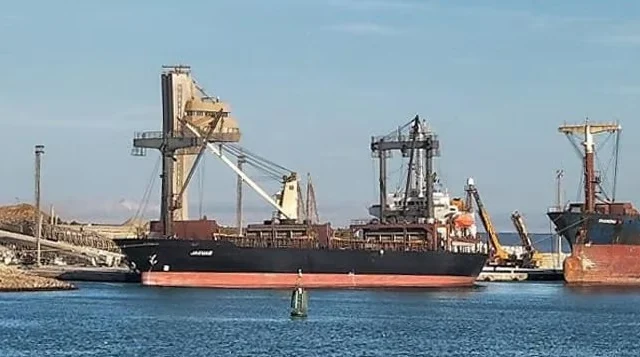
The conflict has disrupted maritime routes and affected food and energy markets. The report identified three existing pathways for conflict spread that are particularly vulnerable: Gulf states are shifting their priorities, Red Sea shipping corridors have been disrupted, and food and energy price shocks are adding fiscal pressure to import-dependent countries.
Kenya is particularly vulnerable because wheat accounts for roughly 24 per cent of cereal consumption, a proportion comparable to Ethiopia and Somalia. During the Red Sea disruptions in 2023, food price inflation in parts of East Africa reached 30 per cent, showing how quickly disturbances along regional trade routes can hit households and economies.
The potential economic impact extends beyond food and fuel prices.
Gulf states provide about 45 per cent of the world’s sulphur and 50 per cent of its urea, according to the report. Disruptions linked to the Iran war could reduce fertiliser supplies during the 2026 planting season, with effects on harvests expected to become apparent in the second half of 2026 and into early 2027.
For Kenya, the potential agricultural shock comes as the country faces significant external financing obligations.
The report identified US$900 million in Kenyan external debt maturities in November and December 2026. Pakistan faces US$1.9 billion and Egypt US$2.3 billion during the same period, putting the combined debt rollover requirement for the three countries at US$5.1 billion.
The timing is critical because the debt maturities coincide with the expected impact of fertiliser shortages on East African harvests. Kenya is also among the countries due to undergo IMF programme reviews, when higher food prices could make fiscal management more difficult.
The report characterised the convergence of IMF reviews, harvest results and debt refinancing in the second half of 2026 “as an unprecedented concentration of risk.”
For Kenya, the GPI assessment means more than a five-place decline in the global rankings. It portrays a country confronting overlapping challenges: insecurity linked to Somalia and the wider conflict system in the Horn, participation in external security theatres, exposure to refugee and arms movements, and vulnerability to disruption along Red Sea trade routes.
Those security challenges are increasingly colliding with food, energy, debt and fiscal risks, making it harder to separate national security, regional conflict and economic stability.