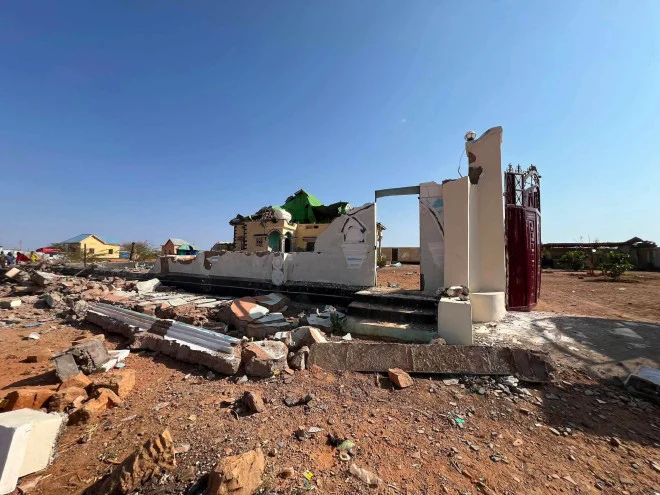
Mogadishu (AX) — Competing accounts have emerged over an overnight explosion at the Doolow residence of former Somali Correctional Service Commander Gen. Mahad Abdirahman Shub, with the federal government denying any role in what Jubaland authorities described as a drone strike.
In a statement issued Friday, Somalia’s Ministry of Information said preliminary reports from security agencies suggested the blast resulted from explosives being prepared inside the house, directly challenging Jubaland’s allegation that the residence had been hit from the air.
- Advertisement -
“The government will immediately appoint a fact-finding committee to conduct a thorough investigation into the incident, its motives and who was behind it,” the ministry said.
The ministry added that Doolow is a strategically important district for security and movement in the Gedo region and said the federal government considers the stability of the area and the protection of residents to be a priority.
It also warned against the spread of what it called misinformation surrounding the explosion, saying unverified claims could fuel confusion at a sensitive moment. According to the ministry, the findings of the inquiry will be made public once the investigation is completed.
Jubaland alleges drone attack
Jubaland State offered a sharply different account of the incident, saying Gen. Shub sustained minor injuries and that four civilians, including his wife, were also wounded.
The explosion reportedly took place at about 11:40 p.m. Thursday at the compound where Shub was staying in Doolow. He was taken to a medical facility in the town, while reports said arrangements were being considered to transfer him to Dolo, Ethiopia, for further treatment.
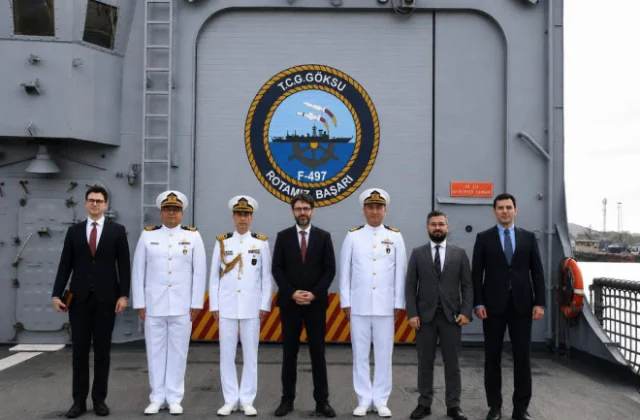
In its statement, Jubaland blamed Turkish drones for the attack and alleged that Shub was targeted because of his political differences with Somalia’s federal government.
“This barbaric attack directly targeted the house of the former Commander of the Federal Government Correctional Service Mahad Abdirahman Aden, who was targeted by the Federal Government and Turkey solely because of his political differences,” Jubaland said.
The regional administration described the incident as a war crime and called for accountability from what it termed the outgoing federal administration and the Turkish government. It also alleged that Türkiye had allowed its aircraft to be used against individuals holding opposing political views.
Jubaland urged the United Nations, the African Union, IGAD, the United States and the European Union to investigate Türkiye’s conduct in Somalia, arguing that its actions did not serve the interests of the Somali people or the wider region.
The administration further said the incident could weaken Türkiye’s position as a mediator in Somalia’s internal political disputes, claiming Ankara had shown support for one side.
Investigation announced amid disputed narratives
No independently verified account of the explosion was immediately available, and the conflicting statements from Mogadishu and Jubaland underscored the political sensitivity of the incident.
The federal government has not only denied involvement but has also advanced an alternative explanation, saying early security assessments indicate the blast may have originated from explosives being handled inside the residence. Jubaland, by contrast, has framed the incident as a deliberate aerial attack.
The divergence is likely to intensify scrutiny of security operations and political alignments in southern Somalia, particularly given the prominence of the injured former commander and the broader tensions involving federal and regional authorities.
Shub’s political connections add to tensions
Gen. Shub is regarded as a close ally of former South West State President Abdiaziz Hassan Mohamed Laftagareen, whose forces attacked Baidoa on Thursday morning, according to the information provided in the competing statements surrounding the wider crisis.
Earlier, South West State’s Council of Ministers classified forces loyal to Laftagareen as a terrorist group and accused them of joining al-Shabab.
Laftagareen rejected that classification, saying his forces have no links to al-Shabab and accusing the federal government and South West authorities of politicizing the security situation.
The timing of the Doolow explosion, coming amid open confrontation and accusations across multiple political fronts, has added another layer of uncertainty to an already volatile environment.
Why Baidoa matters
Baidoa, where fighting linked to Laftagareen’s forces was reported on Thursday, lies about 245 kilometers northwest of Mogadishu and serves as a major humanitarian hub. The city shelters more than half a million people displaced by conflict and drought, making any deterioration in the security situation particularly significant.
The overlap between the Baidoa clashes and the disputed explosion in Doolow is likely to deepen concern among political actors and humanitarian observers, especially as accusations escalate between federal authorities, Jubaland and figures aligned with South West political factions.
Regional and international implications
Jubaland’s direct appeal to international organizations and foreign governments marks an effort to internationalize the dispute, particularly by questioning Türkiye’s role in Somalia. Türkiye has been an important partner in Somalia across security and state-building sectors, making the allegation especially sensitive.
At the same time, the federal government’s decision to announce a fact-finding committee signals an attempt to contain the fallout and present an official investigative process in response to the claims.
Whether that inquiry will narrow the gap between the competing narratives remains unclear. For now, the incident stands as another flashpoint in Somalia’s increasingly strained political and security landscape, with one side alleging a targeted drone attack and the other insisting the blast came from explosives inside the compound.
Until the promised investigation is completed, key details — including the precise cause of the explosion and who may have been responsible — remain disputed.