Jigjiga’s future will be shaped less by the speed of its boulevard upgrades than by whether growth delivers dependable services, secure land ownership and public institutions able to plan beyond the next project cycle.
Jigjiga has outgrown its identity as a small regional town. As the political, administrative, educational and commercial hub of Ethiopia’s Somali Region, it is expanding under pressure from population growth, migration, private building and public investment. That moment presents a rare choice: the city can develop into a carefully planned regional capital, or allow existing infrastructure weaknesses to become entrenched as a long-term urban crisis.
- Advertisement -
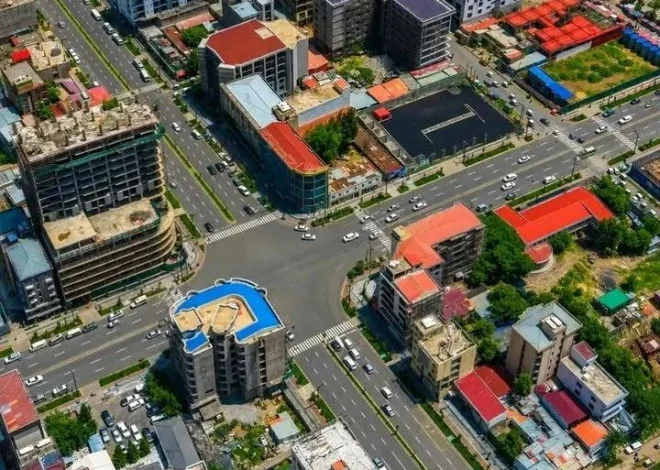
Recent corridor projects have upgraded parts of the road network, pedestrian areas and street lighting while improving the appearance of central districts. Those changes are significant, but a polished corridor alone does not make a city function. Experience elsewhere shows that lasting urban progress rests on systems that are often less visible: water and sanitation, drainage, waste collection, land management, equitable taxation and municipal institutions capable of delivering long-term plans.
The issue, then, is not whether Jigjiga should modernize, but how modernization is defined. For residents, it should bring reliable services to homes and neighbourhoods. For businesses, it should provide consistent rules and fair taxation. For government, it should encourage investment guided by a long-range strategy rather than emergency responses after urban problems become costly and politically harder to solve.
Water is the first test of modernization
Jigjiga’s most immediate urban test is the reliability of its water supply. Shortages and erratic service continue to affect households and businesses despite major spending on water infrastructure. The consequences extend from public health to household finances and commercial activity, with low-income residents frequently paying the greatest effective cost for privately supplied water.
A 2025 investigation by The Reporter estimated that the city needs roughly 40,000 cubic metres of water each day, while current infrastructure provides only a portion of that amount. The report also cited allegations of procurement irregularities, inadequate supervision, delays and technical deficiencies linked to the second phase of the Jigjiga Water Project. The officials and contractor disputed elements of those allegations. Those differing accounts reinforce the need for an independent technical and financial assessment—not to assign blame in advance, but to determine what was delivered, why shortages remain and how subsequent investments can be safeguarded.
The assessment should cover the capacity and condition of wells, reservoirs, transmission pipelines and distribution networks, as well as contracts, payments, oversight and completion documentation. Its main conclusions should be released publicly. Greater openness would help rebuild public confidence and ensure that any future phase reflects the shortcomings and lessons of earlier work.
Jigjiga also needs a water-security plan grounded in credible population forecasts. That plan should protect existing sources, develop sustainable new supplies, limit leakage, increase storage and connect underserved neighbourhoods to the network. Authorities should not approve new settlements without a practical strategy for water, drainage and other essential infrastructure. Extending the city without extending its networks merely moves the shortage to a new location.
Waste, sanitation and drainage are one system
Waste management is sometimes treated as a minor municipal responsibility, yet it directly affects public health, flood risk and civic dignity. An environmental and social assessment prepared in 2023 under Ethiopia’s urban water and sanitation programme found that Jigjiga had no sewer network and collected only about 40 percent of the solid waste it produced. The assessment also expressed concern about the existing disposal site near the Jerer River.
The city needs a complete chain of services, from collection and transportation to sorting, recycling, treatment and environmentally responsible disposal. Collection timetables should be dependable across all neighbourhoods, including those on the urban fringe. Private operators, youth-led enterprises and community groups could contribute to delivery, but the municipality must establish standards, track performance and remain responsible for ensuring coverage.
Water, sanitation, drainage and solid waste cannot be planned in isolation. Blocked drainage channels caused by rubbish can turn heavy rain into a combined flooding and public-health emergency. For that reason, corridor projects should include adequate drainage, utility access and maintenance arrangements from the outset, rather than attempting to add them once roads and pavements are finished.
Plan expansion before it becomes irreversible
The decisions with the greatest long-term impact are increasingly being taken on Jigjiga’s outskirts. New settlements generate immediate needs for roads, water, schools, clinics, markets, public transport and open areas. If those requirements are not mapped and protected before land is distributed, later infrastructure retrofits will be expensive and could force residents to move.
Jigjiga is not starting without a planning framework. The regional government began revising the city’s structure plan in 2019 with technical assistance from UN-Habitat. As described by UN-Habitat, the initiative aimed to connect the citywide structure plan with Local Development Plans while addressing economic expansion, inclusion, environmental pressures and links with surrounding areas. The pressing task now is to implement that framework transparently.
Approved plans should be available to the public, updated at regular intervals and applied consistently to land allocations, construction permits and infrastructure budgets. Before residential plots are released, the city should set aside land for water infrastructure, drainage, roads, schools, health centres, markets, parks, waste facilities and emergency routes. Expansion must also recognize legitimate customary, pastoral and peri-urban land interests through consultation, transparent valuation and fair compensation.
Digital land records need institutional safeguards
A city growing at this pace cannot depend indefinitely on scattered paper files. Jigjiga should create an integrated digital land-information system that connects verified rights with surveyed parcels and authorized land uses. Every recognized parcel should receive a unique identifier and a georeferenced cadastral record.
Ethiopia’s Urban Landholding and Land-Related Property Registration Proclamation No. 1381/2024 establishes a national legal foundation for improved cadastral registration and land-information systems. Digitization, however, must not simply convert contested paper records into electronic ones. Claims need to be verified through transparent processes, affected parties must be able to appeal, and every change to a record should generate an auditable trail.
Technology alone will not deliver that system. The city and its sub-cities require trained planners, surveyors, engineers, GIS experts, archivists, legal officers and information-technology professionals. Jigjiga University and other institutions could contribute through specialist training, applied research and independent technical assessments.
Taxation works only when public trust works
Urban services depend on revenue, and businesses are responsible for meeting lawful tax requirements. Revenue collection, however, must be predictable, transparent and subject to review. Parts of Jigjiga’s business community have questioned estimated assessments, VAT enforcement and digital tax systems. An Addis Standard analysis of the dispute recognized the government’s legitimate interest in compliance while also noting business concerns about consultation, implementation and data protection.
Constructive dialogue is more effective than confrontation. Taxpayers should receive clear written reasons for assessments and have access to a prompt, impartial appeals process. Businesses, for their part, should maintain accurate records, issue lawful receipts and declare income correctly. The aim should not be weaker taxation, but taxation that commands greater confidence.
Regular public reporting would help build that confidence. The city should issue accessible annual accounts detailing revenue collected and spending on water, sanitation, waste services, roads and other municipal functions. Compliance is easier to justify when residents can identify a visible connection between their payments and the services they receive.
A city-building vision for the next generation
Corridor construction can remain part of Jigjiga’s development, provided it strengthens rather than crowds out essential services. With public funds limited, finishing a smaller number of projects properly is more responsible than dispersing budgets across many incomplete schemes. Quality, maintenance and demonstrable improvements in service delivery should carry more weight than the volume of projects announced.
Jigjiga’s current administration merits recognition for visible infrastructure gains. The next stage, however, calls for a wider and more ambitious urban strategy. Leaders must plan for where future residents will live, the sources of their water, the management of their waste, the land required for public facilities and the way municipal revenue will be recorded and spent. These are not matters to postpone until 2040; choices made today will determine the city’s options then.
One practical course would be to designate Jigjiga as the Somali Region’s pilot for comprehensive urban modernization: independently review water investments, establish citywide sanitation and waste services, apply development plans transparently, protect land records and link taxation to accountable service delivery. After evaluation, effective systems could be adapted for other growing regional cities without placing excessive demands on limited public resources.
Jigjiga has the location, economic significance and human capacity to become one of eastern Ethiopia’s leading urban centres. Its progress, however, will not be judged solely by what visitors see along the main avenues. The more meaningful measures are whether a family can open a tap and receive water, whether a neighbourhood is clean and secure, whether a business faces fair taxation, whether a land record is reliable and whether expansion follows a coherent plan.
That is the modernization Jigjiga’s residents deserve—and the benchmark against which the city’s next chapter should be measured.