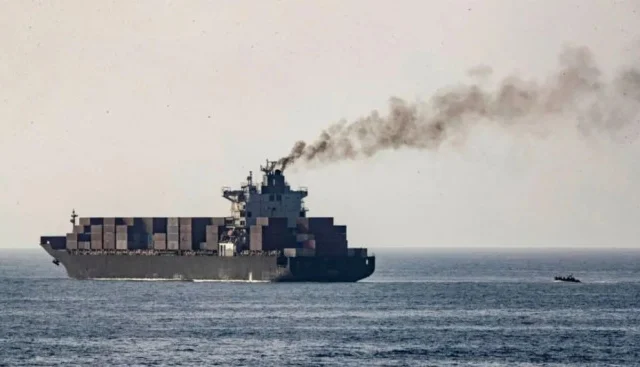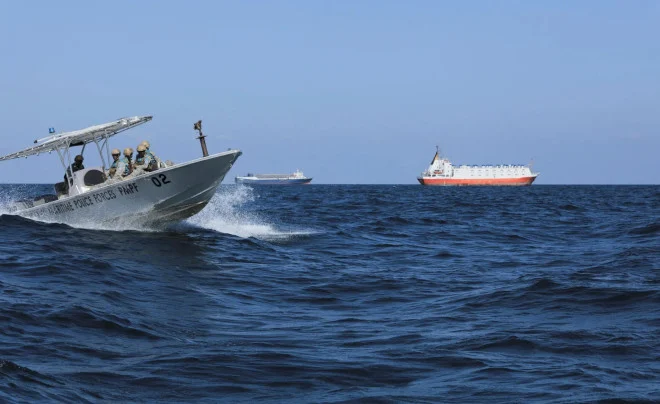
Security forces patrolling the Gulf of Aden off the coast of Puntland State, the semiautonomous Somali region, in 2024.Credit…Abdirahman Hussein/Reuters
Somali pirates seized a suspected Iranian shadow-fleet tanker off Yemen on Thursday, the latest in a string of attacks that experts describe as the region’s most significant piracy surge in more than a decade.
- Advertisement -
The tanker, SIBU 1, is registered under the Eritrean flag but likely belongs to Iran’s shadow fleet, a network of vessels used to move oil internationally, according to TankerTrackers.com, which tracks global shipping. The company said the ship has repeatedly transported fuel to an oil terminal at Ras Isa, a Yemeni port controlled by the Iranian-backed Houthi militia.
SIBU 1 was the second vessel seized by Somali pirates within four days, Somali officials said. Earlier this week, pirates captured the Cameroon-flagged Lutuf, a cargo ship carrying weapons, off the coast of Puntland State, according to Abshir Hashi Ali, director general of the ports ministry in neighboring Galmadug State.
The attacks come years after an international naval campaign sharply reduced piracy in the waters around Somalia. Experts now warn that the conflict involving Iran, regional power struggles and mounting economic pressure on coastal fishermen are creating conditions for piracy to return.
More than 17 piracy-related incidents were recorded in Somali waters and the Gulf of Aden during the first five months of the year, according to the Center for Maritime Security. The incidents included the hijacking of at least three commercial vessels and five dhow boats.
Mr. Hashi said Somali pirates were holding six ships, including the two captured this week. More than 100 crew members were being held hostage aboard those vessels, he said.
Maritime blockades and fighting along vital shipping corridors, including the Red Sea and the Strait of Hormuz, have further complicated security in the region and expanded the opportunities for hijackings and ransom demands.
“The most frequent successful spate of piracy attacks in almost a decade and a half are going virtually unnoticed on account of just how bad the maritime security picture is in the wider region,” said Ian Ralby, president of Auxilium Worldwide, a nonprofit focused on maritime governance.
Col. Mohamed Jama, a senior official with the Puntland State Maritime Police force, said seven armed pirates boarded SIBU 1 about 130 miles off Yemen’s coast before steering it toward Somali waters. The condition of the vessel’s 20 crew members was not known, he said.
The Lutuf had been traveling from Turkey to Mogadishu, Somalia’s capital, when it was captured on Monday, Mr. Hashi said.
Turkey and other regional powers, including the United Arab Emirates, have competed for influence in Somalia. Turkey supports the government in Mogadishu, where it operates a large military facility and trains dozens of Somali forces. The United Arab Emirates has expanded its relationship with Puntland State, which occupies a strategic position where the Gulf of Aden meets the Indian Ocean.
Several hours after the Lutuf was seized off Puntland State, airstrikes hit a suspected Somali pirate boat that had made contact with the pirates aboard the hijacked vessel, Mr. Hashi said.
At least four people died in the strike, though its source was not immediately clear, he said.
Piracy became a major threat in the Red Sea and surrounding waters in recent decades, peaking around 2010, when hundreds of vessels were captured. Shipping companies and insurers lost billions of dollars, including through ransom payments.
The number of attacks fell partly because of international naval operations involving NATO and the European Union. Commercial ships also began sailing farther from Somalia’s coast and adopted defensive measures such as water cannons.
In recent years, Houthi missiles and drones targeting Red Sea shipping in support of Hamas’s war against Israel in Gaza have posed a greater danger to commercial vessels than Somali piracy. The Houthis, an Iranian-backed Yemeni militant group, paused their attacks on shipping last year but resumed threatening vessels in the sea this summer after announcing a blockade on Saudi Arabia in the Red Sea.
A series of attacks near Yemen has fueled suspicions among experts and local officials that Somali pirates and the Houthis may be cooperating.
In May, Somali pirates captured the Togo-flagged oil tanker Eureka off Yemen and redirected it through the Yemeni section of the Gulf of Aden toward Somalia’s coast.
The Houthis and Somali pirates have built an alliance over the years, with the militia sometimes supplying technology and military support. Analysts say the war involving Iran and the resulting disruption to oil shipments may provide additional incentives for cooperation, as elevated fuel prices create a lucrative opportunity.
Experts also point to deeper, long-term causes behind the renewed piracy. Coastal communities have faced increased competition from Chinese and Spanish trawlers, making fishing less profitable, while reduced maritime patrols have given armed gangs more room to operate.
Declan Walsh contributed reporting.
Pranav Baskar is an international reporter at The Times, based in New York.