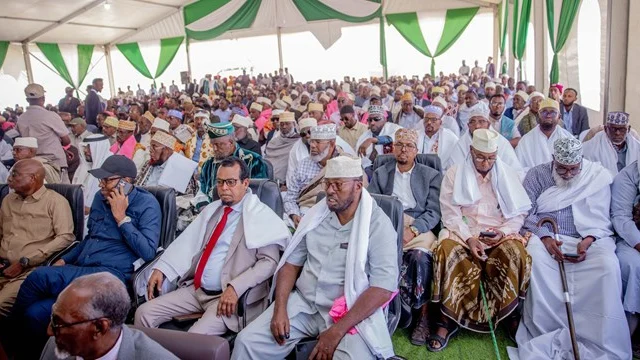

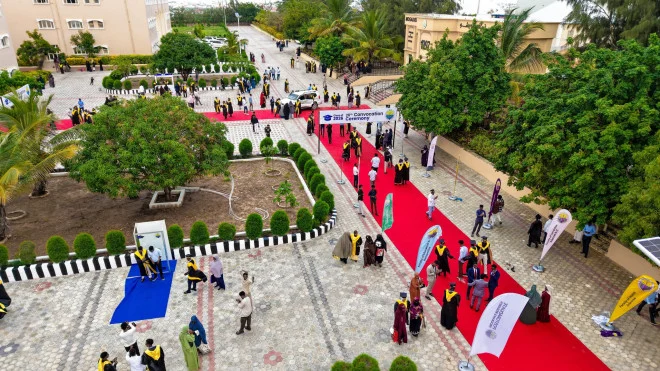
Twenty-nine years after Mogadishu University opened its doors, and as the institution celebrates the graduation of its twenty-sixth cohort, I feel profound joy and pride seeing the seed planted in exceptionally difficult conditions grow, by the grace of Allah, into a respected academic institution. Its branches have extended widely, its work has borne fruit, and its contributions have reached tens of thousands of Somali men and women.
As the University’s first President and one of its founders, I offer my warmest congratulations and sincere best wishes to my sons and daughters graduating with the twenty-sixth cohort. I also congratulate their families, who shared the demands of study, patience, and perseverance and supported them throughout the journey that has now culminated in the award of their university degrees.
- Advertisement -
This occasion marks more than the graduation of another cohort. It is also a moment to consider the journey of an academic institution established amid adversity and its contribution, over almost three decades, to developing people, strengthening civil society, advancing a culture of peace, supporting national reconciliation, and helping rebuild the Somali state.
A University Born in a Time of Adversity
Mogadishu University was not created as an ordinary educational venture. It was a national response to an urgent historical challenge. The University emerged after state institutions had collapsed, Somali society had endured enormous losses of life and property, schools and other educational facilities had been damaged, and many scholars, professors, and skilled professionals had left the country.
In that unsettled period, Somali young people risked losing access to education and, with it, their prospects for the future. At the same time, Somalia needed knowledge and qualified professionals more than ever to confront the consequences of war and begin rebuilding society.
The idea of establishing the University grew from this reality and from the conviction that rebuilding Somalia required more than roads and buildings. It had to begin with people—through knowledge, intellectual growth, sound character, professional ability, and a strong sense of responsibility to society and the nation.
Creating the University in such circumstances was a practical rejection of despair and a declaration that conflict could not end the pursuit of education. It showed that a society able to protect its academic institutions still possesses the capacity to recover and rise.
From the outset, Mogadishu University pursued a mission broader than issuing degrees. It sought to prepare a generation able to think, work, and lead; confident in its identity and values; and receptive to science, knowledge, and useful experience from around the world.
From a Modest Dream to an Academic Institution
The University began with limited resources but with an expansive vision, ambition, and determination. Its path was difficult. Persistent security, financial, administrative, and academic challenges tested the institution. Yet the commitment of its founders and leaders, the public’s confidence in its mission, the dedication of faculty and administrative staff, and the resolve of its students allowed it to survive, expand, and achieve results that would have seemed unlikely in its earliest years.
During its twenty-nine-year history, more than forty thousand students have enrolled in the University’s different stages and programs. Tens of thousands have completed undergraduate and postgraduate qualifications, while thousands of others remain enrolled across its faculties and programs.
Those graduates are far more than entries in institutional records. They include judges, lawyers, journalists, doctors, engineers, teachers, legal professionals, economists, administrators, researchers, and community leaders. Across Somalia and beyond, they have helped restore state institutions, deliver services, support economic development, expand knowledge and culture, and reinforce civil society.
Such results reveal the lasting value of higher education. Each graduate leaves not only with a qualification, but with additional skills that strengthen society as a whole and create another opportunity to confront national challenges and shape a better future.
An Experience That Opened the Way for Higher Education
The hope Mogadishu University inspired among Somalis did not remain an aspiration. It grew, took root, and produced results. The institution’s influence extended beyond its own students and alumni, helping restore confidence that higher education could return to Somalia despite the collapse of the state and the country’s difficult security and political circumstances.
In the years that followed, universities, institutes, and other higher education institutions were established in different parts of the country. Mogadishu University therefore represented more than one institution. It was a pioneering experience that helped launch a wider revival of higher education and demonstrated that Somali society could create, protect, and advance academic institutions even under severe pressure.
Among the University’s most important achievements was its role in reviving hope for young people surrounded by despair. It gave them a chance to study at home rather than face migration, unemployment, or involvement in conflict as their only apparent choices.
Knowledge in the Service of Peace and National Unity
Mogadishu University never treated education as an activity detached from the problems confronting society. It understood learning as a means of building peace and reinforcing national unity.
The University brought together Somalis from different regions and backgrounds to study and work through knowledge, ability, brotherhood, and citizenship, rather than through the divisions and narrow loyalties that had weakened society and prolonged the national crisis.
Its academic environment showed how knowledge can become a bridge toward reconciliation. Classrooms brought together people separated by war and politics, while the institution helped demonstrate that an inclusive national identity is built in places that teach dialogue, respect for difference, acceptance of others, and service to the public good.
Accordingly, Mogadishu University’s mission went beyond teaching and professional specialization. It included promoting peace, reinforcing national unity, confronting ignorance, extremism, and intolerance, and preparing citizens who understand both their rights and their responsibilities to their country and society.
The University’s Role in Strengthening Civil Society
From its founding, Mogadishu University understood that its work could not be limited to the classroom. During years when state institutions were absent or unable to perform their duties fully, it played an important role in strengthening Somali civil society.
After the state collapsed, educational institutions and civil society organizations became among the few structures capable of preserving a measure of social order, delivering services, and creating forums for dialogue and collective action.
Against that backdrop, the University offered an intellectual and academic setting for examining public issues. It organized seminars, conferences, lectures, and discussions on peace, reconciliation, education, development, and state reconstruction. It also encouraged faculty members, students, and graduates to join civic, humanitarian, and public-awareness efforts, while helping produce professionals who later held leadership positions in educational, professional, research, and humanitarian institutions.
In this way, the University became a gathering point for academic and national figures, a platform for peace, citizenship, and tolerance, and a link between scholars, intellectuals, and community leaders.
This engagement was not an optional supplement to its educational work. It followed naturally from the University’s belief that a university is a social institution and that knowledge should be converted into a force for reform, stability, and public service.
That commitment helped sustain civil society during the years without a central state, preserve a degree of social cohesion, and encourage communities to help address crises rather than wait solely for political solutions from outside.
Participation in the Arta Reconciliation Process and State Reconstruction
Mogadishu University’s contribution to national life went beyond civil society and included direct involvement in reconciliation and the reconstruction of Somali state institutions.
This was evident in its participation in the Somali reconciliation process held in Arta, Djibouti. The process resulted in the creation of the Transitional National Government and the formation of the first national parliament in nearly a decade after the collapse of the central state.
The University understood that reconciliation could not succeed through political actors alone. It also required scholars, experts, and civil society institutions, along with legal, administrative, and constitutional expertise.
With that understanding, several of the University’s academics and experts took part in the Arta Conference process. They contributed their legal and academic knowledge to drafting the constitutional document that governed the transitional period and provided a framework for the new government institutions.
The involvement marked an important shift: the University moved from safeguarding education during national collapse to helping shape the legal and political foundations of an emerging state. It offered a practical illustration of how universities can assist societies moving from war to peace and from institutional breakdown toward state reconstruction.
Its work did not conclude when the reconciliation conference succeeded and transitional institutions were established. The University later helped train members of the first Somali parliament formed after the process, familiarizing them with the duties of the legislative branch, the principles of parliamentary practice, oversight and lawmaking mechanisms, and the obligations of representatives to protect the public interest.
Preparing parliamentarians was a significant contribution to institutional capacity. A parliament is not fully functional merely because its members have been selected; those members must also be equipped to carry out their constitutional responsibilities effectively and responsibly.
Through this work, Mogadishu University made clear that state reconstruction is not simply a political undertaking. It is also an educational, institutional, and knowledge-based effort requiring universities, research centers, and national expertise.
The University’s role in the Arta reconciliation process, its participation in drafting the constitutional document, and its training of parliamentarians remain defining chapters in its history. Together, they reflect the connection between its academic, social, and national responsibilities and confirm that the University was not a passive witness to events, but an active partner in restoring peace and state institutions.
Graduates and the Responsibility of Carrying the Mission
Graduation closes one phase of learning but opens another defined by responsibility. A degree reaches its full value only when its holder turns knowledge into useful action, professional excellence, good character, and genuine service to others.
For that reason, I call on my sons and daughters among the graduates to carry the University’s mission wherever life takes them. They should demonstrate integrity, competence, and discipline; apply their education to rebuilding the country and addressing the needs of their communities; serve the vulnerable and those in need; and place the public interest ahead of narrow personal gain.
Somalia expects its graduates to help deliver solutions and to contribute to a state governed by institutions and law. Their responsibilities include advancing education, healthcare, the economy, and public administration, while reinforcing reconciliation, justice, and citizenship.
Nations do not advance simply because more people possess academic qualifications. They progress when knowledge shapes conduct, education produces results, competence is matched by responsibility, and personal achievement becomes a contribution to society and the nation.
I also urge the graduates to continue learning. Scientific and technological change is accelerating, and their university education is only the foundation of a lifelong intellectual journey. Continuing education, thoughtful engagement with modern developments, and adherence to professional standards and ethics will remain essential to their future success.
Honoring Those Who Built the Journey
At this important moment, we must recognize everyone who helped establish and preserve this institution over the years: the founders who carried the idea and believed in its promise, the Boards of Trustees and successive administrations, the professors who gave generously of their knowledge and time, the administrators and staff who served with commitment, and the students and families who placed their confidence in the University.
I extend particular thanks and appreciation to the current President and University leadership for their efforts to advance its mission, improve academic and administrative performance, and protect the standing it has earned in Somalia and the region.
We also remember those who took part in this journey and have since passed away after leaving their imprint on the University’s growth and on its service to students and society. We ask Allah to reward them generously and to count the knowledge, work, and contributions they left behind as an enduring charity among their good deeds.
The Responsibility of the Next Stage
Mogadishu University has achieved much, but the road ahead remains long and the challenges of the coming period demand a renewed vision.
The University must now give greater attention to educational quality, scientific research, and the responsible application of modern technologies and artificial intelligence. It must align academic programs more closely with society’s needs and the labor market and develop strong partnerships with universities and institutions in the region and around the world.
It should also expand research into Somalia’s most pressing challenges and develop solutions suited to the country, especially in state building, reconciliation, governance, economic development, environmental protection, food security, administrative reform, and the empowerment of youth and women.
Meeting these demands means moving from consuming knowledge to producing it, and from simply teaching ready-made answers to examining Somali realities through rigorous scientific research. In doing so, the University can become a source of ideas, policies, and initiatives that help shape the country’s future.
An institution that remained resilient through years of adversity is capable, by the grace of Allah, of progressing beyond survival and continuity toward leadership and influence. It can become a center for producing knowledge and solutions, and an academic beacon serving Somalia and the wider Horn of Africa.
Congratulations and Renewed Hope
With all my heart, I congratulate the graduates of the twenty-sixth cohort and share the happiness of this achievement with them and their families.
I tell them: Your University has equipped you with knowledge and placed in your hands keys to the future. Guard its reputation, represent it with honor, and turn your personal accomplishments into a means of serving your society and your country.Congratulations to Mogadishu University as it marks twenty-nine years since the beginning of its mission, and congratulations on this fruitful generation of graduates and professionals.
If the University began amid adversity as an effort to plant hope, it now stands as evidence of the Somali people’s ability to build, endure, and renew.
We ask Allah to protect Mogadishu University, bless all who serve it, grant success to its sons and daughters, and enable it to remain a beacon of knowledge, a builder of people, a bridge for peace, and an active partner in creating Somalia’s state and future.
_________________________________________
Dr. Ali Sheikh Ahmed
A prominent Somali academic and intellectual, one of Mogadishu University’s founders and its first President. For several decades, he has contributed to the advancement of education and to strengthening Islamic outreach and community engagement in Somalia.