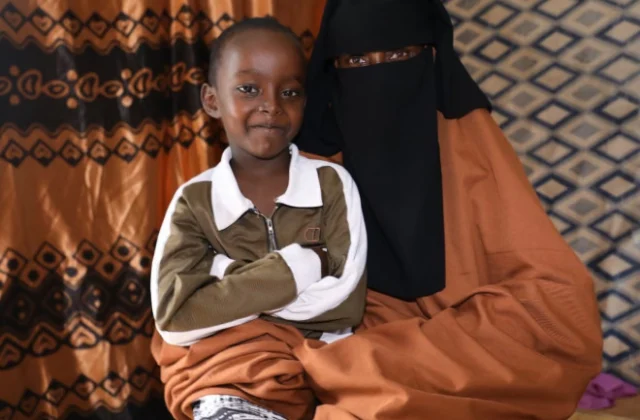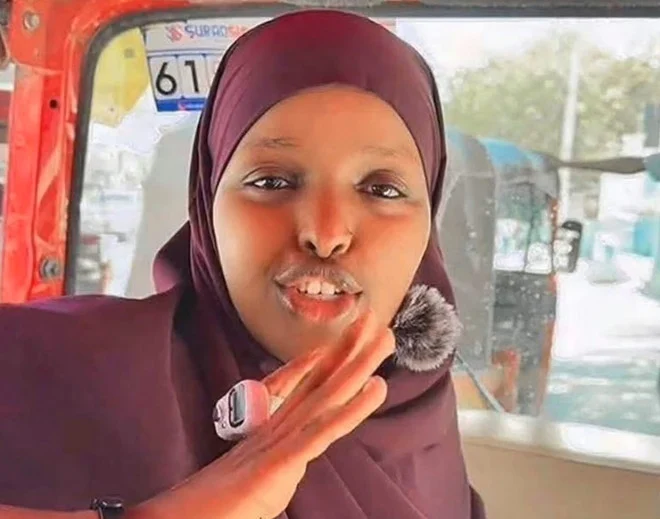
The Somali activist Sadia Moalim Ali was detained after using TikTok and Facebook to criticize forced evictions, soaring fuel prices and nepotism. Photograph: Handout
“Why don’t you just drive your tuk-tuk and do your work?” the judge asked after videos from my social media accounts were played in court. I had used TikTok and Facebook to discuss problems affecting Somalia, including forced evictions in the capital, Mogadishu, rising fuel costs and nepotism within the government.
- Advertisement -
I also spoke about trying to find work in hospitals and government departments. On three separate occasions, I was told I would have to provide a sexual favour in exchange for a job.
In Somalia, women are denied the right to participate fully in society or express themselves. They are not respected. Women who speak out risk violence – and may even disappear.
Two days before my court appearance, two police officers abducted me and forced me into a vehicle. At the police station, they slapped me and smashed my head against a wall. I was denied access to a lawyer, and no formal charges were brought against me.
The judge ordered that I remain in custody while the investigation continued. I was taken to Mogadishu Central prison, where about 120 women were held in the female wing, including roughly 30 in my cell. The prison dated back to the colonial era and had never been renovated. There were no windows or lights, the smell was unbearable and the only toilet had no door, leaving us without privacy.
My first night was terrifying. Some of the women imprisoned with me belonged to [jihadist militant group] al-Shabaab. They discussed killings, explosions and plans to target prominent people. I was too frightened to sleep.
Breakfast each day consisted of tea and a single slice of stale bread. About three hours later, we received half a plate of rice. Guards demanded bribes before allowing prisoners outside to get some sunlight.
Many women were depressed and suffering from health problems. I developed skin complaints, lost a significant amount of weight and stopped having periods.
As the days passed, I heard more about the women around me. One had been jailed while pregnant after her former husband was suspected of belonging to al-Shabaab and irregular payments were discovered in their joint bank account.
With help from other prisoners, she gave birth to her daughter inside the cell. The child is now 18 months old. I found the situation devastating: the baby had committed no crime and deserved a better life.
Whenever I saw the child, I thought of my own daughter, whom I had been breastfeeding when I was arrested. Two girls, aged 13 and 17, were also imprisoned with me. Other women had been jailed over debt or unpaid fines. Many had never had a lawyer and had received prison sentences lasting years without understanding what offence they were accused of committing.
I saw that many of the women had received no education and had been exploited. I began teaching some of them to read and write.
I managed to obtain a phone and contacted a local radio station from inside the prison. I agreed to the interview to protect myself, draw attention to my situation and let people know what was happening to me.
An hour after the interview aired, a group of men arrived at my cell and took me to a room used for torture and punishment. The prison commander began stripping me, removing my headscarf and dress, and beating me. My hands were bound behind my back. The men ordered me to crawl on my chest while throwing water over me. CCTV cameras were installed in the room.
I spoke to the media again after that – this time to the Guardian. I wanted to make clear that I would not be silenced and that the punishment would not end my campaign. Even if I was tortured, I would continue to rise up and speak.
Following publication of the interview, I was threatened with rape. Prison officials said they would film it and publish the video.
Three men pushed me to the floor and pulled off my headscarf before sexually assaulting me. The attack was recorded on a mobile phone.
I eventually obtained a lawyer. After a month in prison, I attended the first of three court hearings. Prosecutors presented the Guardian article about my torture and accused me of spreading anti-government propaganda. At that moment, I realised the article had struck a nerve.
On 25 June, I was convicted of insulting government institutions and sentenced to three years in prison. It felt like being shot in the head. I began shaking and my vision blurred.
My lawyer appealed, and reports that people were campaigning for my release gave me hope. On 12 August, the Banadir [region] court of appeal overturned both my conviction and three-year sentence. I was released that same day.
When I saw my daughter again, she did not recognise me. What she had endured during my absence felt worse than anything done to me.
The threats continued, along with pressure to stop speaking publicly. Members of al-Shabaab had followed my case and wanted me to join them. Fearing for my life, I left Somalia.
I am now recovering from what happened. I want mental health support because I still experience flashbacks to my time in prison. I am also writing a book about my experiences.
Through my social media channels, I continue to campaign for some of the women I met in prison. They are invisible, and I want to help secure their freedom.
As told to Sarah Johnson
Sadia Moalim Ali is a rickshaw driver and social activist