

Ethiopia renews push for access to Red Sea
ADDIS ABABA, Ethiopia — Ethiopia’s drive to secure a route to the Red Sea has returned to the centre of regional tensions, with Prime Minister Abiy Ahmed declaring that his landlocked country will continue pursuing maritime access despite objections from coastal neighbours.
- Advertisement -
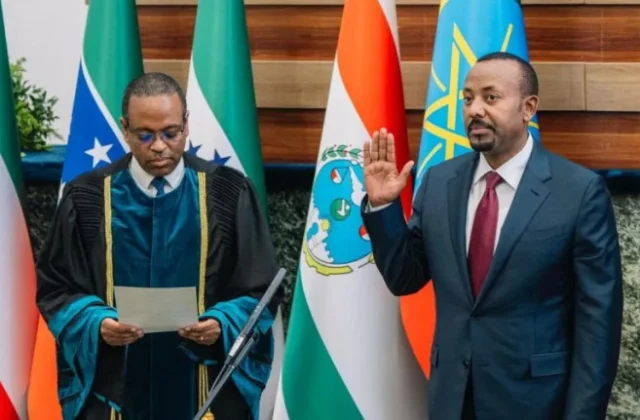
Speaking to parliament on Monday after taking the oath for another five-year term, Abiy said access to the sea remained a central national interest. He pledged that his government would maintain efforts to establish a route for Ethiopia’s maritime trade.
“Based on the principle of reciprocity, we will work diligently to ensure that Ethiopia obtains access to the sea,” Abiy said, without identifying the country or territory through which Addis Ababa hopes to secure that access.
Ethiopia has been landlocked since 1993, when Eritrea — previously part of Ethiopia — gained independence and control of the country’s coastline. It has since depended largely on neighbouring countries, especially Djibouti, to handle most of its imports and exports by sea.
Abiy’s statement comes as Ethiopia’s relations with several countries in the Horn of Africa and beyond deteriorate. Addis Ababa has accused Eritrea, Egypt and Sudan of backing forces opposed to the Ethiopian government, particularly amid renewed tensions linked to Tigray. All three countries have rejected those accusations.
Eritrea has separately accused Ethiopia of seeking maritime access through Eritrean territory. Tensions with Egypt and Sudan have also centred on the Grand Ethiopian Renaissance Dam (GERD), which Cairo and Khartoum fear could affect the flow and availability of Nile waters.
On Sunday, the leaders of Egypt, Eritrea, Somalia and Sudan met in New Alamein, Egypt. In a joint statement, they said the countries bordering the Red Sea should retain responsibility for administering and securing the waterway. The leaders also cautioned against steps that could threaten Egypt and Sudan’s access to Nile waters.
Ethiopia’s Foreign Ministry responded a day later, saying discussions over the Red Sea must recognise Ethiopia’s “legitimate interests and longstanding ties” to the waterway.
Somali President Hassan Sheikh Mohamud, who took part in the New Alamein meeting, congratulated Abiy on his renewed mandate. He also called for closer ties between Somalia and Ethiopia and greater efforts to advance peace and stability across the Horn of Africa.
Hassan has previously said Somalia would not object to Ethiopia obtaining maritime access through Somali territory. He has, however, insisted that any such agreement must be formally negotiated by the two governments and uphold Somalia’s sovereignty.
Abiy’s latest comments follow reports of renewed fighting in northern Ethiopia, particularly in Tigray. They also come as relations between Ethiopia and Eritrea have entered an especially fragile period after a diplomatic rupture between the neighbouring countries.
The competing positions have added to the pressures facing a volatile region, where questions over Red Sea access and security overlap with disputes over Nile waters and continuing armed conflicts.
Ethiopia says it intends to pursue maritime access through dialogue and cooperation. Coastal states, meanwhile, have stressed that they hold sovereign authority over decisions affecting the Red Sea.
AXADLETM