Mogadishu (AX) — Ethiopia is considering pulling more than 3,000 troops out of Somalia as renewed violence inside the country increases pressure on Prime Minister Abiy Ahmed’s government, Bloomberg reported this week.
The withdrawal could start within weeks, according to people familiar with the plan who spoke to Bloomberg anonymously because they were not authorized to discuss the matter publicly.
- Advertisement -
Neither Ethiopia nor Somalia has confirmed the reported move, and the African Union has made no announcement indicating any change to Ethiopia’s deployment.
A Somali Defense Ministry official told Bloomberg that Mogadishu had not received notice from Addis Ababa.
“Ethiopia has not informed us of any plan to withdraw its troops from Somalia,” the official said.
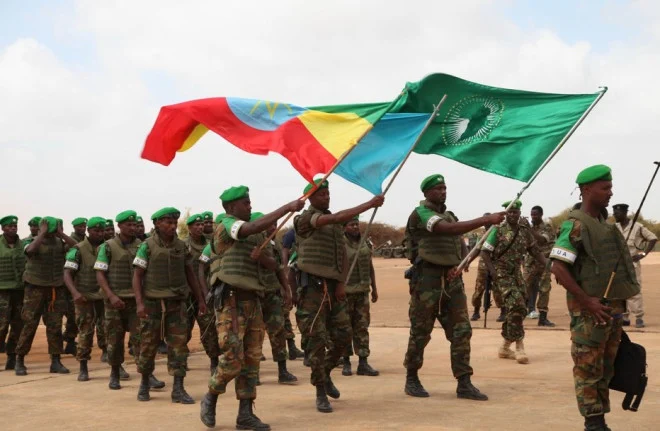
Ethiopia currently deploys forces in Somalia through two channels: the African Union Support and Stabilization Mission in Somalia (AUSSOM) and bilateral security agreements with the Somali government.
Roughly 2,500 Ethiopian soldiers are assigned to AUSSOM, while other Ethiopian troops operate separately under bilateral arrangements. For years, Ethiopian forces have been stationed in regions including Bay, Bakool, Gedo and Hiiraan, several of them bordering Ethiopia.
It remained unclear whether the reported withdrawal would involve the AUSSOM contingent, the bilateral deployment or both.
Ethiopia is among the regional countries providing troops to AUSSOM. The African Union mission assists Somali forces in their campaign against al-Shabab while managing a gradual handover of security duties to Somalia’s national forces.
The reported plan emerges as Ethiopia confronts a worsening security crisis at home.
Fighting has escalated in the northern Tigray region between federal forces and Tigrayan fighters, placing a November 2022 peace agreement at risk. That accord ended a two-year civil war. Recent clashes have involved artillery fire and troop movements near Mekelle and elsewhere in Tigray.
Relations with neighboring Eritrea have also deteriorated. Ethiopia expelled 10 Eritrean diplomats this week, alleging that Asmara was backing armed groups in Tigray. Eritrea denied the accusations and cut diplomatic ties with Ethiopia.
The renewed fighting comes alongside continuing violence in other parts of Ethiopia, including clashes involving armed groups in the Amhara region.
Ethiopia’s military involvement in Somalia dates back nearly two decades. Its forces entered the country in large numbers in 2006 to support the internationally backed transitional government against the Islamic Courts Union, and they have since remained central to regional operations against al-Shabab.
Ethiopian troops subsequently served in successive African Union missions, including AMISOM and ATMIS, before AUSSOM launched operations in January 2025.
AUSSOM’s future is already facing scrutiny amid long-running concerns about funding and the speed at which Somali forces can take over areas currently protected by African Union troops.
African Union leaders meeting this year have repeatedly urged the international community to provide predictable, sustainable financing for the mission. They have warned that security gains could be threatened without sufficient support for both AUSSOM and Somalia’s security forces.