
More than 500 Somalis in Minnesota have received deportation orders this year as the Trump administration accelerates asylum proceedings and tightens access to legal protection.
The Bishop Henry Whipple Building during Operation Metro Surge. (Christopher Magan/The Minnesota Star Tribune)
- Advertisement -
Since February, more than 1,000 Somali asylum-seekers nationwide have been ordered removed, underscoring the Trump administration’s continued enforcement push following last winter’s federal operation in Minnesota.
Somalis living in Minnesota account for more than half of those deportation orders — nearly 10 times the number recorded in 2025, according to a Minnesota Star Tribune analysis of federal data.
Most Somalis living in Minnesota are U.S. citizens, hold legal status or were pursuing asylum claims. But earlier this year, the Trump administration ended a temporary legal protection for Somalis in the United States and moved hundreds of cases quickly to immigration judges who seldom approve asylum applications.
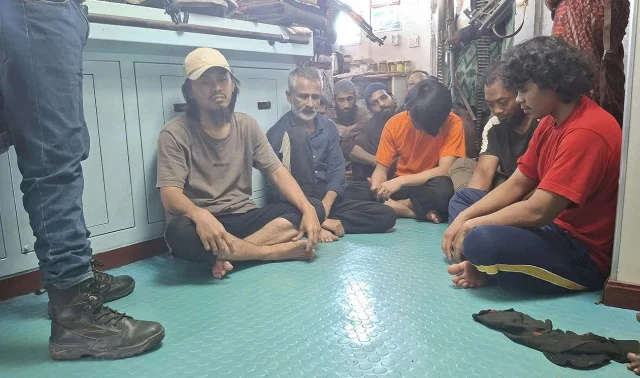
More than 500 Somali immigrants from Minnesota received removal orders this year. Some have already been deported, while others were transferred to detention facilities as distant as Guantánamo Bay, Cuba, including at least two Minnesotans.
Immigration attorney Marc Prokosch called the transfers to the military detention facility a “political scare tactic.” He represented four men who were informed they would be deported to Somalia but spent nearly a month at Guantánamo Bay before being flown to Africa.
“Think of the taxpayer dollars it takes to do this,” Prokosch said. “They are using every lever possible to terrorize and scare people.”
Few Somali asylum seekers have felony convictions. But a spokesperson for the U.S. Department of Homeland Security said President Trump and Homeland Security Secretary Markwayne Mullin were acting to protect Americans from criminals.
“If you come to our country illegally, you could end up in Guantánamo Bay or even another third country,” the Homeland Security spokesperson said.
Somali asylum case outcomes under President TrumpOperation Metro Surge marked the start of an ongoing campaign by immigration officials to accelerate cases involving Somali asylum seekers. Case decisions and removal orders have surged in 2026.
Changing tactics
Trump said last December that Operation Metro Surge was intended to combat “Somali bandits” accused of defrauding social services programs.
Yet federal records show that only about 100 of the 3,800 immigrants detained during the operation were Somali, according to records compiled by the Deportation Data Project.
Federal officials soon shifted their approach.
Trump announced in mid-January that he would terminate Temporary Protected Status for Somalis.
In February, the administration established what became known as the “rocket docket,” enabling judges to conduct online hearings for Somali nationals. Immigration attorneys were forced to prepare for cases that had originally been scheduled at least a year later. Nearly every removal decision during the first eight months of 2026 involved Somali immigrants placed on the expedited docket.
Immigration attorneys say a docket reserved for people from one nationality is unprecedented, but they have been unable to halt the practice. The hearings generally take place outside public view and are limited to attorneys, immigrants and their relatives.
A spokesperson for the immigration court said the system is focused on the “timely completion of all cases” and pointed to federal law requiring asylum applications to be decided within 180 days.
“Unnecessary delay hurts both aliens with meritorious claims and the American public who wish to see aliens with non-meritorious claims removed as quickly as possible,” the court spokesperson said in a statement.
Still, a nationwide backlog of 2.3 million pending asylum applications means cases are seldom resolved rapidly.
In July, federal officials further restricted one path available to Somali asylum seekers by moving oversight of people seeking protection from a federal agency to immigration court.
Osman Ahmed, founder of Talo Table, an organization focused on civic and community engagement, said the increase in removal orders has affected Minnesota’s Somali community more broadly than the federal operation itself.
“This has been much more dangerous and harmful to families,” Ahmed said.
Somalis also are no longer assured asylum when they face threats from the terrorist group Al Shabaab or retaliation over interclan marriages.
“Regardless of how much evidence individuals have, it doesn’t matter,” Ahmed said. “Judges are not questioning anything they are being told.”
Third country fears
Before the men were deported this month, Prokosch represented four of the eight detainees held at Guantánamo Bay.
Adam Abdullah, 31, was arrested in St. Paul in December during Operation Metro Surge. Although his record included only a few traffic tickets, he had a removal order. Immigration and Customs Enforcement has characterized Abdullah and the other men sent to Cuba as security threats.
“This flight of illegal aliens to Guantánamo Bay included some of the worst of the worst with criminal histories including aggravated assaults, weapons offenses, robbery, multiple larcenies, police obstruction, possession of burglary tools, receiving stolen property, trespassing, unauthorized use of a vehicle, multiple drug charges and DUIs,” ICE said in a prepared statement.
Prokosch learned Sept. 24 that the men were being flown from Guantánamo Bay to Kenya. ICE has not operated direct flights to Somalia in nearly a decade, but the agency has transported detainees to neighboring countries, including Kenya and Uganda.
In some cases, the detainees were later sent onward to Somalia. Prokosch said he spoke with Abdullah after Abdullah arrived in Mogadishu.
Prokosch and other immigration attorneys also fear Somali asylum seekers could be transferred to one of the increasing number of African countries accepting third-country removals. Since Trump returned to office, more than 25,000 people have been deported to nations where they have no ties.
“Third country agreements are helping close one of the loopholes in our immigration system that has far too often been abused with false claims,” ICE said in a prepared statement.
Questionable evidence
The Trump administration is deporting Somali asylum seekers to Somalia even as the U.S. government has issued conflicting assessments of the country’s safety.
Homeland Security and Justice Department officials have filed a 270-page packet in dozens of immigration cases arguing that Somalia is safe, despite warnings from the U.S. State Department.
The filing cites portions of news reports depicting Somalia as secure while leaving out passages describing continuing violence.
“Mogadishu is actually safe,” the exhibit quotes a Somali woman visiting from Canada who appeared in an Associated Press report about a new bowling alley. The filing does not emphasize that the alley needed to hire private security. “Mogadishu remains vulnerable to militant attacks, however, with security measures like check points and heavily guarded zones part of daily life.”
The filing also omits the State Department’s current travel advisory warning of “crime, kidnapping, terrorism.” U.S. government employees cannot leave the U.S. embassy compound at Mogadishu International Airport without armed protection.
One category of applicants continues to receive asylum protection: women who have experienced or faced threats of female genital mutilation.
Refugee and human rights organizations say female genital mutilation, or cutting, remains nearly universal in Somalia. Homeland Security officials continue to classify the practice as a human rights violation and child abuse.
Of the 148 Somali applicants who won their immigration cases in 2026, more than 70% were women.
___________________________
Christopher Magan covers Hennepin County.