
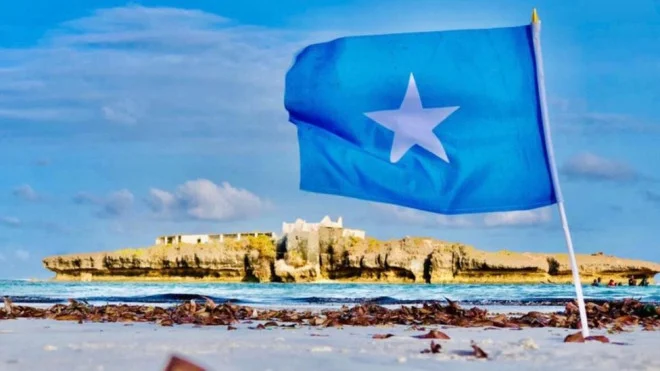
What went wrong in Somalia? Do we know what is holding us back, and who is genuinely opposed to Somalia becoming a powerful country that develops its resources, builds a strong military, and earns its rightful status on the African continent as it strives for progress?
It is certain that these questions weigh heavily on the minds of many Somalis. Nevertheless, many people still do not understand why the country has reached this point. To determine where things went wrong, we must look back at the history and interconnected events that brought the country to its current situation.
Since gaining independence on July 1, 1960, Somalia has been among the countries at the forefront of defending the rights of the Palestinian people. It provided full support to the Palestinian brothers and sisters, expressing that support through politics, religion, and even national literature.
The former president of the country, Mohamed Siad Barre, may Allah have mercy on him, was among the world leaders who openly condemned, in public forums, the abuses Israel committed against the Palestinian people. This part of the historical record is attested to by many people.
What followed that period? I argue that Somalia became the first country in which the West and Israel tested a plan known as regime change. According to the information available to me, the first attempt took place in 1979, when Israeli intelligence organized an unsuccessful coup.
I also believe that Israeli intelligence subsequently began training and arming clan-based rebel groups. Officers from the Somali National Movement and the Somali Salvation Democratic Front became the first groups to receive training in Israel. Meanwhile, Western intelligence agencies, particularly those of the United States and Italy, were financially supporting the faction of the United Somali Congress.
Following the car accident involving Mohamed Siad Barre in 1986, control of the country gradually shifted into the hands of members of his family. The clan-based rebel groups took advantage of the resulting vacuum and intensified their armed activities. The Barre government launched its first counteroffensive in the northern regions in 1988. After the populations of those areas were displaced, the government began losing control over the country’s regions.
In my view, Israel helped accelerate the rebels’ advance as they seized parts of the country. The fighting eventually reached Mogadishu on December 31, 1990, marking the beginning of the total collapse of the central government.
What resulted from the collapse of state institutions?
Somalia had no plan or preparations for the situation that would follow the overthrow of Mohamed Siad Barre. The groups that had fought his regime failed to reach an agreement and turned against one another, with their rivalry evolving into clan conflict. Some traditional elders worked to preserve what remained of the state, but once their efforts became known, several intellectuals were massacred in a house where they had gathered.
What followed was widespread clan warfare, which I believe the West and Israel continuously funded in order to keep Somalia in endless turmoil and prevent the emergence of a strong government.
After the clan war subsided and the country became divided, foreign funding was redirected to the leaders who participated in establishing the government elected in Kenya in 2004. I believe Ethiopia acted as an agent for the West and Israel in this effort. On October 10, 2004, Abdullahi Yusuf, formerly an officer in the SSDF, was elected president.
At the same time, Mogadishu’s faction leaders were receiving financial support while continuing to fuel chaos and instability until 2006.
In 2006, I support my argument that foreign funding reached the Union of Islamic Courts, which took control of Mogadishu and the two Shabelle regions. The main objective was to pave the way for a large Ethiopian force to enter Somalia. According to my information, the West supported both Ethiopia and the Islamic Courts while serving Israel’s interests.
The Union of Islamic Courts received broader public support than those operating behind the scenes had expected, as Somalis demonstrated that they preferred a system based on Islamic Sharia to clan administrations. I argue that the United States subsequently split the Islamic Courts into two factions after reaching an agreement with its senior leadership. One faction joined the government following the Djibouti talks and was allocated 250 parliamentary seats, while the other transformed into the terrorist group Al-Shabaab.
I am fully convinced that the Western plan was to keep Somalia in perpetual war while simultaneously supporting both the Somali government and Al-Shabaab.
Türkiye’s role in Somalia’s recovery
In 2011, Recep Tayyip Erdoğan, who was then the prime minister of Türkiye and is now its president, took a historic step that refocused the world’s attention on the country’s situation. Sustained humanitarian assistance followed, and Türkiye helped rebuild roads and hospitals and develop the port and airport. It also provided education to Somali students, with thousands of young people educated in Türkiye now working in Somalia.
The cooperation between the two countries also extended to training and equipping a capable national army, as well as helping Somalia extract oil and other natural resources.
When Somalia began recovering from its difficulties, I argue that Israel, this time acting through the United Arab Emirates, launched a strong campaign against Türkiye and directly supported the government’s opposition. I also believe that efforts were made to revive inter-clan conflict, particularly in the Hiiraan and South West State of Somalia areas.
In my view, the UAE and Israel influenced some of the countries that contributed troops to the AUSSOM mission. I also believe that some of those forces, particularly Ethiopian troops, supported Al-Shabaab. I regard this as the first evidence indicating Israeli funding of both sides.
I argue that Israel, with support from the United States, succeeded in regime change in Iraq, Syria, Iran, and Libya, but failed in Iran, Somalia, and Sudan. Regarding the diplomatic rivalry between Israel and Türkiye, I believe Türkiye has prevailed in Libya, Sudan, and Syria. I also believe it will prevail in Somalia.
My concerns do not end there; they also extend to Somalia’s current government. I believe Israel has officials and influence within the government’s security and financial institutions. I also believe it has business connections in Mogadishu involving hotels and companies operating in the Halane compound.
What, then, will the Somali government do about all these issues? I leave the investigation and response to this matter to the Somali government.
Prof. Isse Sheikh Ali, a lecturer at Somali National University.