When discussing state-building, peacebuilding, and conflict management, one of the most important terms used consistently is the national political agreement. It is an essential foundation for any country seeking to move beyond periods of division and advance toward stability and sustainable development.
This agreement is not merely a document signed by leaders; it is a profound process for establishing broad consensus on how the country should be governed, how power should be shared, and how citizens can live together peacefully.
What Is a National Political Agreement?
A national political agreement is a mutual understanding or broad accord among political leaders, social stakeholders, and various groups with influence in the country. Its primary purpose is to establish the basic rules governing the country and political competition.
This agreement is described as a new “social contract” that addresses past disputes while paving the way for an inclusive system in which all parties can have confidence.
-
- It Is a Broad Consensus: It is not a compulsory law imposed by one side, but an agreement reached through dialogue and compromise.
-
- It Is a Guide to Governance: It provides the foundation for building state institutions and reforming the constitution.
-
- It Is a Guardian of Peace: It reduces fear and mistrust between communities or political parties.
Its Importance in State-Building
Countries that have experienced conflict or are undergoing transitions cannot achieve lasting peace without a strong political agreement. The agreement’s importance includes:
-
- Political Stability: It eliminates uncertainty by creating a stable environment in which vital national issues can be addressed jointly.
-
- Legitimacy of State Institutions: When all parties agree on the existing system, state institutions gain public support and recognition.
-
- Preventing Confrontation: It resolves disputes arising from electoral competition or resource-sharing before they turn violent.
-
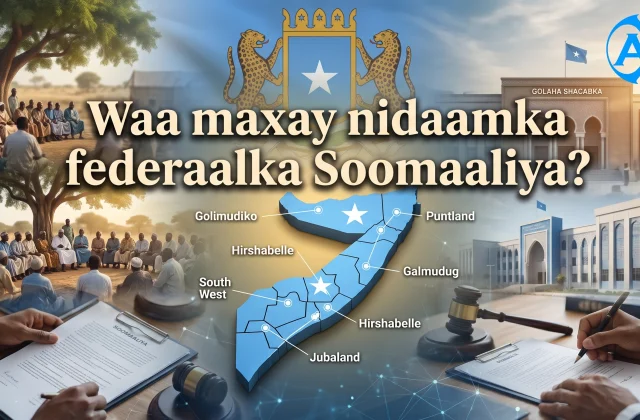
- Uniting the Country’s Regions: It facilitates cooperation between the federal government and the country’s administrations, such as Puntland, Jubaland, Galmudug, Hirshabelle, and South West State, as well as relations with other areas in the region, such as the North Western State of Somalia.
Key Elements of a Political Agreement
Every national political agreement is based on several important pillars. If any one of them is absent, it becomes difficult for the agreement to succeed:
-
- Power-Sharing: Defining how senior positions and the administration of the country will be shared so that no one feels marginalised.
-
- Resource-Sharing: Establishing clear procedures for managing national revenues, natural resources, and international assistance.
-
- Security Arrangements: Building a neutral national army, integrating armed forces, and implementing an effective disarmament plan.
-
- The Constitution and Laws: Establishing a process for completing the provisional constitution and holding free and fair elections.
-
- The Judiciary and Justice: Establishing an independent and trusted judiciary and resolving historical grievances among communities or regions.
Origins and Circumstances in Which They Are Reached
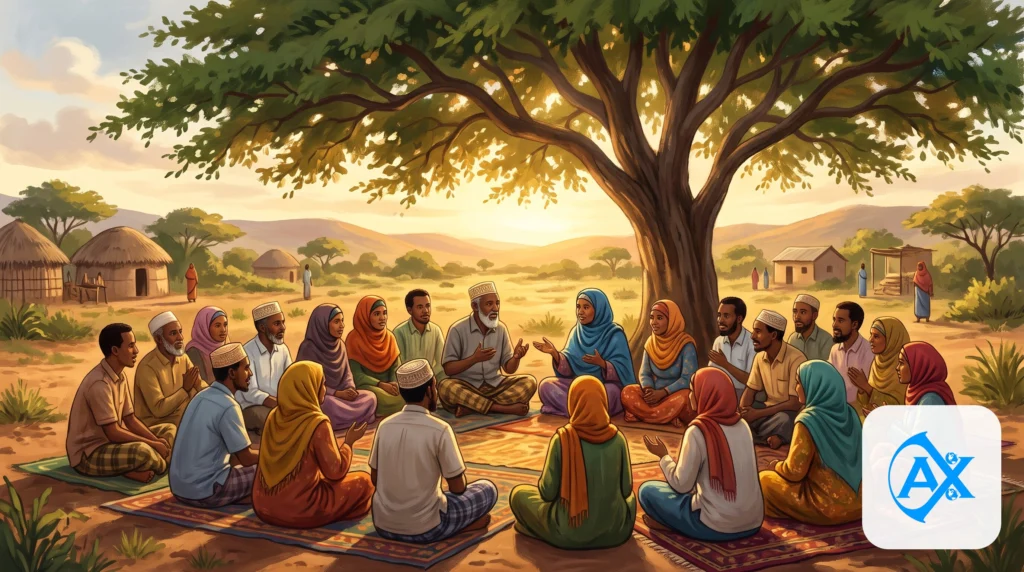
Political agreements of this kind often emerge from consultative conferences or national dialogues that bring together different segments of society. They are held in major cities across the country, such as Mogadishu, Hargeisa, Kismayo, Baidoa, Jowhar, Bosaso, Garowe, or Zeila, with the aim of finding lasting solutions to prevailing challenges.
They are the first step toward enabling a country to adopt a formal constitution. The constitution then legally enshrines the matters agreed upon politically, turning them into binding law applicable to everyone.
Frequently Asked Questions (FAQs)
1. Is a political agreement superior to the country’s constitution?
In principle, the constitution is the supreme law of the country. However, during transitional periods or when constitutional challenges arise that are not clearly addressed by law, a political agreement fills existing gaps and is used as a means of achieving constitutional reform.
2. What happens if one of the parties breaches the agreement?
A breach of the political agreement can undermine the trust that has been built, revive political tensions, and disrupt the functioning of the state. To prevent this, agreements often include a committee tasked with monitoring the implementation of the agreed provisions.
3. Who has the right to participate in a national political agreement?
For any national agreement to be effective, it must be inclusive. Participants include the federal government, the leaders of the federal member states, political parties, traditional elders, civil society, and various groups of academics and women.