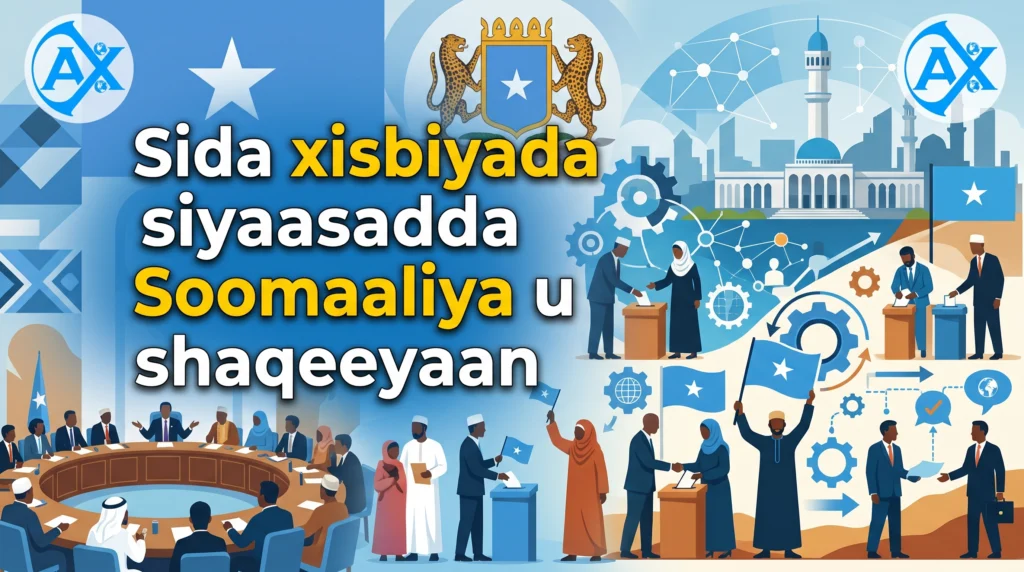
Somalia’s political process has in recent years been undergoing reforms aimed at moving the country away from a clan-based system toward a democratic, multiparty system. Political parties are the backbone of modern state-building, bringing together citizens who share similar political views so they can compete for leadership and governance of the country.
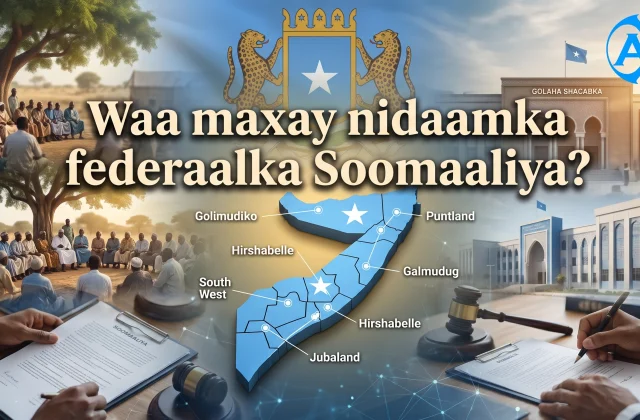
Understanding how Somalia’s political parties operate is important for anyone who wants to follow the decision-making process, elections, and the future of decentralised governance across the country, from Mogadishu to regions such as Puntland, Jubaland, Galmudug, Hirshabelle, South West State, and the North Western State of Somalia.
What Is a Political Party?
A political party is a legally recognised organisation formed by citizens who share principles, political goals, and views on how the country should be governed. The primary purpose of establishing a political party is to participate in elections, win public votes, and represent citizens in government offices.
In Somalia, a party is not merely a platform for competing for government seats; it also serves as a bridge linking diverse communities with constitutional institutions, working to strengthen national unity and move beyond the clan-based system.
A Brief History of the Party System
Somalia has a long history of multiparty politics. Before and after the country gained independence, prominent parties played a leading role in the struggle for freedom and the establishment of the first government, including the Somali Youth League (SYL). At that time, political competition was based on direct voting and open competition among parties.
However, following the collapse of the central government, the country’s politics shifted towards a system based on clan power-sharing. In recent years, the federal government and the Somali people have renewed efforts to restore a multiparty system and return power to the public.
How Somalia’s Political Parties Operate
Political parties operating in the country function under specific laws and internal administrative systems. Their general work is divided into several areas:
-
- Building Internal Structures: Each party has a chairperson, an executive council, and a central committee. These members manage the party’s day-to-day activities and determine its political direction.
-
- Official Registration: To become legally recognised, a party must meet the requirements established by the electoral commission and the country’s political party laws, and then obtain an official certificate of recognition.
-
- Presenting a Political Programme: Parties develop policy documents or programmes outlining what they will do if they come to power, including plans for economic development, security, education, and social services.
-
- Public Awareness and Recruitment of Supporters: Parties open offices in major cities such as Mogadishu, Kismayo, Baidoa, Jowhar, Bosaso, and Garowe to gain support from different sections of society.
The Importance of Political Parties
A multiparty system offers Somalia major long-term benefits that form the foundation for building a democratic government:
-
- Moving Beyond the Clan System: They help remove the practice of basing politics on clans, encouraging people to be chosen for their ideas, abilities, and policy programmes.
-
- Balancing Government Power: Opposition parties hold the ruling party or group accountable by highlighting shortcomings and presenting alternative solutions.
-
- Connecting Citizens: A party gives the public the power to cast their votes and choose the leader they believe can advance the national interest.
-
- Political Stability: When competition is based on clear rules and elections, it reduces armed conflict and political instability.
Key Requirements for Every Party
The country’s laws require parties to meet several conditions in order to contest national elections:
-
- National Representation: A party cannot be limited to one clan or one region. It must have members and supporters across all the country’s administrations, including Puntland, Jubaland, Galmudug, Hirshabelle, South West State, and Banadir region.
-
- Financial Transparency: Parties must disclose their sources of funding to prevent corruption and foreign interference.
-
- Compliance with the Constitution: Every party must recognise the unity of the country, Somalia’s sovereignty, and the Federal Constitution.
Challenges Facing Political Parties
Although efforts are under way, Somalia’s political parties face several challenges, including security conditions in parts of the country, limited funding for political organisations, and an electoral system that has not yet fully achieved universal direct voting nationwide. Nevertheless, growing public awareness and the strengthening of constitutional institutions indicate that this system may ultimately be the only path to achieving fully established statehood.
Frequently Asked Questions (FAQ)
1. Are Somalia’s political parties fully operational?
Many parties are officially registered and have offices in the capital and some regions. They are working to build their support bases and present their political views, although efforts are still under way to complete the system that would enable them to fully compete in direct elections.
2. How is a political party registered in Somalia?
A party seeking registration must meet the requirements of the political parties law, including having a specified number of members from across the country’s regions, an internal constitution, established offices, and a structure that is not based on clan ideology or the interests of a particular group.
3. What is the difference between the party system and the clan system?
The clan system distributes power through clan agreements without regard to a politician’s qualifications or programme, while the party system is based on development programmes, competition among ideas, and electing individuals through the public vote.