
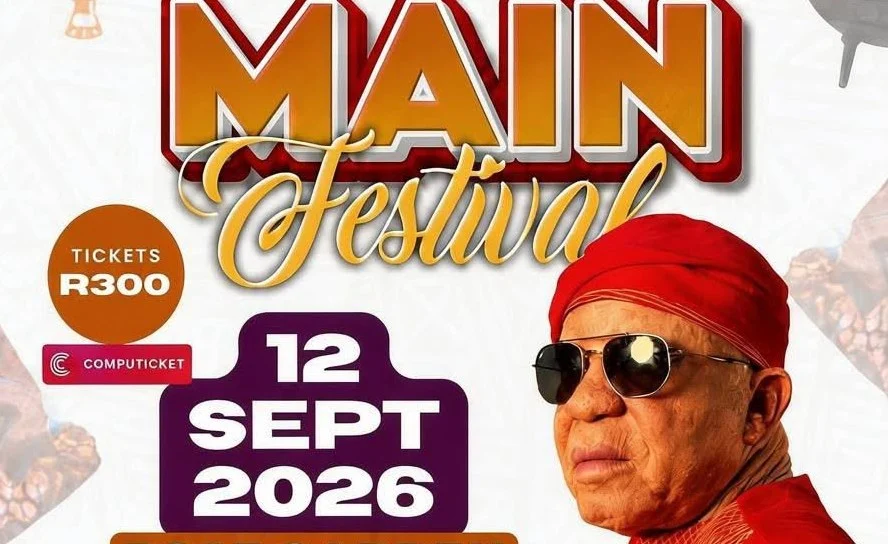
Salif Keïta, one of Mali’s most celebrated musicians, has withdrawn from South Africa’s Macufe festival, citing concerns about xenophobic violence targeting African migrants in the country.
Keïta’s decision has dealt a blow to the annual event and sparked renewed attention on tensions surrounding migrants in South Africa, where recent protests have called for undocumented foreigners to leave. Free State authorities expressed disappointment at the singer’s cancellation, saying the festival is intended to celebrate African culture and solidarity rather than division.
- Advertisement -
The development comes at a sensitive moment for South Africa, where anti-migrant sentiment has again moved into public view. According to the information provided, more than 160,000 people have reportedly left the country under voluntary repatriation programmes since May. Those returning to their home countries include migrants from Tanzania, Malawi, Zimbabwe, Zambia, Ghana and Nigeria.
Keïta’s withdrawal is likely to resonate beyond the festival itself. As one of West Africa’s best-known musical figures, his public stance highlights how concerns over migrant safety and African unity are now affecting major cultural events as well as broader political debate.
Festival withdrawal draws wider attention
Macufe has long been presented as a cultural gathering intended to bring together artists and audiences from across the continent. Free State authorities said they were disappointed by Keïta’s decision because the event’s purpose is to promote African unity.
That message stands in sharp contrast to the concerns cited by the Malian artist. His withdrawal suggests that, for some African performers, the current atmosphere in South Africa has become too fraught to ignore. The symbolism is significant: a festival designed to celebrate pan-African identity is now confronting the fallout from a dispute centered on who belongs in South Africa and under what conditions.
There was no additional detail in the assignment on whether Keïta had been scheduled for one or several appearances linked to the festival, nor whether other artists were reviewing their participation. But his cancellation alone is likely to intensify scrutiny of how organizers and authorities respond to the issue.
Anti-migrant protests deepen pressure
The cancellation follows protests calling for undocumented migrants to leave South Africa. The demonstrations have become an important part of the backdrop to the story, particularly because they appear to be feeding concerns among African communities about safety, belonging and freedom of movement within the continent.
More than 160,000 people have reportedly departed under voluntary repatriation programmes since May, according to the information provided. The scale of that movement suggests that the pressure on migrant communities has been substantial, whether driven by direct fear, public hostility, uncertainty about legal status, or a combination of those factors.
The reported departures span a broad range of African nationalities, including people from Tanzania, Malawi, Zimbabwe, Zambia, Ghana and Nigeria. That list underlines the regional dimension of the issue. This is not a dispute affecting one migrant community alone, but one touching multiple countries across eastern, southern and western Africa.
Because the departures are described as taking place under voluntary repatriation programmes, the exact circumstances behind individual decisions are not fully clear from the material provided. But the number itself is striking, and it has already become part of the wider debate over South Africa’s treatment of migrants from elsewhere on the continent.
September 30 protests could raise tensions further
Adding to concerns, March and March, the anti-migrant group behind the protests, has announced plans for further demonstrations across the country on September 30.
The planned protests may deepen anxiety ahead of that date, especially for migrants, artists, event organizers and local authorities. Keïta’s withdrawal may now be seen as an early sign of how the issue can spill beyond politics and into cultural life, tourism and public gatherings.
Further demonstrations could also sharpen debate over the line between immigration enforcement, public protest and xenophobia. Supporters of tougher action against undocumented migration may present the protests as a response to immigration concerns, while critics are likely to argue that the climate created by such mobilization places African migrants at risk and undermines regional solidarity.
For cultural institutions and public festivals, that creates a difficult balancing act. Events marketed as continental celebrations depend not only on logistics and performances, but also on the confidence of artists and audiences that they will be welcomed and safe.
A cultural story with political implications
Keïta’s withdrawal is more than a booking change. It reflects a larger political and social question confronting South Africa and, in a broader sense, the African continent: how commitments to African unity are tested when migration becomes politically contentious.
The reaction from Free State authorities shows that local officials are aware of the reputational damage that such a cancellation can cause. If a major African artist feels unable to take part in a festival meant to represent unity, the credibility of that message is inevitably weakened.
The episode may also fuel debate in other African countries whose citizens are among those reportedly leaving South Africa. Governments, cultural figures and civil society groups across the continent often watch high-profile incidents like this closely, especially when they touch on the treatment of African nationals abroad.
At the same time, the situation remains fluid. The available information does not indicate whether South African authorities have announced any new measures in response to the protests, nor whether organizers have made fresh assurances to artists concerned about the security environment. It also remains unclear whether Keïta’s withdrawal will lead to further cancellations or public statements from other performers.
Unity message faces a hard test
For now, the immediate consequence is clear: one of Mali’s most respected musicians will no longer perform at Macufe. The broader consequence may be a fresh wave of questions about the gap between official rhetoric about African unity and the reality experienced by migrants on the ground.
As September 30 approaches and more demonstrations are planned, that tension is likely to remain in focus. Keïta’s decision has already turned a festival lineup change into a wider continental story, tying culture, migration and identity into a single, uncomfortable debate.
For Macufe organizers and Free State officials, the challenge will be to defend the festival’s unity message at a time when events outside the stage are overpowering what happens on it. For critics of xenophobia, Keïta’s withdrawal is likely to be seen as a warning that Africa’s cultural ties can be strained when migrants no longer feel secure.
And for many observers across the continent, the episode stands as a reminder that the promise of African solidarity is judged not only in speeches and festivals, but in how African migrants are treated when tensions rise.