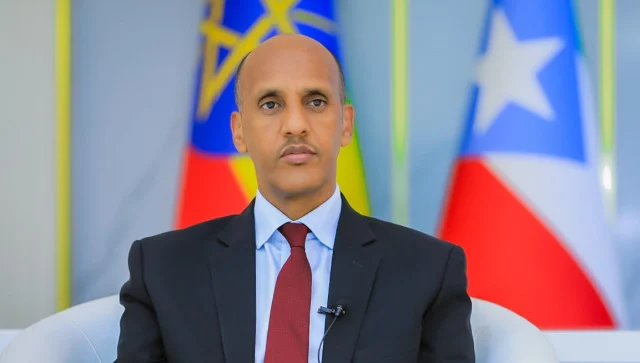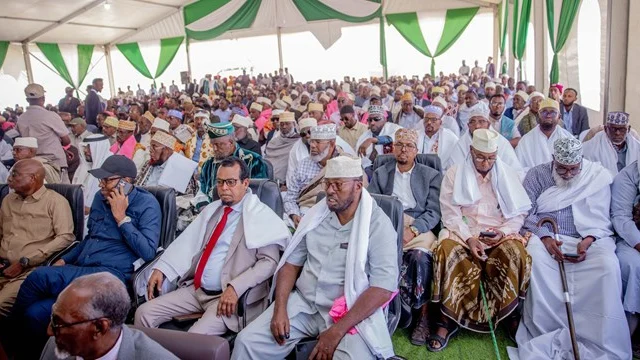

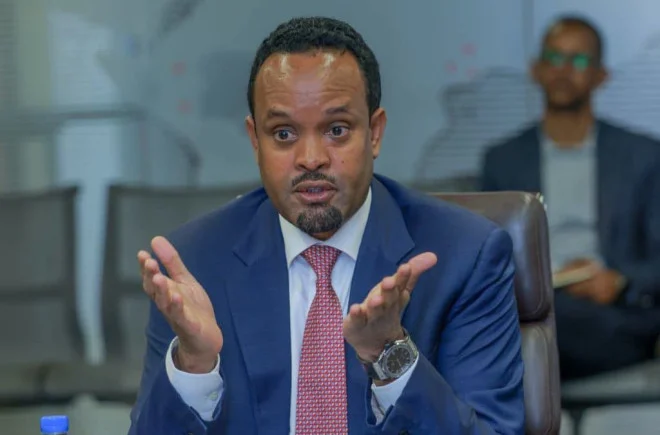
ADDIS ABABA (AX) — Ethiopia’s parliament has elected former Finance Minister Ahmed Shide as speaker, making him the first ethnic Somali to preside over the House of Peoples’ Representatives.
Lawmakers unanimously approved Shide during Monday’s opening session of the seventh parliament, and he took the oath of office later that day. He replaces Tagesse Chafo, who had held the speakership since 2018.
- Advertisement -
Ayelech Eshete, a former state minister for education, was chosen as deputy speaker. Parliament also appointed and swore in Prime Minister Abiy Ahmed for a second term as head of government.
Shide is the first ethnic Somali to lead the House of Peoples’ Representatives, Ethiopia’s main federal legislative chamber. He is not the first Somali politician to head either of the country’s two parliamentary houses.
Aden Farah, a former vice president of the Somali Regional State, became speaker of the House of Federation, the upper chamber, in June 2020. He remained in the post until October 2021.
Shide’s elevation shifts one of Ethiopia’s most prominent Somali political figures from managing economic policy to directing the federal legislature.
He had served as finance minister since October 2018, following earlier senior roles as transport minister, government communications minister and state minister at the former Ministry of Finance and Economic Development.
At the Finance Ministry, Shide was a central figure in the government’s economic reform efforts as Ethiopia grappled with high inflation, foreign-currency shortages, mounting debt pressures and the financial consequences of years of conflict.
His appointment also places a senior representative of Ethiopia’s Somali community in one of the federal political system’s top positions.
Shide previously represented the Somali Regional State in federal politics and held senior political offices in the region. He was elected to parliament from a constituency in the Somali region.
The new legislature was established after Ethiopia’s general election on June 1.
According to the National Election Board of Ethiopia, more than 54 million people were registered to vote. The ruling Prosperity Party captured 438 seats in the House of Peoples’ Representatives, giving it a commanding majority and the constitutional authority to form the federal government.
Balloting was not held in every constituency because of insecurity and other disruptions, including in areas of Tigray, Amhara and Oromia.
Shide takes over the speakership as Ethiopia continues to confront political and security pressures, including renewed tensions in the north and ongoing armed conflict elsewhere in the country.
His election, together with Ayelech’s appointment as deputy speaker, opens a five-year parliamentary term under a Prosperity Party government that holds a strong majority in the lower house.