
MOGADSHU – Somalia is entering a critical period as foreign forces begin pulling out, international funding for its security services faces uncertainty and a deepening political dispute threatens its first direct democratic elections in decades.
The overlapping crises have prompted concerns over whether the government can contain al-Shabab while also managing widening divisions among the country’s political factions.
Some analysts warn that the instability could strengthen al-Shabab, the al-Qaeda-linked militant group, and raise the possibility that it could eventually capture the capital, Mogadishu.
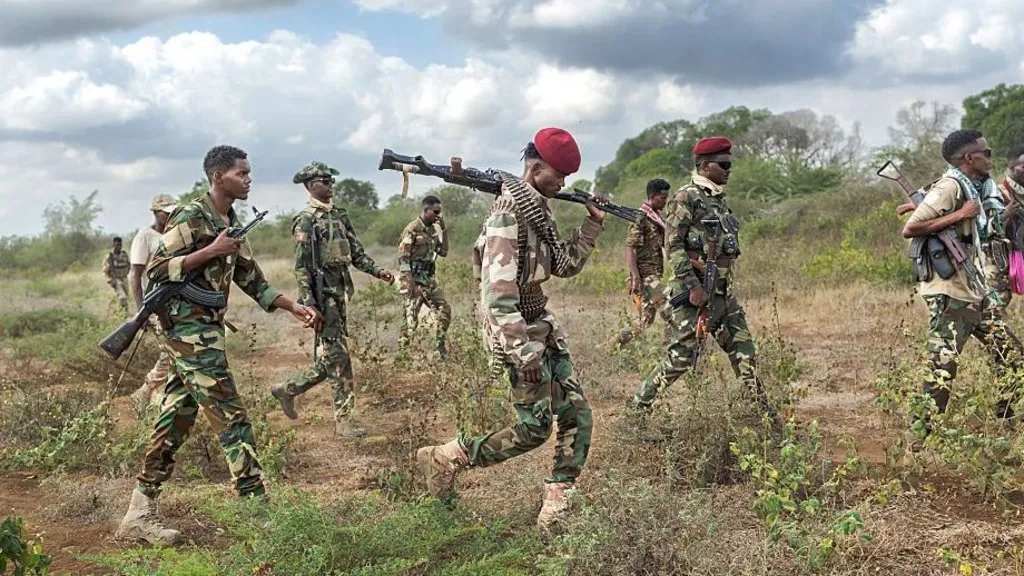
Al-Shabab already holds extensive territory across Somalia, despite the presence of roughly 12,000 African Union (AU) troops supporting the government.
Fears over the government’s ability to retain control have grown as foreign forces withdraw and clan-based militias aligned with competing political groups become more active.
Uganda, which supplies the largest contingent to the AU force, began withdrawing troops last month and is expected to complete the process by next year.
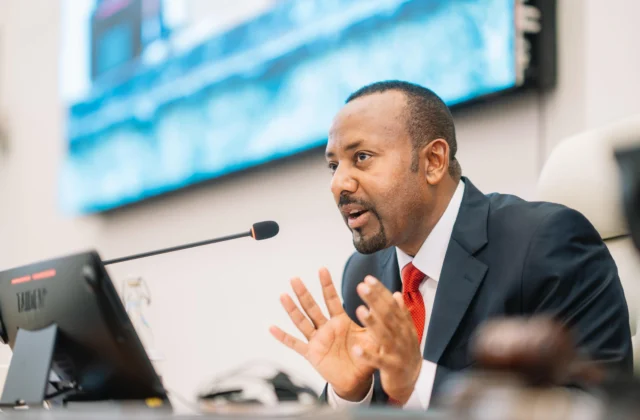
Ethiopia, another major contributor with more than 7,000 soldiers in the mission, is also reportedly preparing to withdraw nearly half of its contingent.
The US had previously announced cuts to funding for the UN Support Office in Somalia (Uunsos), but has since said it will extend the support for another year. Washington provides about a quarter of Unsos’s annual $500m (£380) budget, which funds Somali security forces, AU operations and individual troop-contributing countries. With military backing uncertain and political pressure mounting, analysts are questioning whether Somalia’s forces are prepared to operate independently.
Those concerns intensified after al-Shabab claimed it had killed hundreds of elite Somali soldiers in a recent attack. The government confirmed that an assault had taken place but did not provide a casualty figure.
Abdisalam Guleid, a former deputy director of Somalia’s National Security Agency, told the BBC that the country’s security outlook was becoming increasingly fragile.
He said the departure of foreign troops could expose Mogadishu to a takeover resembling the Taliban’s seizure of Afghanistan in 2021 after US and Nato forces withdrew.
“I don’t think Mogadishu will be able to defend itself. The Taliban style [takeover]… that’s the most likely scenario I can envision now,” he said.
The Taliban captured control of Afghanistan between 6-15 August 2021 in a rapid offensive that followed the withdrawal of US and NATO forces.
Guleid says Somalia has faced a comparable collapse before.
The country has previously experienced the breakdown of central government authority.
In the early 1990s, clan-based rebel groups moved towards Mogadishu from several directions, forcing President Mohamed Siad Barre from office.
His removal ushered in a devastating civil war and a prolonged humanitarian emergency. The subsequent collapse of state institutions helped create the conditions for Islamist militant organisations, including al-Shabab, to extend their reach.
Guleid says Ugandan troops have been instrumental in preventing a repeat of that collapse since their initial deployment to Somalia in 2007.
They helped push al-Shabab out of Mogadishu and other major towns, while securing key sites such as the airport, seaport, government buildings and diplomatic missions.
Burundi, Djibouti, Kenya, Sierra Leone and Ethiopia later contributed troops to the AU mission. Turkey and the US, meanwhile, maintained separate military deployments and provided Somali forces with training and equipment.
Yet Guleid argues that years of international support have failed to give the Somali government enough military capacity to operate without outside protection.
In his view, the authorities became so dependent on foreign forces that they did not adequately prepare their own troops to assume responsibility.
Somalia’s Information Minister Abdifatah Qasim Mohamud rejected claims that the country would be unable to manage the withdrawals.
He told the BBC that Somali soldiers had already occupied some positions vacated by Ugandan forces and were ready to take on a larger role in protecting the country.
He said Somalia could not rely on foreign troops indefinitely.
“I believe there is no reason for concern over this issue. There will be no change in the country’s security situation or in the areas they have vacated,” he said.
President Hassan Sheikh Mohamud has also appealed for sustained international assistance.
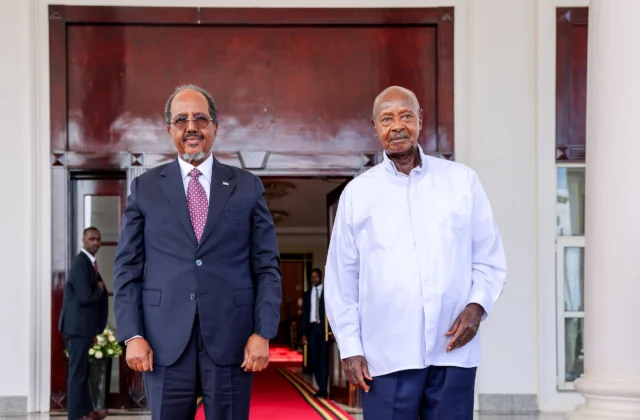
During a 23 November visit to Uganda, he and President Yoweri Museveni urged the international community to continue helping Somalia consolidate its security gains.
Some observers do not believe the troop withdrawal will automatically trigger a security collapse.
Ugandan security analyst Freddie David Egesa says years of international military assistance have helped Somalia build institutions capable of assuming greater responsibility for national security.
He says the withdrawal will offer a chance to measure the progress those institutions have made.
It will also compel Somalia’s political leaders to overcome their differences and accept greater responsibility for the country’s future, he says.
Other analysts, however, believe the timing presents serious risks.
Omar Mahmood, an analyst at the International Crisis Group, says Somali forces are already under severe strain as they battle al-Shabab and move into positions previously held by foreign troops.
He describes the transition as a major challenge for a military that remains in development.
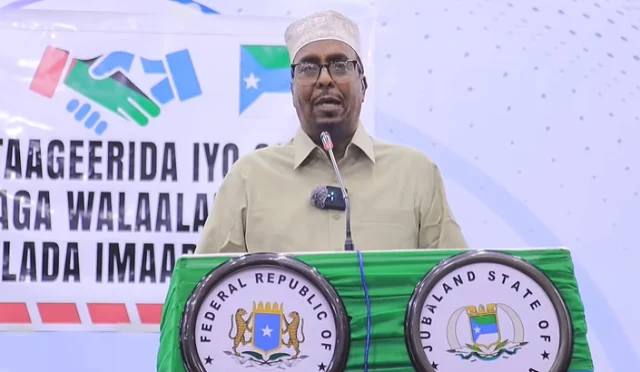
The army is also under pressure in the Bay region of the South-West state, where forces loyal to ousted regional President Abdiaziz Hassan Mohamed have been fighting the federal government.
The departure of Ugandan troops from Lower Shabelle could bring additional security problems, Mahmood says. He also identifies Somalia’s long-delayed elections as a further complication because they will require security arrangements amid the wider instability.
Somalia has been trying to replace its indirect electoral system, under which clan elders choose lawmakers and lawmakers elect the president, with a system based on direct voting.
Mahmood says the government must resolve not only the military crisis but also the escalating dispute over when and how elections should be held.
The proposed reforms have split the government and opposition, which remain divided over the rules and process for the vote.
The confrontation intensified this year when the president backed constitutional amendments extending the presidential term from four years to five, effectively postponing the next elections until 2027.
This month, the Supreme Court rejected the extension and ordered political leaders to reach an electoral roadmap within 30 days, with elections to take place within three months.
Somalia has said it does not accept the ruling.
One day before the decision, the president dismissed Chief Justice Baashe Yusuf Ahmed. Both dismissals have since been challenged at the East African regional court in Tanzania.
Mahmood says the political and security crises are intertwined. Without agreement over the elections, he argues, the government will find it more difficult to concentrate on its campaign against al-Shabab.
Guleid also warns that the threat to Somalia’s stability extends beyond al-Shabab, pointing to clan-based militias that are increasingly confronting the federal authorities.
“Today, we have clan loyalists fighting alongside al-Shabab against the federal government,” he says.
He added that the country’s leaders appeared unprepared for the scale of the challenges facing them.
Who will fill the gap left by foreign partners?
Somalia’s security difficulties are made worse by its reliance on overseas financial assistance.
Figures from the finance ministry show that donor grants of $878.8m account for two-thirds of the country’s planned $1.36bn budget for 2026.
However, the ministry said it had received only about $314m in grants during the first nine months of the year, or 35% of the expected annual aid.
Mahmood says that while some international military support is being reduced, bilateral agreements and continued assistance from other partners could help close the gap.
Guleid is doubtful that countries such as Turkey, Qatar and Egypt could rapidly replace the military and financial support provided by Uganda and the US.
He says Somalia’s dependence on external backing leaves it particularly exposed whenever international partners alter their priorities.
That reliance has also contributed to increasingly tense relations with some foreign governments.
Somalia has accused the United Arab Emirates of financing armed groups and weakening its sovereignty, in the latest dispute involving an outside power with major security and economic interests in the country.
The UAE rejected the accusation and responded by describing the Somali leader as an “outgoing president”, referring to the dispute over his term in office.
The two countries formally cut diplomatic ties earlier this year, although the UAE has long been a significant security and economic partner for Somalia.
Egesa says the departure of foreign troops could ultimately allow Somalia to show how far it has progressed in rebuilding its security institutions.
He argues that a phased withdrawal would give Somali forces time to assume duties gradually while compelling rival political factions to cooperate.
Guleid, however, remains considerably more pessimistic.
He says Somalia risks losing its security gains unless it tackles weaknesses within the military, political divisions and the expanding influence of armed groups.
For now, the country must confront an entrenched insurgency, competing political interests and a divisive electoral process as some of its military partners prepare to leave.
Whether Somalia can withstand those pressures without sliding back into instability remains uncertain.
Source: BBC