Somalia’s Political Crossroads: Power, Federalism and the Legacy of Leadership
By Ali Musa | Analysis
A political leader’s legacy is rarely defined by speeches or promises alone. It is measured by the institutions strengthened—or weakened—under their leadership, the public confidence they inspire, and the political order they leave behind.
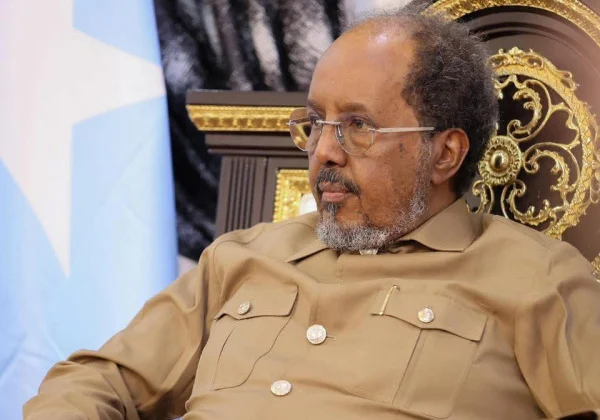
History ultimately records how leaders used power, responded to dissent and managed moments of national uncertainty. Viewed through this lens, President Hassan Sheikh Mohamud’s current term has become the subject of an increasingly contentious debate over Somalia’s institutions, federal system and political direction.
Several decisions taken during this period have provoked strong public criticism. Among the most sensitive was the exhumation of graves and the treatment of families whose relatives had been buried there. The episode touched on deeply held religious and cultural values, raising difficult questions about the dignity of the dead, the responsibilities of the state and the rights of affected citizens.
The government may argue that its actions had a legal or administrative basis. Yet legality alone does not guarantee public acceptance. In a fragile political environment such as Somalia’s, the manner in which a decision is implemented can be just as important as the authority used to justify it. Poor communication and inadequate consultation can quickly erode public trust.
Parliament and the scrutiny of international agreements
Questions have also been raised about international agreements submitted to Somalia’s Federal Parliament.
Opposition politicians and some members of parliament have argued that lawmakers were not given sufficient time to examine, analyse and debate certain agreements before being asked to vote on them. These concerns go beyond procedural disagreements.
Parliament is constitutionally expected to scrutinise the executive, examine major national commitments and ensure that government decisions serve the public interest. If lawmakers are expected to approve important agreements without adequate time or access to information, parliamentary oversight risks becoming a formality rather than a meaningful democratic safeguard.
Strong governments do not require weak legislatures. On the contrary, effective parliamentary scrutiny can improve public policy, strengthen the legitimacy of national agreements and prevent disputes from escalating beyond the political arena.
Growing tensions within the federation
Relations between the Federal Government and several federal member states have become another source of concern.
The confrontation with Jubaland, particularly around Ras Kamboni, demonstrated how quickly a political dispute can acquire a military dimension. The events there risked damaging perceptions of unity within Somalia’s security institutions while deepening mistrust between the federal authorities and regional administrations.
The disagreement has not remained confined to Jubaland. Relations with South West State have faced pressure, while the longstanding dispute between Mogadishu and Puntland continues to expose fundamental disagreements about constitutional authority, political representation and the future of the federal system.
These disputes are not simply personal confrontations between political leaders. They reflect unresolved questions at the heart of the Somali state: How should power be divided? What authority belongs to the Federal Government? What powers are reserved for the federal member states? And who has the legitimacy to alter the constitutional arrangement?
Somalia’s federal system emerged as a political response to decades of conflict, mistrust and excessive centralisation. It remains imperfect and incomplete, but attempting to resolve federal disputes through military pressure or political isolation could make national reconciliation even more difficult.
Dialogue may be slow and frustrating, but coercion carries far greater risks in a country where institutions remain fragile and political mistrust runs deep.
The lessons of Somali history
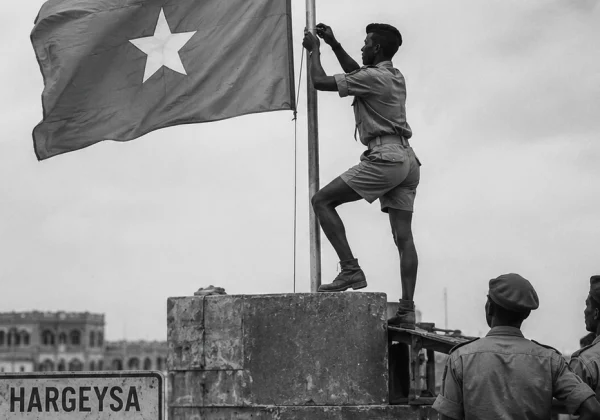
Somalia’s recent history offers clear warnings about the limitations of force.
The late General Mohamed Farrah Aidid once controlled significant territory in southern Somalia and commanded considerable military power. That strength, however, did not produce an inclusive political settlement or lasting national stability.
President Mohamed Siad Barre’s government also controlled most of the country and possessed the institutions of a centralised state. Yet as political exclusion, repression and armed resistance intensified, the government gradually lost both public legitimacy and political support.
The two periods were different in character and historical context. Nevertheless, they point to a common lesson: control is not the same as legitimacy, and military strength cannot substitute for political consensus.
Force can deliver temporary victories. It may capture territory, silence opponents or compel short-term compliance. But without lawful authority, political inclusion and public confidence, those gains rarely create durable stability.
Constitutional choices and political responsibility
Members of the Cabinet and Federal Parliament also carry individual responsibility for the direction of the country.
If ministers or lawmakers believe that government policies threaten Somalia’s unity, constitutional order or political stability, they have several legitimate options. They may challenge those policies from within the institutions, demand greater consultation and use parliamentary procedures to seek accountability.
If they conclude that remaining in office would make them complicit in policies they fundamentally oppose, resignation is also a constitutional and democratic choice. A resignation accompanied by a clear explanation allows an official to defend a political principle openly and accept responsibility for that position.
Working for reform from within and resigning in protest are both legitimate courses of action. What is difficult to defend is remaining silent while privately acknowledging that the country may be moving in a dangerous direction.
Beyond political rivalry
Somalia needs more than another contest between the government and its opponents. It needs leadership capable of compromise, an opposition that offers credible alternatives and constitutional institutions that perform their responsibilities without intimidation or political interference.
It also needs citizens to trust that disagreements can be resolved through dialogue, courts, parliament and other lawful institutions—not through military mobilisation or attempts by one political camp to overpower another.
The central question is therefore larger than the political future of any single president, minister or regional leader. It concerns the type of state Somalia is attempting to build.
Will it become a constitutional federation in which power is negotiated, institutions are respected and political differences are managed peacefully? Or will it return to a system in which authority is concentrated and disputes are settled through pressure and force?
Somalia’s future will depend on whether its leaders can transform confrontation into consensus while protecting the constitutional order and respecting the principles of federalism.
If the objective is a functioning state and lasting peace, political decisions must be grounded in consultation, transparency, accountability and the broader national interest. Somalia’s history has repeatedly shown that power can impose an outcome for a time—but only legitimacy and agreement can sustain a nation.
What must happen next
The immediate task is not to determine which political camp can demonstrate the greatest strength. It is to prevent institutional disagreements from developing into a wider national crisis.
The Federal Government should reopen meaningful dialogue with Puntland, Jubaland and other federal member states. Such talks should not be organised merely to create the appearance of consultation. They must have a clear agenda, credible mediation and a genuine willingness by all parties to reconsider their positions.
Somalia’s National Consultative Council was intended to provide a forum through which the Federal Government and regional leaders could address major political questions. Its credibility, however, depends on broad participation. A national dialogue that excludes important federal member states cannot produce a genuinely national settlement.
Where direct negotiations have failed, respected Somali statesmen, civil-society leaders, religious scholars and constitutional experts could help facilitate discussions. Somalia’s international partners may support this process, but they should not be allowed to determine its outcome. The settlement must be negotiated, owned and defended by Somalis themselves.
The unfinished constitutional question
Many of today’s disputes are symptoms of a deeper problem: Somalia’s constitutional transition remains unfinished.
The Provisional Constitution has provided a framework for rebuilding the state, but several fundamental issues have not been conclusively settled. These include the distribution of political authority, control of security forces, management of natural resources, electoral arrangements and the respective responsibilities of the federal and regional governments.
As long as these questions remain unresolved, political leaders will continue to interpret federalism according to their immediate interests. The Federal Government may seek greater central authority, while federal member states may resist any measure they consider an encroachment on their autonomy.
Constitutional reform is therefore necessary, but both the process and the outcome must command broad legitimacy. Amendments adopted without sufficient participation could deepen the crisis they are intended to resolve.
A constitution is more than a legal document approved by political institutions. It is a national agreement defining how citizens are governed, how authority is limited and how disputes are peacefully settled. Changes of such importance require extensive public consultation, parliamentary scrutiny and the meaningful involvement of federal member states.
Elections and political legitimacy
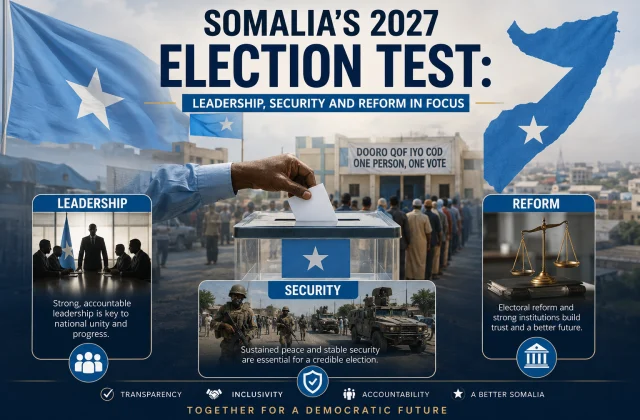
The debate over Somalia’s future electoral system is equally important.
Most Somalis support the principle of choosing their representatives directly. The aspiration for universal suffrage reflects a legitimate desire to move beyond indirect elections dominated by political elites and clan-based negotiations.
However, the credibility of an election depends on more than the promise of “one person, one vote.” It requires an agreed legal framework, secure polling arrangements, reliable voter registration, independent electoral institutions and the participation of the principal political stakeholders.
An election conducted without broad agreement may produce ballots, but it will not necessarily produce legitimacy. If major political actors reject the rules before voting begins, the result could intensify rather than resolve Somalia’s political divisions.
The government must therefore resist the temptation to treat electoral reform as a contest between supporters of democracy and defenders of the status quo. The real question is whether Somalia can develop an inclusive, technically credible and constitutionally legitimate electoral process.
Political consensus should not become an excuse for indefinite delay. At the same time, speed should not be used to justify exclusion.
The responsibility of the opposition
Responsibility does not rest with the Federal Government alone.
Somalia’s opposition must do more than criticise the presidency. It should present a credible programme for constitutional reform, federal cooperation, national security, economic development and democratic elections.
Opposition leaders also have a responsibility to avoid inflammatory rhetoric that could deepen social divisions or encourage armed confrontation. Criticism is necessary in any democratic system, but it becomes constructive only when accompanied by practical alternatives.
Somalia does not benefit when political figures defend federalism only while they are outside the central government, or support centralisation only when they occupy national office. Constitutional principles must be upheld consistently, regardless of who controls the presidency.
A credible opposition should defend institutions rather than personalities. It should challenge unlawful decisions through parliament, the courts and peaceful political organisation while making clear that government failure must not become an opportunity for national destabilisation.
Security forces must remain national institutions
Somalia’s security forces occupy a particularly sensitive position in the current political climate.
The army, police and intelligence services exist to protect the country and its citizens. They must not be transformed into instruments for settling electoral disputes, weakening political opponents or pressuring federal member states.
When national forces become involved in conflicts rooted primarily in political disagreement, their institutional unity and public credibility are placed at risk. Soldiers may find themselves confronting other Somali forces while the threat posed by Al-Shabaab and other armed groups remains unresolved.
Security institutions should operate under clear laws, professional command structures and effective civilian oversight. Their loyalty must be to the constitutional order and the Somali nation—not to an individual officeholder, political party or regional administration.
A divided security sector would be one of the most dangerous consequences of a prolonged federal crisis. Rebuilding national forces has taken years of Somali effort and substantial international support. Their cohesion should not be sacrificed for short-term political advantage.
The role of Somalia’s international partners
The international community has considerable influence in Somalia through security assistance, diplomatic engagement and development financing. That influence brings responsibility.
Foreign partners should apply consistent standards when defending constitutional governance, inclusive politics and human rights. Silence in response to institutional overreach can be interpreted as approval, particularly when the government involved is considered a strategic partner.
At the same time, international actors must avoid imposing settlements designed primarily around their own security or geopolitical interests. Somalia is not simply a counterterrorism project or an arena for regional competition. It is a sovereign country whose citizens must determine the structure and direction of their state.
External support can help facilitate dialogue, strengthen institutions and provide technical expertise. It cannot manufacture the political trust required to sustain a federal system.
The legacy still being written
President Hassan Sheikh Mohamud’s political legacy has not yet been conclusively determined. His administration still has an opportunity to change course, lower political tensions and pursue a more inclusive national settlement.
A willingness to compromise should not be mistaken for weakness. In a fragmented political environment, the ability to bring opponents into a negotiated agreement may be a greater demonstration of leadership than defeating them in a temporary contest for power.
The President can choose to be remembered as a leader under whom the relationship between Mogadishu and the federal member states deteriorated further. Alternatively, he can use the remainder of his mandate to rebuild trust, protect institutions and help complete Somalia’s constitutional transition through consensus.
Federal member-state leaders face a similar choice. They must defend their constitutional interests without turning political disagreement into permanent hostility toward the national government. Federalism requires both regional autonomy and a functioning centre. Neither can succeed by attempting to eliminate the other.
Somalia stands at a consequential moment. The decisions taken now will shape not only the next election but also the long-term relationship between citizens, regional administrations and the federal state.
The country has already paid a devastating price for political exclusion, personalised authority and the militarisation of disagreement. Its leaders should not require another national breakdown to learn lessons that history has made painfully clear.
Political administrations come to an end. The consequences of their decisions remain.
The legacy of today’s leaders will ultimately be judged by whether they expanded the space for peaceful politics, strengthened constitutional government and left behind a more united Somalia—or whether their pursuit of immediate advantage deepened the divisions inherited by the next generation.