Introduction: As climate pressures intensify across the globe, Ethiopia has turned tree planting into a national project with far-reaching consequences. The country of more than 130 million people remains heavily reliant on rain-fed agriculture, which supports about 85 percent of the population and leaves millions exposed to shifting weather patterns and climate uncertainty.
It was against that backdrop that Prime Minister Abiy Ahmed launched the Green Legacy Initiative (GLI) in 2019. Alongside the Dine Initiative, Digital Ethiopia, Urban and Corridor Development, and nationwide peace and reconciliation efforts, it has emerged as one of his signature programs.
Ethiopia opened its 2026 planting season on 15 June in Bishoftu, with a target of 8 billion seedlings for the year as it moves toward a national goal of 65 billion trees. Over seven years, the Green Legacy Initiative has already produced 48 billion seedlings.
According to the Ethiopian Broadcasting Service, the program surpassed its first-year goal in 2019 by planting 4.7 billion seedlings against a target of 4 billion. It continued in 2020 despite the disruptions of the COVID-19 pandemic, gained broader community participation and a stronger sense of unity in its third year, and by the end of its first phase had delivered more than 25 billion seedlings.
The second phase has shifted the emphasis toward sustainability and economic value. In its first year, the focus was on fruit-bearing and economically valuable species. Geographic Information Systems, or GIS, were introduced in the second year to improve long-term planning and survival. In the third year of the phase, Ethiopia set a single-day record by planting 714 million seedlings. The fourth year of the phase is set to bring the planting of more than 8 billion seedlings.
The reported survival rate of planted seedlings now stands at 84 percent, while the initiative has helped sequester roughly 297 million tons of carbon dioxide. Those figures point to a program that goes well beyond afforestation, positioning the Green Legacy Initiative as a tool for economic growth, climate resilience, and social cohesion.
Social Impacts
The Third Great National Mobilization: From the battlefield of Adwa, which secured sovereignty, to the rise of GERD as a symbol of economic destiny, and now to the Green Legacy Initiative as an environmental triumph, Ethiopia’s modern story is one of repeated collective effort turning hardship into renewal. It is also a broader African story of resilience, development, ecological restoration, and a shared continental legacy.
Few recent national campaigns have drawn Ethiopians together on such a scale. Like the victory at Adwa and the building of the Grand Ethiopian Renaissance Dam, the Green Legacy Initiative has become one of the country’s defining collective undertakings.
Dialogue Earth, an independent non-profit environmental journalism organization, has reported that the initiative has helped place tree planting at the center of Ethiopian culture, with more than 30 million people taking part each year. In the process, it has deepened civic engagement and made environmental awareness part of everyday public life.
Since its launch, the campaign has brought together people from every part of society, including students, government institutions, civic and religious organizations, the armed forces, diaspora communities, diplomatic missions, international organizations, civil servants, and the private sector.
That wide participation has broadened public understanding of environmental protection, reinforced a shared duty toward national development, and elevated conservation from a narrow policy issue to a mainstream social priority.
The GLI as a Force for National Unity: One of the initiative’s less discussed effects has been its role in strengthening national cohesion. By creating a common platform for Ethiopians of different backgrounds and age groups, the campaign has allowed many to take part in a single national effort. Civil servants are frequently deployed to different regions during planting seasons, a practice that creates new social ties and deepens a sense of belonging to the country as a whole.
The initiative has offered a rare space in which care for the environment cuts across political, regional, and social lines. In that sense, the Green Legacy is not only an ecological undertaking but also a nation-building project.
Cultural Shift and Emerging Tradition: A noticeable cultural change has also taken hold. Tree planting and greening practices are increasingly becoming a national tradition in Ethiopia. Households, hotels, restaurants, public institutions, government offices, and private organizations are beautifying their surroundings with ornamental and fruit-bearing plants, turning green spaces into a shared social norm. Environmental beautification has therefore moved beyond policy and become part of daily life. The Green Decade continues to stand as a developing Ethiopian tradition, a source of national pride, and a symbol of hope beyond the country.
Economic and Food Security Benefits
Although the Green Legacy Initiative is often discussed as an environmental campaign, its reach extends far beyond planting trees. The program includes forest species, agroforestry plants, fruit trees, fodder crops, and ornamental plants, reflecting both ecological and economic priorities. It has also produced major benefits for jobs and food security, creating more than 1.2 million jobs.
Fruit-bearing and agroforestry species such as coffee, avocado, mango, apple, papaya, and tea have supported household incomes, improved food availability, and strengthened rural livelihoods. These crops have also contributed to export earnings and foreign exchange. More broadly, the initiative has become an important driver of job creation, income diversification, and Ethiopia’s wider economic transformation.
Environmental Restoration
That diversity shows the initiative was never designed simply as a reforestation drive. It also advances wider environmental and economic goals. Beyond planting seedlings, it supports soil and water conservation, the recovery of degraded land, the reduction of erosion, improved watershed management, and biodiversity protection. It has also helped rehabilitate tributaries feeding major river systems, including the Abbay Basin, reinforcing long-term water security.
The program has further bolstered climate resilience. Ethiopia says the Green Legacy Initiative has raised national forest cover from 17.2% to 23.6%, a sign of its environmental impact and of the role community participation plays in rainy-season planting drives.
Climate Diplomacy and Recognition
Ethiopia has also used the Green Legacy Initiative and participation in global carbon finance mechanisms to engage more deeply in climate diplomacy and environmental cooperation. While mobilizing billions of seedlings for domestic restoration, it has shared its experience, technical expertise, and climate action practices with neighboring countries in the Horn of Africa.
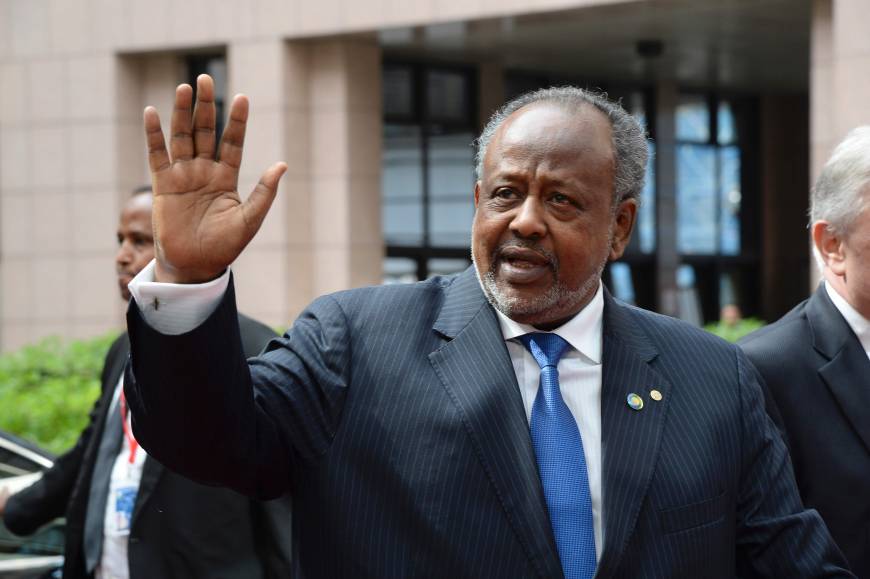
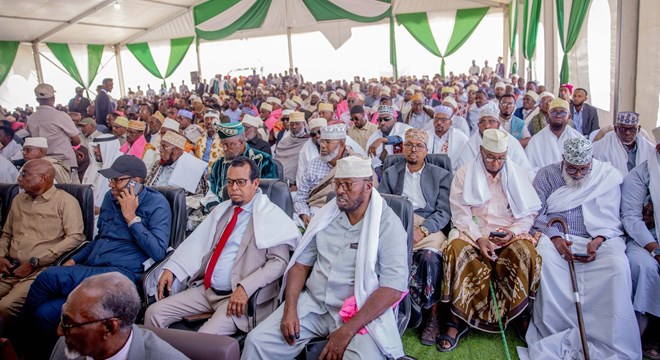
Green Diplomacy: The Green Legacy Initiative has increasingly become a bridge for regional cooperation on environmental action. Ethiopia has shared its experience with other countries and contributed to broader climate mitigation efforts. It has provided seedlings, technical know-how, and lessons learned to neighboring countries including Djibouti, Kenya, Somalia, South Sudan, and Sudan. Those countries have joined the effort, strengthening regional collaboration, with Ethiopia supplying multipurpose seedlings beyond its borders. In Puntland State, Somalia alone, 25,000 seedlings have been shared so far and are expected to continue.
Kenyan President William Ruto said he was inspired by Ethiopia’s initiative to plant 15 billion trees in his country and described Prime Minister Abiy Ahmed’s vision as a lasting legacy with strong regional impact for future generations.
Hosting Climate Summits: International organizations, diplomats, environmental experts, and media outlets have drawn attention to Ethiopia’s large-scale mobilization and climate action. The initiative has strengthened the country’s position in global environmental diplomacy and helped build international confidence in Ethiopia’s climate leadership.
Ethiopia’s progress under the Green Legacy Initiative, together with its hosting of the African Climate Summit 2, contributed to its selection as host of COP32 under the UN Framework Convention on Climate Change, underscoring its practical commitment to climate policy implementation and sustainable development.
Recognition and Awards: The Green Legacy Initiative has drawn international praise as a model for large-scale climate action. Having planted more than 48 billion seedlings, it supports Ethiopia’s ambition to build a climate-resilient green economy and reach net-zero emissions by 2050. The program also aligns with Africa’s climate justice agenda, echoing long-standing demands for fair climate financing and recognition of the continent’s environmental stewardship. It has received the FAO Award for Sustainable Forest Management and Use. The African Union Staff Association has also cited it as a leading climate action example in Africa, while the Petersberg Climate Dialogue identified Ethiopia’s approach as a best practice and a successful example of locally adapted, high-impact climate action.
Climate Financing Support: Ethiopia has argued that climate challenges require regional answers, not just national ones. On carbon finance, the country has signed results-based agreements, including a deal of about $40 million with the World Bank for emission reductions through sustainable land management, and a $75 million climate partnership with Norway to support forest conservation and carbon credit development. These arrangements have helped Ethiopia attract climate finance, improve forest cover, and establish itself as a regional climate leader.
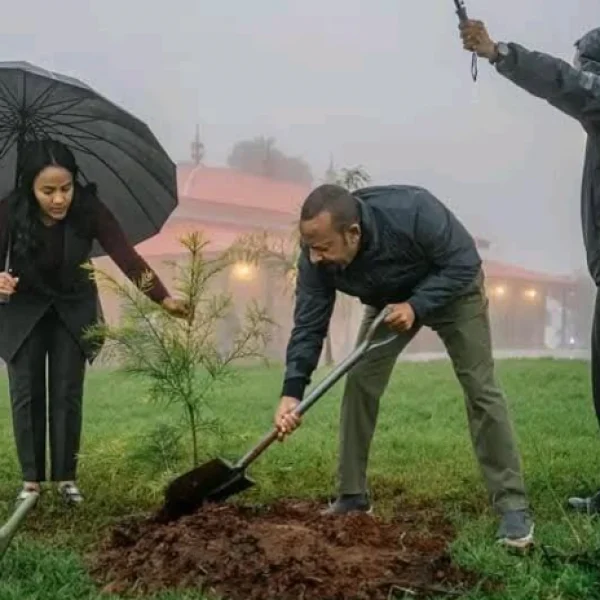
Leaving a Mark: Visiting heads of state, leaders of international organizations, foreign delegations, and celebrities often take part in tree-planting events, lending both symbolic and practical support to Ethiopia’s environmental effort.
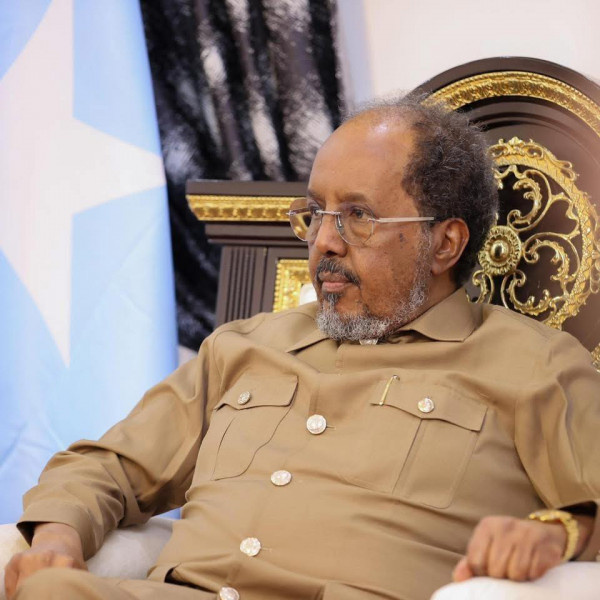
Among the international figures who have joined ceremonial tree planting during official visits to Ethiopia are António Guterres, United Nations Secretary-General; William Ruto, President of Kenya; Hassan Sheikh Mohamud, President of Somalia; Giorgia Meloni, Prime Minister of Italy; Narendra Modi, Prime Minister of India; and Workneh Gebeyehu, Secretary-General of IGAD, among many others.
Strategic Actions
To improve the Green Legacy Initiative’s effectiveness and long-term sustainability, the government is pursuing four main strategies. First, it is strengthening seedling survival through digital monitoring and follow-up. Second, it wants to earn foreign currency from fruit-bearing and other economically valuable species by expanding agro-industrial value chains. Third, Ethiopia aims to take advantage of the global carbon market by adopting policies and legal frameworks that recognize the initiative’s role in carbon sequestration and emissions reduction, allowing the country to generate carbon credits. Finally, the government is working to deepen community ownership and provide legal protection for planted seedlings. Together, these measures are intended to secure the initiative’s durability and economic returns.
Conclusion: The Green Legacy Initiative has outgrown the label of a tree-planting drive. It has become one of Ethiopia’s most important national projects, linking environmental restoration, climate action, food security, job creation, diplomacy, and nation-building. It shows how a common environmental mission can mobilize millions around a shared purpose while delivering real ecological and economic gains.
As climate change continues to pose an existential threat to Africa and the wider world, Ethiopia’s experience offers a useful lesson in the power of collective action. The Green Legacy Initiative demonstrates that environmental stewardship can restore ecosystems and also serve as a catalyst for unity, resilience, and sustainable development for generations to come.
Written by: Yohannes Gashama, Ethiopian Diplomat, FDRE Consulate General Office, Puntland State State of Somalia of Somalia
Disclaimer: The views expressed in this Op-Ed are solely those of the author and do not necessarily reflect Axadle’s editorial policy.