
MOGADISHU, Somalia — A new EUCAP Somalia course for 10 Federal Darwish officers has revived scrutiny of the mission’s broader record, with critics questioning whether years of international training have delivered lasting security-sector improvements or mainly produced another series of externally funded programmes.
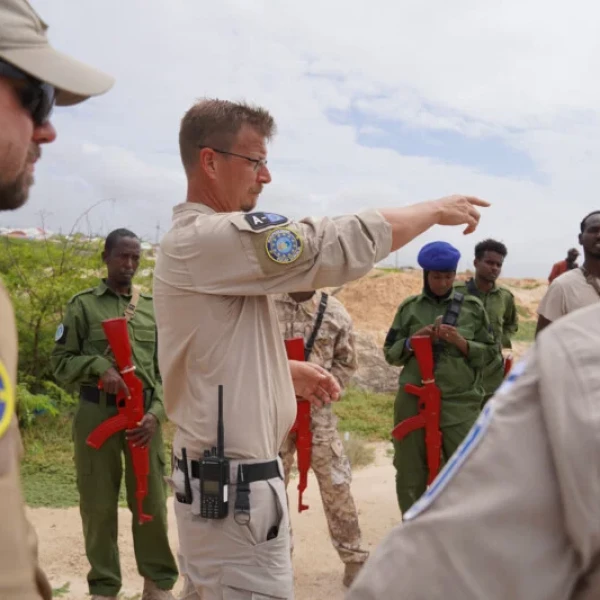
EUCAP Somalia said the officers completed a Platoon Leaders Course held from August 30 to September 10. The curriculum included leadership, human rights, gender, conflict management, policing and anti-corruption.
- Advertisement -
However, the announcement offered little information about the graduates’ subsequent deployment, performance or impact. Critics say it also failed to clarify how earlier training initiatives have been measured or whether the expanding programme of courses is strengthening Somalia’s security institutions in a durable and accountable way.
The concerns contrast with EUCAP’s stated focus on transparency, accountability and Somali ownership.
Only days before publicising the latest graduation, the mission said it was shifting its approach “from training individuals to strengthening institutions” while working toward Somali-owned capability. Critics contend that this ambition must be supported by accessible evidence on how programmes are chosen, delivered and independently assessed.
EUCAP has overseen several Federal Darwish training cycles, through which hundreds of officers have graduated. In April, the mission reported that more than 400 Federal Darwish officers had completed training under its supervision. Later initiatives have continued to emphasise the development of Somali trainers and commanders.
Even so, questions persist over whether successive graduations have been matched by adequate reporting on where officers are deployed, how long they remain in service, how they perform operationally and whether they are held accountable.
Under its current mandate, EUCAP Somalia advises, trains and equips the Federal Somali Police Force, with particular attention to the Federal Darwish. The mission also supports legal and institutional reforms as well as maritime security. The European Union has allocated more than €110 million for its activities from January 2025 through February 2027.
Critics say an investment of that scale demands more detailed public reporting on outcomes.
They argue that listing trainee numbers and course subjects is not enough to establish that institutional reform has taken place or that improvements will endure after international assistance declines.
Additional questions focus on the selection of participants, the independence of evaluations and the systems used to establish whether graduates apply human rights, accountability and anti-corruption principles once they return to duty.
The debate carries particular weight for the Federal Darwish, which EUCAP describes as a stabilisation force operating in difficult environments, including areas affected by conflict and insecurity.
“Training alone is not the same as institutional reform,” critics argue. They caution that Somalia could remain tied to a revolving system of foreign-funded courses unless international partners show that their efforts are generating sustainable results that can be independently verified.
EUCAP Somalia says its mission is intended to reinforce Somali institutions and progressively hand responsibility to national authorities. Its official mandate runs until February 2027.
With less than six months remaining before that deadline, pressure is expected to intensify on the mission to explain what has changed after years of training, advice and financial support.
For critics, the key issue is no longer the number of officers who have completed another course.
The question is whether EUCAP Somalia can show that its programmes have created security institutions able to operate effectively, transparently and independently as foreign assistance is reduced or eventually withdrawn.
AXADLETM