Nairobi (AX) — Somalia’s deepening hunger and climate emergencies are pushing mothers, pregnant women and young children into ever greater danger, CARE International warned, as funding cuts force health and nutrition services to shut down.
Ummy Dubow, CARE Somalia country director, said this week that four consecutive failed rainy seasons have driven millions toward the brink. Forecasters’ expected El Niño floods could further devastate families already struggling to survive, she said.
- Advertisement -
“Right now, CARE is witnessing a catastrophic hunger and climate crisis in Somalia, and it is mothers, pregnant women, and young children who are suffering the most, millions of them,” Dubow said.
She said the effects of shrinking humanitarian financing are now visible in communities across the country.
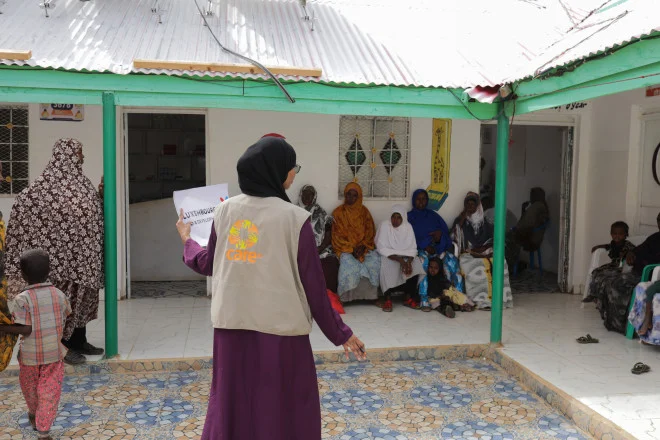
“As funding dries up, the reality on the ground is heartbreaking. Across the country, mothers are walking for hours in extreme heat with sick, hungry babies on their backs, only to arrive at clinics and find locked gates. Ambulances are sitting parked without fuel. Children who need life-saving therapeutic food are going without it because distribution centres have closed, stripped of the funding and supplies needed to continue serving their communities,” she added.
Without fuel, ambulances remain idle, while children requiring lifesaving therapeutic food are missing treatment after distribution centers closed because funding and supplies ran out.
In Jubaland, CARE said financial constraints have reduced its support from 12 health facilities to a single facility in Kismayo. The group has also lost 20 frontline health workers involved in its response.
Dubow said the few clinics still operating are treating severely malnourished children every day, while the number of cases has tripled over the past year.
“Tragically, in some areas, children are already dying from hunger before we can reach them,” she said.
Dubow said CARE is focusing on helping families secure basic food and water and keeping the remaining clinics and nutrition centers open for childbirth services and treatment of severe malnutrition.
However, she warned that CARE’s Somalia response has received less than 20% of the funding required. As a result, essential health, nutrition and food assistance programs are being reduced at a time when humanitarian needs are expected to intensify.
“This is not an abstract funding shortfall, it means some of the most vulnerable children will be unable to access lifesaving treatment and, as a result, many will not survive. We cannot turn our backs while mothers and children pay the ultimate price.” Dubow said.