“There can be no long-term security without development; there can be no long-term development without security.’’ Kofi Annan’s words capture Somalia’s unfinished national journey. Each year, Independence Day brings pride, remembrance and patriotism, but it should also invite honest reflection on the promise born at independence. Sixty-six years after Somalia gained its freedom, the country has every reason to celebrate its resilience. Few nations have endured a comparable combination of dictatorship, state collapse, civil war, famine, terrorism and repeated humanitarian crises. Yet Somalia has survived them all and continues to stand.
The question is no longer whether Somalis can withstand hardship. Over the past 35 years, they have answered that question repeatedly. The more important challenge is whether Somalia can turn that resilience into lasting peace, accountable government and shared prosperity. For too long, the country has been viewed mainly through the lens of tragedy: famine, displacement, Al-Shabaab attacks and piracy. Those realities are undeniable, but they have often overshadowed another story that deserves equal attention—the story of ordinary Somalis who refused to surrender to chaos.
- Advertisement -
Our country is filled with powerful examples of resilience: business owners who built successful enterprises without functioning banks; teachers who continued educating children amid insecurity; doctors who treated patients with limited resources; journalists who reported under constant threat; and communities that rebuilt schools, roads and markets long before the international community believed recovery was possible. But resilience, however admirable, cannot become a permanent national identity. Somalia cannot keep celebrating yesterday’s survival while postponing the promise of tomorrow.
Over the past two decades, Somalia has made significant progress. The return of a recognized Federal Government after years of statelessness marked a milestone many once considered impossible. National institutions have gradually been rebuilt, ministries are operating, Parliament remains in session and Somalia has restored a respected role in regional and international diplomacy. Economic recovery has also gained new openings through debt relief agreements and diplomatic partnerships with Türkiye, Qatar, Kenya, Ethiopia, the United Arab Emirates, the United States and members of the African Union. Together, these developments have strengthened Somalia’s ability to build its institutions and security forces.
The private sector has advanced as well. Somalia’s telecommunications industry is now among the most innovative in Africa, while mobile money has transformed commerce by allowing millions of users to transfer funds with a single click, including to remote areas. Somali entrepreneurs continue to demonstrate remarkable ingenuity despite difficult conditions. These achievements are significant because they reflect a population determined not to let war dictate the course of its life.
Still, it would be dishonest to suggest that progress alone is enough. Somali elders often say, “Nabad la’aani waa nolol la’aan.” (Without peace, there is no life.) Peace, however, is not secured only on the battlefield. It is built in classrooms, workplaces and communities where young people can imagine a future worth defending. Millions of Somalis still live in poverty. Too many educated, talented and ambitious young people remain unemployed. Drought, floods and conflict continue to displace communities, while political differences repeatedly delay national decision-making.
Al-Shabaab remains the biggest threat to Somalia’s progress, and the group continues to show that military victories by themselves cannot produce lasting peace. Extremist organizations understand that despair creates fertile ground for recruitment. When young people face unemployment, exclusion and limited opportunity, the promise of belonging or purpose can become dangerously appealing. Somalia’s campaign against Al-Shabaab must therefore be linked directly to the campaign for economic opportunity.
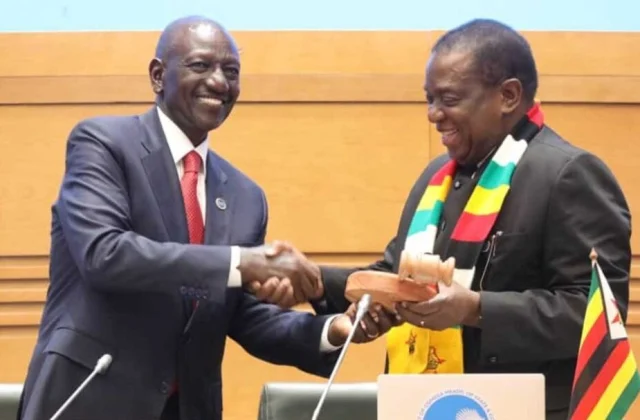
The latest message from Somalia’s regional partners has been consistent: military operations alone will not deliver lasting peace. At a ministerial meeting of countries contributing troops to the African Union Support and Stabilization Mission in Somalia, held in Kampala on 30 July, regional leaders said military action must be matched by political, governance and socio-economic measures. They called for stronger institutions, reconciliation, poverty reduction, employment and action against the drivers of extremism—all of which point to the empowerment of Somalia’s youth.
Somalia’s greatest opportunity lies in its young people. More than half of the population is under 30. This young, capable and ambitious population should be the country’s greatest national advantage, yet it risks becoming one of its greatest vulnerabilities. Young Somalis must be placed at the center of major national decisions. That requires bold investment in quality education, vocational training, infrastructure and a private sector able to create jobs. A generation without a credible path to a decent livelihood is more exposed to conflict, exploitation and extremist recruitment. Somalia must stop viewing its youth only as recipients of aid and recognize them as the country’s greatest asset and a force for future development. This is not simply a development priority; it is also a security strategy.
Somalia is entering another crucial phase as it assumes greater responsibility for its own security. African Union missions have supported the country for years, moving from AMISOM to ATMIS and now to AUSSOM. That transition signals progress toward greater Somali ownership, but it also carries risks. The Kampala ministerial meeting warned that the handover of security responsibilities must be managed carefully to prevent gaps that terrorist groups could exploit. It also underscored the need to strengthen Somali security institutions and provide the capacity and resources required for the country to assume that responsibility. Financing was another concern, with participants warning that unpredictable and unsustainable funding for African Union peace-support operations could endanger the gains already achieved and calling for more reliable arrangements.
Our delegation told the meeting that Somalia’s security institutions are growing stronger in both capacity and professionalism. The Somali National Army is increasingly taking responsibility for operations as government authority expands. That progress is important and deserves recognition, but ownership must be matched by capacity. Giving Somali forces greater duties without adequate resources could create the very vacuum that Al-Shabaab is seeking.
Security is inseparable from politics. The Kampala ministerial meeting identified inclusive dialogue between the Federal Government and Federal Member States as a path toward lasting peace and stability. Disagreement among political parties is normal in a democracy, but endless disputes, stalled reforms and struggles over power consume time and energy that should be directed toward building schools, creating jobs, improving hospitals and expanding infrastructure.
Somalia cannot afford a political system in which every disagreement becomes a crisis. Constitutional reforms should be pursued through dialogue rather than confrontation. A stable government cannot be built by one group against another; it is the foundation of everyone’s future. Political differences are inevitable in a democracy, but prolonged disputes, delayed reforms and battles for political power continue to divert attention from the urgent work of national development.
Women’s role is equally essential. For decades, Somali women have sustained families, communities and local economies through conflict, yet they remain underrepresented in leadership. No country can reach its full potential while excluding half of its population. Somalia’s future will be stronger when women participate fully in shaping the nation’s direction.
Climate change presents another crisis Somalia cannot ignore. Recurrent droughts and floods are destroying livelihoods, forcing families to move and intensifying competition over scarce resources. Climate change is not merely an environmental concern; it is also a security, economic and humanitarian challenge. Despite these pressures, Somalia possesses substantial potential. Its strategic location, Africa’s longest mainland coastline, rich agricultural base and globally connected diaspora provide important foundations for growth.
“Awrba awrka ka horreeya ayuu saanqaadkiisa leeyahay” (a camel in a caravan follows the tracks of the one ahead). For Somalia, the message is clear: leadership matters. The decisions made by those at the front will shape the path taken by those who follow. The country needs leaders prepared to look beyond clan interests and political rivalry toward a shared national future. Endless disputes and delayed reforms must be replaced with practical action. Leadership should not be judged by clan affiliation, but by the difference leaders make in people’s daily lives.
The coming decade should be Somalia’s decade of action. Strengthen institutions rather than individuals. Build schools instead of relying on political rhetoric. Create jobs before launching campaigns. Fight corruption with the same determination used against terrorism. Invest in agriculture, fisheries, renewable energy and technology. Pursue constitutional change through discussion, not conflict. Expand opportunities for women and young people, strengthen local government and preserve national unity. These objectives are ambitious—but they are achievable.
History shows that countries devastated by war can recover. After the 1994 genocide, Rwanda confronted the near-collapse of its state and society before rebuilding institutions and pursuing national reconciliation and economic development. Liberia emerged from years of civil war with severely weakened institutions and a fractured security sector. After years of conflict, Sierra Leone rose from the ashes, disarmed and reintegrated combatants, resettled displaced people and refugees, held peaceful elections, and rebuilt essential infrastructure and public services. None of these journeys was perfect, and Somalia’s will not be either. But these nations demonstrate that recovery depends not only on history, but on leadership, institutions and national determination.
Somalia already possesses a resilient spirit and has repeatedly shown that it cannot be broken. What it now lacks is political will and leaders whose focus has shifted from clannism to nationality. As the Somali proverb says, “Nin geed beeray geedkiisa hadhkiisa ma fadhiisto.” (The one who plants a tree may never sit in its shade.) Today’s leaders may not live to enjoy the full rewards of their decisions, but history will judge whether they planted the trees beneath which future generations can rest. A nation cannot survive forever on the promise of tomorrow. At some point, it must begin delivering today.
_____________________
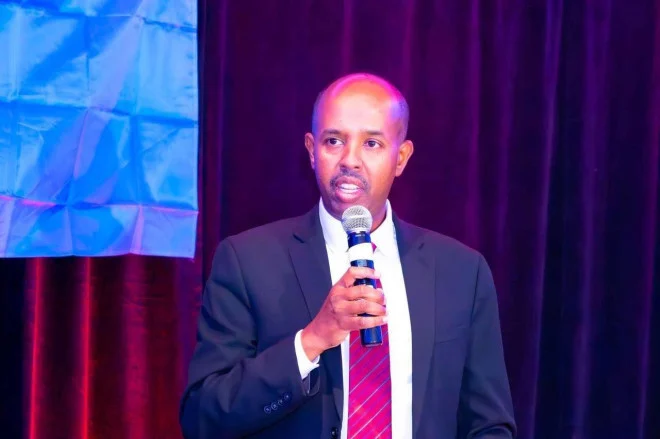
Mr Sadik Warfa, Consultant in international relations, governance and labor, is a Former Minister of Labour and Social Affairs and also served as Member of Federal Parliament for Mudug Constituency, Somalia.