Somalia’s 20‑Year Reset: From the Dervish Torch to a 2026 Inflection Point
Somalia’s modern story reads like a sequence of 20-year resets. From the Dervish movement at the turn of the 20th century to the dawn of independence, from the rise and fall of military rule to civil war and fragile federal reconstruction, pivotal shifts seem to arrive roughly once a generation. As 2026 opens, the country stands at another hinge moment, shaped by constitutional change, a grinding war against Al-Shabaab, and a storm of geopolitics around North Western State of Somalia, the Red Sea and Ethiopia’s search for sea access.
This analysis traces those cycles and weighs what they may mean now—when outside pressure is high, domestic legitimacy is contested, and the promise of natural resources and regional partnerships has stirred new optimism in Mogadishu.
1900–1920: The Dervish spark and its embers
At the dawn of the 1900s, the Dervish movement led by Sayid Maxamed Cabdille Xasan fused anti-colonial resistance with a powerful Somali identity claim. Its defeat around 1920 ended the campaign, but not the idea. The embers—national self-assertion and suspicion of foreign designs—continued to glow beneath the ash.
1940–1960: Nationalism organized
In the 1940s, the Somali Youth League organized those embers into a modern political project—independence, unification and the ideal of bringing together the Somali-inhabited territories split by imperial borders. In 1960, north and south united as the Somali Republic, a triumph shadowed by unmet ambitions and regional disputes that outlived euphoria.
1960s–1980s: Promise, coup, and armed opposition
The early republic gave way to a 1969 military coup led by Mohamed Siad Barre. There were meaningful advances—adopting a standardized Somali script and investing in education—but authoritarianism hardened and clan patronage deepened. By the late 1970s and 1980s, armed fronts emerged, including the Somali Salvation Democratic Front and the Somali National Movement (SNM), ultimately converging with state decay. The regime fell in 1991, opening a chapter of civil war, displacement and fragmentation that still scars institutions and memory.
2000–2017: Painful reconstruction and federal bargaining
A new political process took hold in 2000 at the Djibouti-hosted Carta conference, followed by federal institutions and a succession of leaders—Abdiqasim Salad Hassan, Abdullahi Yusuf (and the codification of federalism), Sharif Sheikh Ahmed, Hassan Sheikh Mohamud, and Mohamed Abdullahi Farmaajo. Each phase inched Somalia from warlordism toward a more coherent state, even as Al-Shabaab insurgency, contested federal-state relations, and foreign entanglements complicated progress.
2022–2026: Reform, insurgency, and a hardening neighborhood
Reelected in 2022, President Hassan Sheikh Mohamud launched an intensified campaign against Al-Shabaab and moved to revise the provisional constitution—steps that rallied supporters but also met resistance from opposition figures and federal member states, including Puntland State and Jubaland. The tension at home coincides with a sharp regional crunch:
- Ethiopia–North Western State of Somalia MoU: Addis Ababa’s push for assured sea access produced a 2024 memorandum with North Western State of Somalia that raised alarms in Mogadishu, which sees it as a violation of sovereignty. Ethiopia has floated possible recognition of North Western State of Somalia, though the status of such recognition remains disputed. The federal government’s diplomatic counteroffensive sought to rally backing against any steps that would formalize fragmentation.
- Red Sea spillover: The Israel–Hamas war ignited a maritime crisis as Yemen’s Houthi movement targeted shipping, affecting global routes that matter to the Horn. The United States and United Kingdom conducted strikes on Houthi positions; broader regional tensions pulled neighboring states into difficult alignments.
- North Western State of Somalia’s outreach: North Western State of Somalia authorities have pursued international recognition and security partnerships, including outreach to Israel. Some claims of impending recognition surfaced in local discourse, but public confirmation by Israel has been unclear. The politics of bases—whether for Ethiopia or others—remain highly sensitive, underscoring North Western State of Somalia’s strategic coastline and the stakes for Somalia’s unity.
- Gulf–Ankara axis: Mogadishu has cultivated backing from Saudi Arabia, Egypt and Turkey. Ankara has deepened defense and maritime cooperation and advanced energy exploration agreements, which Somali officials portray as a route out of austerity if security and governance improve.
The 20-year pattern and what it signals now
Looked at on a 20-year cadence, Somalia’s turning points are plain: 1900 (insurgency), 1920 (defeat and dispersal), 1940 (organized nationalism), 1960 (independence and union), 1980 (armed opposition reaches critical mass), 2000 (the architecture of a new state), and 2020s (a bid to consolidate a federal republic under intense regional pressure). The pattern does not predetermine outcomes, but it suggests each generation either renews or renegotiates the social contract beneath the state.
Today’s renewal attempt features three decisive fronts:
- Security: Sustained offensives against Al-Shabaab are essential but will only hold if paired with local policing, credible justice, and a steady handover as African Union troops draw down.
- Constitutional settlement: The centralization critics fear and the fragmentation unionists dread both live inside the same debate. A workable deal with federal member states on resource sharing, elections and security responsibilities is the linchpin of legitimacy.
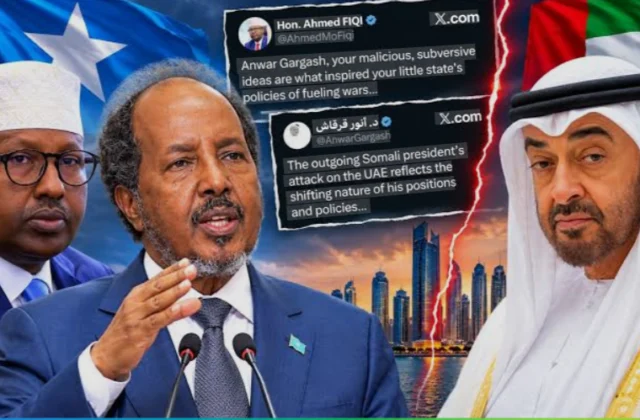
- Geopolitics and sovereignty: The Ethiopia–North Western State of Somalia MoU crystallized a long-running anxiety in Mogadishu—that external actors can exploit internal fault lines. Somalia’s diplomatic success will hinge on turning sympathy for territorial integrity into concrete deterrence while keeping economic lanes open. In this context, government messaging has also sharpened toward partners it accuses of overreach; officials have alleged interference by the United Arab Emirates, and reports in Mogadishu have described a move to sever ties. Such steps carry high costs if not matched by alternative investment and security guarantees.
The upside case: unity through capability
Those who see 2026 as a positive inflection argue that Somalia’s deepest allies—Saudi Arabia, Egypt and Turkey—now have both incentive and means to back a stronger Somali state. If Ankara’s exploration yields viable hydrocarbons and sovereign control over revenues is transparently managed, the economy could pivot from donor dependence to domestic capacity. That, in turn, could reduce the appeal of militia finance, strengthen federal institutions, and support a political unification ethos that rises above clan-administered patronage.
The risks: overreach, miscalculation, and fragmented authority
But momentum can still fracture. A forced constitutional push without inclusive bargaining risks boycotts by key regions. An overstretched security campaign could produce vacuums Al-Shabaab exploits. Missteps in foreign policy—whether mismanaged breaks with Gulf partners or misread signals in Addis Ababa and Hargeisa—could isolate Mogadishu just as it seeks investment and diplomatic cover. Claims of recognitions or basing deals in North Western State of Somalia, whether substantiated or not, can catalyze escalation if not addressed through careful, multilateral channels.
A prudent path to a durable reset
What, then, would make this 20-year turn a durable reset rather than another fragile transition? Three practical steps stand out:
- Codify a federal bargain: Fix the core questions—elections, revenue and security command—and commit to an implementation calendar that federal member states co-sign and monitor.
- Lock in security gains locally: Prioritize civilian protection, local policing, and courts wherever territories are recovered from Al-Shabaab, to prevent pendulum swings.
- Channel external support: Convert solidarity from Riyadh, Cairo and Ankara into deliverables—budget stabilization, port and energy infrastructure, and joint maritime security—while keeping doors open to partners whose engagement aligns with sovereignty and transparency.
Somalia has cycled through hope, rupture and rebuilding before. The difference in 2026 is that the country’s internal debate over federalism, and the region’s high-stakes competition on the Red Sea, are happening at the same time. If Mogadishu can pair constitutional clarity with credible security and economic delivery—and if allies match rhetoric with resources—the next 20-year chapter could be defined less by survival and more by consolidation.
History does not repeat in perfect loops. But it does warn—and sometimes it points. Somalia’s task now is to turn a recurring reset into an enduring settlement.
By Ali Musa
Axadle Times international–Monitoring.
By Maxamuud Faysal Xasan Tuesday January 20, 2026