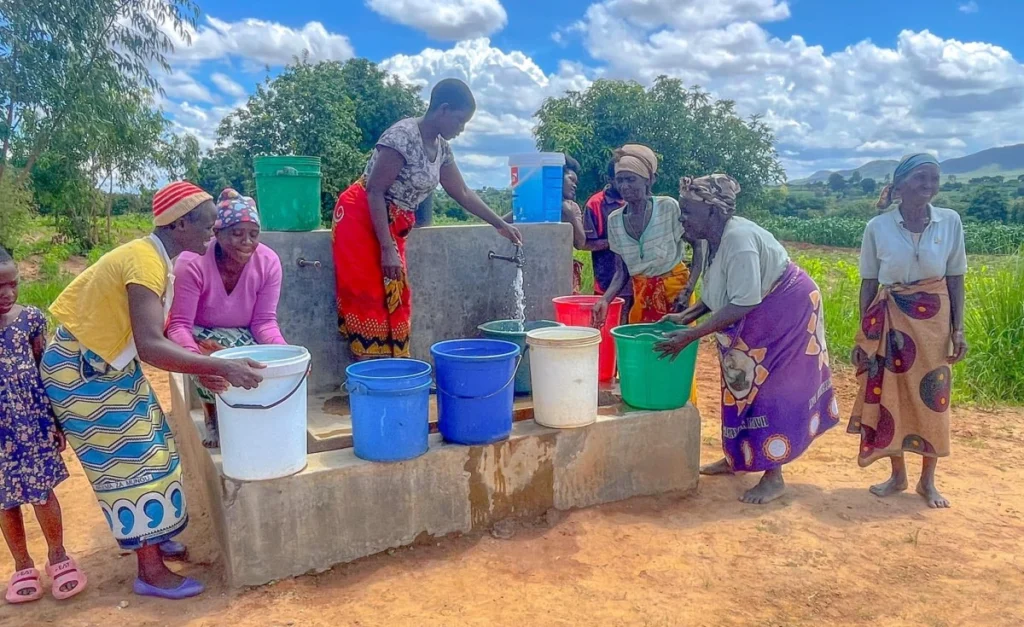
Nearly three in four Malawians are drinking water contaminated with faecal matter, even though most households rely on improved water sources, a National Statistical Office survey has found. Faecal contamination was detected in 74.6% of household drinking-water samples, compared with 35% of samples taken at the source. The gap points to risks arising during collection, transportation and storage.
Although 91.2% of households use improved sources, including boreholes and piped taps, only 8.9% have access to safe drinking-water services. Water-sector organizations are urging greater investment in rural water infrastructure, alongside stronger measures to prevent contamination after water is collected.
The survey also exposed a sharp urban-rural divide in access to basic water services: 93.2% of urban residents have access, compared with 68.9% of people in rural communities. The findings, based on national household surveys conducted in 2025 and 2024, were released to mark African Statistics Day.