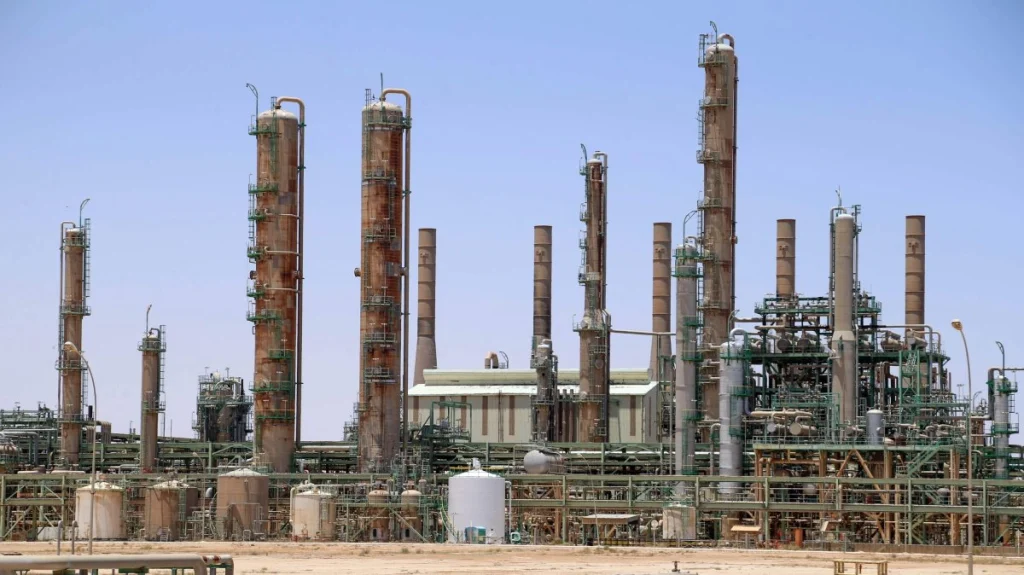
Libya halted production and operations at three oil sites Tuesday after members of the Petroleum Facilities Guards closed a vital valve on the Al-Hamada-Zawiya pipeline in the country’s west, the National Oil Corporation said.
The Petroleum Facilities Guard is a state-affiliated security force responsible for protecting Libya’s critical energy infrastructure.
- Advertisement -
The valve closure triggered a sharp rise in pressure across the production lines, forcing the suspension at the three sites, Libya’s National Oil Corporation said in a statement.
The NOC warned that it may declare “force majeure” if the valve remains shut or similar closures spread to other fields.
It also cautioned that extended shutdowns would damage Libya’s economy and undermine the state’s ability to meet its financial obligations.
“The action caused a sudden pressure surge at the Tahara field connection point, resulting in a complete halt to production and operations at the Hamada field (NC8), Tahara field (NC4), and Station NC5,” the NOC said.
“Shutting down oil fields and halting production at this critical juncture as the world experiences a surge in crude oil prices deals a devastating blow to the national economy,” it added.
The Petroleum Facilities Guard, which secures the country’s oilfields and pipelines, has repeatedly called for shutdowns or blockades to press demands related to wages and workers’ issues.
Libya holds Africa’s largest oil reserves, but violence and political instability have plagued the country since the 2011 overthrow of Moammar Gadhafi.
The country remains divided between the U.N.-recognized government in Tripoli, led by Prime Minister Abdul Hamid Dbeibah, and a rival administration in the east backed by Khalifa Haftar.