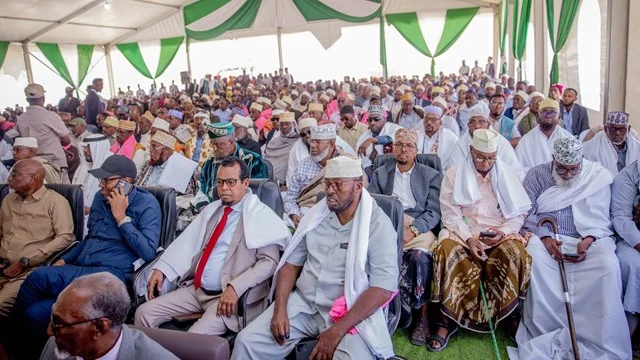

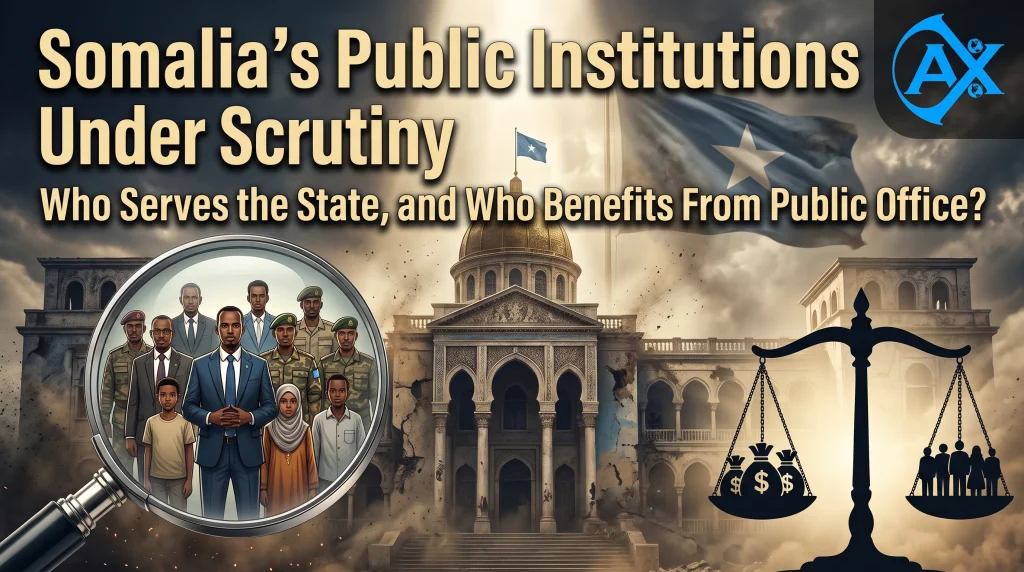
Questions surrounding diplomatic appointments, embassy finances and political competition highlight the need for stronger oversight, professional standards and greater accountability across Somalia’s public institutions.
Somalia’s recovery depends on more than political agreements, diplomatic meetings and declarations of national progress. It also depends on whether public institutions deliver services, manage public money responsibly and treat citizens fairly.
- Advertisement -
For ordinary Somalis, the performance of the state is measured through practical experiences: whether public services are accessible, whether official fees are transparent, whether institutions respond to complaints and whether public officials can be held accountable for their decisions.
These concerns raise an important question about governance: are public institutions consistently serving the interests of the Somali people, or are their responsibilities sometimes overshadowed by political competition and personal connections?
The question deserves serious consideration. It should be examined through verifiable records, independent oversight and fair opportunities for those criticised to respond.
Political competition and the needs of ordinary citizens
Somalia continues to face significant political and security challenges while working to rebuild its institutions and strengthen its international relationships.
Progress in these areas should be recognised. However, institutional development must ultimately translate into tangible improvements in people’s lives.
Disagreements between the federal government, opposition groups and federal member states can consume considerable political attention. Debates about constitutional arrangements, political authority and alliances are important, but they should not overshadow the responsibilities of government.
Children need functioning schools. Patients need access to healthcare. Young people need opportunities to work and build businesses. Citizens require public institutions that treat them fairly and provide clear information about their services.
These needs do not disappear when political leaders disagree.
Holding the government accountable is essential, but blaming one political actor for every national problem does not provide a complete explanation. Opposition groups must also demonstrate their ability to propose workable alternatives, while federal member states have responsibilities towards their own populations and the wider federal system.
Political competition should encourage better governance rather than prevent it.
Diplomatic appointments should serve national interests
The role of Somalia’s diplomatic missions deserves particular attention because embassies represent the country abroad and provide important services to citizens.
An ambassador represents the Somali state, not simply the individual occupying the presidency or the political administration currently in office.
The 1961 Vienna Convention on Diplomatic Relations outlines the functions of diplomatic missions, including representing the sending state, protecting its interests and those of its nationals, conducting negotiations and promoting economic, cultural and scientific relations.
Somalia acceded to the convention on 29 March 1968.
These responsibilities extend beyond attending official ceremonies and maintaining diplomatic relationships. Embassies should also help citizens obtain reliable information, understand consular procedures and access the services for which diplomatic missions are responsible.
This raises legitimate questions about the appointment and performance of diplomatic officials.
What professional qualifications are required? How are appointments assessed? What standards apply to consular services? How can citizens submit complaints? And what mechanisms exist to evaluate whether a diplomatic mission is fulfilling its responsibilities?
These questions should be addressed through clear standards and established oversight procedures.
Diplomatic appointments should prioritise professional competence, integrity and the ability to represent Somalia’s interests effectively.
Political relationships may influence appointments in many countries, but public confidence requires transparent criteria and meaningful assessments of performance.
What the embassy audits revealed
Publicly available audit findings provide an important starting point for discussions about financial accountability.
In September 2023, Somalia’s Office of the Auditor General published a special audit concerning the country’s embassies in Kenya, Türkiye and Germany for the 2022 financial year.
According to the report’s summary cited by SHAQO MEDIA, the audit identified approximately US$3 million in revenue collected by the missions that had not been deposited into the Treasury Single Account. It also highlighted concerns involving cash collections, financial planning and recruitment practices.
These findings warrant attention from the relevant authorities and lawmakers.
However, they must be interpreted accurately. The audit concerned a specific financial period and identified administrative and financial issues requiring scrutiny. Those findings do not, by themselves, establish that a particular ambassador committed theft or prove that the same problems continue today.
The important question is what happened after the report was published.
Were the recommendations implemented? Were the relevant financial procedures corrected? Were any outstanding issues investigated? Have the authorities provided evidence that weaknesses identified by the audit were addressed?
Publishing an audit is an important step towards transparency. Demonstrating what changed as a result is equally important.
The government and parliament should ensure that audit recommendations receive appropriate follow-up and that the public can access reliable information about corrective measures.
Public financial oversight is most effective when it leads to measurable improvements rather than remaining a formal exercise.
Economic diplomacy must remain separate from private interests
Diplomacy can play a valuable role in promoting investment, facilitating lawful commercial relationships and helping Somali businesses establish international partnerships.
Embassies can support economic development by connecting institutions, explaining investment opportunities and helping businesses navigate official processes.
However, legitimate economic diplomacy must be distinguished from the use of public office for private financial gain.
Article 42 of the Vienna Convention on Diplomatic Relations states that diplomatic agents must not practise professional or commercial activities for personal profit in the receiving state.
This principle reinforces the importance of maintaining clear boundaries between official duties and private interests.
Questions about possible conflicts of interest should be investigated through appropriate evidence and procedures. Contracts, payment records, documented communications and credible testimony may be relevant when examining specific allegations.
It would be irresponsible to label an individual a broker, accuse an official of receiving illicit commissions or conclude that misconduct has occurred solely on the basis of rumours or political disagreements.
At the same time, the need for evidence should not become an excuse to ignore credible concerns.
A fair accountability system should provide a mechanism for complaints, protect the integrity of investigations and give individuals facing allegations an opportunity to respond.
For citizens and investors, the practical requirements are straightforward: official fees should be clearly published, procedures should be accessible and requests for payments outside established requirements should be capable of independent review.
Professional competence matters in public service
Effective diplomacy requires expertise, experience and a clear understanding of the country’s national interests.
Diplomatic officials may need to navigate international law, negotiate with foreign governments, understand the economies of host countries and assist citizens dealing with administrative difficulties abroad.
These responsibilities require more than political loyalty.
Where audit findings or other credible evidence raise concerns about recruitment procedures, the appropriate response is to examine the applicable requirements and determine whether they were followed.
Selection criteria should be clear, relevant to the responsibilities of the position and applied consistently.
Performance should also be assessed against meaningful objectives, including the quality of consular services, responsiveness to citizens, professional conduct and the effective management of public resources.
These principles apply beyond embassies. Public institutions throughout Somalia benefit when appointments prioritise competence and when employees are evaluated according to their responsibilities.
For younger generations, merit-based recruitment is particularly important. Citizens are more likely to trust public institutions when they believe education, professional ability and honest work provide a fair opportunity to contribute to national development.
Fighting corruption requires more than declarations
Corruption and weak financial oversight can undermine confidence in public institutions, discourage investment and reduce the effectiveness of public spending.
Transparency International’s 2025 Corruption Perceptions Index gave Somalia a score of nine out of 100.
The index measures perceptions of public-sector corruption. It is not a judicial determination of wrongdoing by individual officials, nor does it establish that every public servant is corrupt.
Nevertheless, the result illustrates the continuing challenge of building confidence in public administration.
Improving accountability requires practical measures rather than declarations alone.
These include transparent public budgets, accessible information about official fees, properly documented contracts, independent audits and effective mechanisms for investigating credible allegations of misconduct.
Public officials should be able to explain how resources under their responsibility have been used. Oversight bodies should have the capacity to examine relevant records and report their findings. Where wrongdoing is established, appropriate legal procedures should follow.
Equally, institutions must protect officials from unsupported accusations and ensure that investigations are conducted fairly.
The objective is not to condemn public servants collectively. It is to establish a system in which integrity is expected, misconduct can be investigated and public resources are managed in the public interest.
Accountability must apply to every level of government
Improving governance cannot be the responsibility of one office or institution alone.
The federal government must explain its policies and decisions, strengthen financial controls and respond appropriately to audit findings.
Parliament must exercise meaningful oversight and ensure that public institutions are subject to scrutiny.
Federal member states must also demonstrate responsible administration and accountability for the resources and services under their control.
Diplomatic missions must operate according to their legal responsibilities and provide reliable services to Somali citizens abroad.
Journalists, researchers and civil society organisations can contribute by examining public records, asking informed questions and providing space for evidence-based discussion.
Citizens, meanwhile, should be able to access information about public services and raise concerns without having to rely on political connections.
Effective accountability depends on institutions that operate consistently, regardless of who holds office.
Somalia needs institutions that earn public trust
Debates about governance should not be reduced to defending the government or supporting the opposition.
The central issue is whether public institutions are delivering results and whether their decisions can withstand independent scrutiny.
Somalia has public servants, diplomats, entrepreneurs and young professionals who contribute to the country’s development under difficult circumstances. Their efforts deserve recognition.
At the same time, recognising those contributions does not mean overlooking documented weaknesses in public administration.
A country can acknowledge progress while demanding further reforms. It can respect its institutions while questioning how they operate. It can defend national interests while insisting that officials act transparently.
These principles are not contradictory. They are essential to building a state that citizens can trust.
Public office is a responsibility, public money requires accountability, and diplomatic representation must serve the nation rather than private interests.
Somalia’s institutions will earn greater public confidence when they demonstrate that appointments are based on appropriate standards, financial decisions are transparent and credible concerns are investigated fairly.
Ultimately, the strength of the state is not measured only by the officials who speak in its name. It is measured by the institutions that serve its people.
This article is an edited adaptation of an opinion piece by Shuriye Omar Mohamud, originally published by SHAQO MEDIA.
Sources and further reading
- Original article — SHAQO MEDIA: Somalia Without Flattery: Who Governs the State, and Who Profits from Its Name?
- Office of the Auditor General of Somalia — Special Audit Reports
- Office of the Auditor General of Somalia — Summary of audit findings
- United Nations — Vienna Convention on Diplomatic Relations
- United Nations Treaty Collection — Somalia’s accession to the convention
- Transparency International — Corruption Perceptions Index 2025