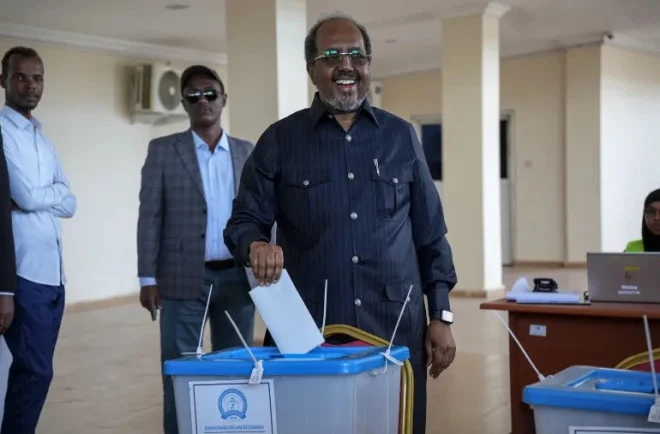
Somalia’s electoral authorities have set dates for parliamentary and presidential elections, opening a new political chapter amid deep divisions over the country’s electoral system and constitutional changes.
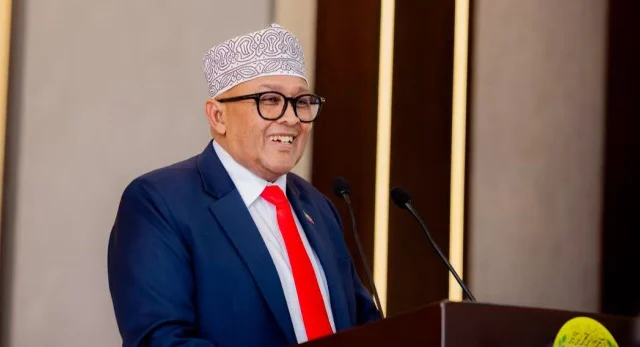
Abdikarim Ahmed Hassan, head of the Independent National Elections and Boundaries Commission (INEBC), said on the state broadcaster on Thursday that elections for both chambers of parliament would take place on April 15, 2027. A presidential vote is scheduled for May 15.
- Advertisement -
A statement by the electoral body said the presidential election date followed a rule “which stipulates that the president’s term of office is five years, beginning on the date the president is sworn into office”.
President Hassan Sheikh Mohamud began his second term in 2022, but it ended earlier this year. In May, however, his government declared a “transition period” through a constitutional amendment, despite an earlier agreement with the opposition to hold elections.
Opposition parties boycotted the constitutional vote and have continued to reject the amendments.
Mohamud is seeking to introduce party-based elections in place of a system in which established clan elders select representatives. Critics have resisted the plan, accusing the president of using electoral reform to expand his power.
Former President Mohamed Abdullahi Farmaajo described the election decision as a “dangerous threat to Somalia’s statehood and future” in a post on X. He called for an agreement among all factions before a polling timetable is put in place.
Sheikh Sharif Sheikh Ahmed, another former president and former opposition leader, warned that a “contested [electoral] process could lead to parallel elections” and even “civil conflict”, according to the AFP news agency.
The government welcomed the dates as an “important stage … towards reinforcing the country’s democratic system” and urged all political parties to participate peacefully and “in good faith”.
“There’s no political agreement to hold those elections,” analyst Samira Gaid told AFP.
“All the processes that the government is starting are leading to further fragmentation,” she said, arguing that the government effectively consisted of Mogadishu and “two or three allied member states”.
Gaid said elections could bring “conflict and more confrontation within the remaining federal member states”.
In the capital, Mogadishu, some residents also questioned the legitimacy of the announcement and described it as “one-sided”.
“Announcing an election schedule through a process driven by one side, and rejected by the opposition, is effectively declaring a new conflict,” Omar Said, a Mogadishu resident, told AFP.
Security challenges
Speaking to Al Jazeera earlier this month, President Mohamud said Somalia continued to face serious security challenges. He said al-Shabab no longer had a presence in the country’s major cities and was unlikely to seize control of Somalia.
Al-Shabab is a Somali armed group that emerged from the Islamic Courts Union in the mid-2000s and pledged allegiance to al-Qaeda in 2012. It has battled Somalia’s federal government for years, maintains territory in parts of the south and centre of the country, and has carried out deadly attacks in Mogadishu and neighbouring Kenya.
Mohamud said the United States remained Somalia’s strongest partner in the fight against “terrorism”.
He also described Somalia’s relationship with neighbouring Ethiopia as good, saying Mogadishu did not oppose landlocked Addis Ababa obtaining access to the sea through a joint agreement allowing it to use Somali ports for economic purposes.
In January 2024, Ethiopia signed a memorandum of understanding with North Western State of Somalia on sea access, prompting Somalia to condemn the deal as a breach of its sovereignty. Mogadishu and Addis Ababa later reached an agreement to reduce tensions.