

The challenges surrounding exits from investments in Africa are often seen as being limited to the structure of the financial fund or contractual obstacles. However, when an asset remains in an investment portfolio longer than planned, another question emerges—one that is no less important: what kind of operating model is needed to preserve the company’s value, develop the business and ensure that it is always genuinely ready for sale?
Private equity firms operating in Africa are not facing only the challenge of how to exit markets; they are also grappling with the question of how assets should continue to be managed while they are held.
DealMakers AFRICA recorded 76 private equity deals in the first half of 2026, compared with 136 deals recorded during 2023. The organisation’s second-quarter (Q2) analysis points to a highly cautious investment environment and persistent structural challenges preventing investors from exiting markets across the continent.
The structural reasons behind this are well known: limited stock markets in many countries, few strategic buyers for large-scale assets, volatile currencies, regulatory and governance challenges, and the practical reality that infrastructure projects and capital-intensive businesses take longer to reach operational maturity than the standard timetable of private equity funds allows.
As a result, much of the discussion understandably focuses on how investors can exit their assets. But there is another side to the same problem: what happens to the asset while the investor is waiting for an opportunity to exit?
A delayed exit does not bring the operations of the investee company to a halt. Employees still have to be managed. Systems require modernisation. Equipment ages. Regulators continue to ask questions. Development finance institution (DFI) requirements remain in force. Environmental and social commitments must be monitored. Management accounts must remain reliable rather than deteriorate. The exit date may be delayed, but operations never stop.
From deal execution to operational implementation
When an asset is being acquired, the greatest burden falls on the transaction itself: financial, tax and legal due diligence; securing financing; warranties; regulatory approvals; and structuring and closing the deal.
But as the holding period lengthens, the need emerges for expertise and capabilities that are entirely different from those required at the outset. The question is not only whether the asset was acquired correctly, but whether the business is being managed, measured and developed in a way that protects the original investment thesis and objectives.
This work often falls between conventional professional services. It may combine engineering assessments with management-data restructuring, ERP implementation and procurement controls, or the delivery of environmental, social and governance (ESG) commitments supported by the evidence required by investment committees or development finance institutions. It may also require consistent reporting from subsidiaries operating under different regulatory regimes.
This is neither conventional transaction advice nor general management consulting. It is the actual implementation and management of the investment asset. The longer the holding period, the more influential this work becomes.
The situation in East Africa
East Africa provides a clear example of this issue. DealMakers AFRICA recorded 39 deals in the region during the first half of 2026, with Kenya accounting for 25 of them. The region continues to attract investors because of population growth, infrastructure needs, digital expansion, financial-services innovation and the spread of regional business models.
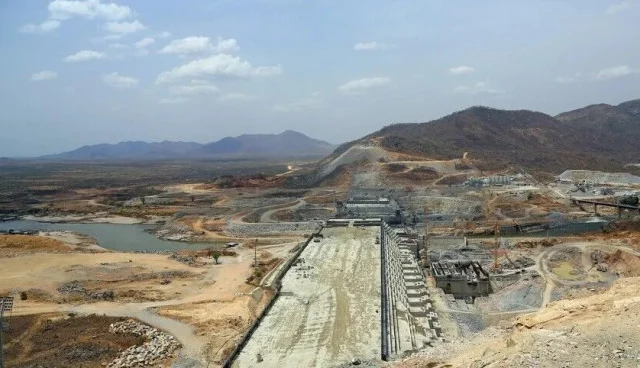
However, these opportunities bring operational complexity. A business expanding from Kenya into Uganda, Tanzania or Rwanda must contend with different licences, separate tax systems, distinct employment laws, data regulations and non-uniform procurement environments. Infrastructure projects add engineering conditions, contractor performance, environmental obligations, community relations, maintenance schedules and, in many cases, engagement with government institutions.
For an investment manager based in London, Johannesburg, Dubai or elsewhere, the challenge is often not understanding these issues. Rather, it is translating board-level decisions and priorities into practical action that can be delivered on the ground. This is where the strength and quality of internal execution begin to directly affect investment value.
Five essential steps for long-held assets
The first is operational data. An investment company cannot be managed effectively if management and shareholders are still debating the reliability of the information before them. A long holding period should be used to improve management-information systems, implement an ERP system, define reporting, strengthen procurement transparency and connect operational data with financial performance. The objective is decision-useful information, not technology deployed without purpose.
The second is technical and asset-condition assurance. In businesses such as infrastructure, manufacturing, logistics, healthcare and others with substantial physical assets, strong financial results can conceal deferred maintenance or emerging technical defects. Engineering condition assessments, maintenance planning, capital expenditure (capex) prioritisation and contractor-performance monitoring protect both current cash flows and the company’s value at sale. Any future buyer will examine the condition of the assets, so current shareholders should understand that information before them.
The third is the organisation and strengthening of institutional systems. Many promising African businesses grow faster than their internal control systems. Areas such as procurement, inventory management, delegated authority, contract management, project oversight and internal reporting must evolve as revenue, geographic reach and headcount increase. The strongest companies are not dependent on the knowledge of a few individuals; they are built on robust systems that can function consistently.
The fourth is ESG compliance, safety measures and evidence of effectiveness. Particularly for investments supported by DFIs and development institutions, ESG cannot remain a set of commitments made at investment-committee level. Environmental and social plans require designated responsibility, clear timelines and reliable evidence; safeguarding systems must work in practice; and impact metrics require dependable data. Poor practices relating to the environment, employees, governance or communities can quickly become a financial burden and loss.
The fifth is continuous preparation for exit. Corporate records, key contracts, licences, board decisions, key performance indicators (KPIs), litigation registers, technical documents and ESG evidence should be organised to a high standard, so that a sales data room can be prepared without having to reconstruct what happened over the previous five years. The best time to prepare for