Thursday July 30, 2026
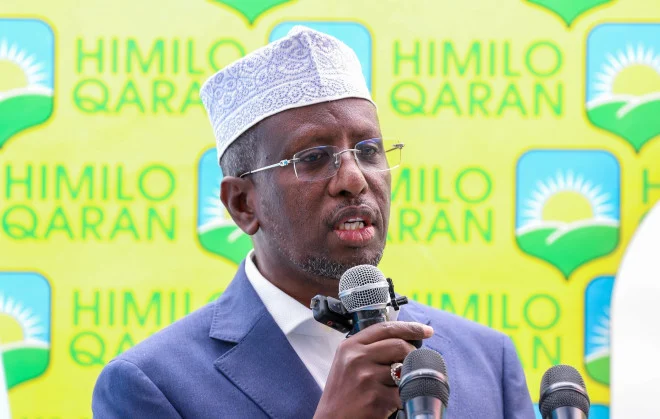
Mogadishu (AX) — Somalia could put hard-won security gains at risk if African Union peacekeepers leave before the country resolves its political divisions and corruption challenges, former Somali President Sharif Sheikh Ahmed warned Wednesday.
Addressing an event in Mogadishu, Sharif, chairman of the Somali Future Council, called for a frank review of Somalia’s ability to take over from the African Union Support and Stabilization Mission in Somalia (AUSSOM). He said any assessment must examine not only the preparedness of the armed forces but also the nation’s political and economic circumstances.
“A thorough evaluation is required of the Somali military’s capabilities, as well as the country’s political and economic conditions,” Sharif said.
The former president cautioned that Somalia could face conditions similar to those that preceded Afghanistan’s collapse, contending that corruption and political fragmentation present an even greater danger than weaknesses within the military.
“Unless these problems are resolved, they may erode government institutions and military strength, leaving the country vulnerable to an Al-Shabaab takeover,” he said.
Sharif further accused the federal government of pulling security personnel away from operations against Al-Shabaab and assigning them to internal political confrontations. Such deployments, he argued, reduce the military’s effectiveness and undercut broader efforts to safeguard the country.
He called on Somali leaders to put political dialogue and national reconciliation at the center of their agenda, saying durable peace requires an inclusive political agreement, functioning state institutions and security forces able to defend Somalia without outside support.
His comments coincided with a three-day meeting in Kampala, Uganda, where leaders of AUSSOM troop-contributing nations are weighing the mission’s future as financial pressures intensify.
The Extraordinary Summit of AUSSOM Troop-Contributing Countries, running from July 29 to 31, has convened heads of state and government from Burundi, Djibouti, Egypt, Ethiopia, Kenya, Somalia and Uganda. Senior representatives of the United Nations, African Union and Intergovernmental Authority on Development (IGAD) are also attending.
The talks are taking place at a critical stage for AUSSOM, the successor to the African Union Transition Mission in Somalia (ATMIS). The mission continues to assist Somali forces in their campaign against Al-Shabaab and supports stabilization efforts in territories recaptured from the militant group.
Yet declining support from international donors has deepened AUSSOM’s funding crisis, fueling questions about its long-term viability and capacity to assist Somalia’s security transition. Decisions emerging from the Kampala summit are expected to influence negotiations over future financing and determine how quickly Somalia moves toward assuming complete responsibility for its security.