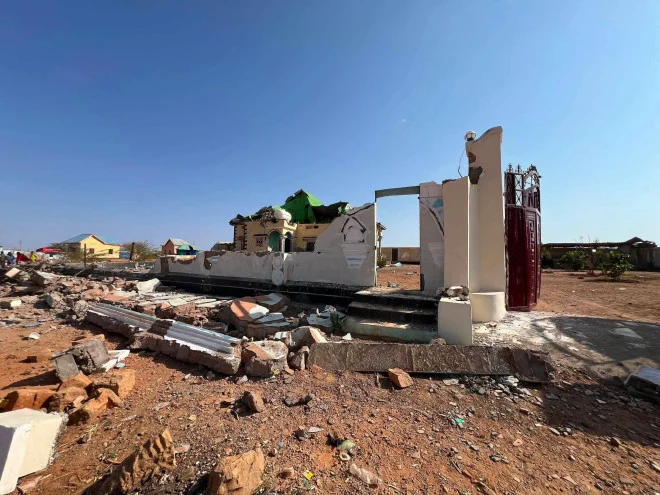
The reported attempt to assassinate General Mahad Abdirahman Aden “Shub,” the former commander of the Somali Custodial Corps, in Doolow has exposed one of the most sensitive fault lines in Somalia’s political order. Any attempt on a person’s life is alarming, and General Shub is entitled to the protection of the law, regardless of his political affiliation.
Yet the response to the reported attack raises an uncomfortable question about the country’s approach to violence: why does an incident involving a prominent figure from Somalia’s political and security elite provoke immediate and forceful condemnation, while the far greater suffering endured by ordinary citizens often receives far less political attention? Since the Federal Government intervened in Southwest State to challenge former President Abdiaziz Laftagareen, around 200 people have reportedly been killed and nearly 1,000 injured, though those cumulative figures require independent verification.
- Advertisement -
Yet the reported targeting of General Shub drew strong condemnation from senior political figures, including former presidents Sheikh Sharif Sheikh Ahmed and Farmaajo, as well as others who do not necessarily share his political outlook. The contrast is troubling, but it provides a revealing look at Somalia’s political settlement—and the unwritten limits that shape elite competition.
General Shub is not merely another victim of Somalia’s long-running violence. He belongs to the country’s political and security elite. His reported targeting appears to have crossed an unwritten boundary within Somalia’s political settlement: powerful groups may compete fiercely for authority, resources and influence, but there are limits to how far that struggle should be directed against members of the elite. A political settlement is, at its core, a balance of power that makes political order sustainable. It does not end competition; instead, it establishes enough rules, understandings and restraint to keep rivalry from becoming a fight for physical survival.
That dynamic helps explain the reaction to the attack on Abdirahman Abdishakur in December 2017. The assault on a prominent opposition leader triggered widespread political outrage. The response was not necessarily a sign that every critic had become his supporter. Rather, it reflected the belief that attacking a senior political figure crossed a boundary that could ultimately endanger everyone in the political class.
There is an uneasy distinction at work here. Since Somalia’s civil war began, relatively few senior political and elite figures have been deliberately killed compared with the enormous number of ordinary Somalis who have lost their lives. The disparity remains stark even when deaths caused by Al-Shabaab and other armed actors are counted. Ordinary citizens have borne the heaviest cost of violence, while powerful figures have developed informal arrangements that offer them a measure of political and physical protection.
Part of the explanation lies in self-interest. Every major actor seeks security, resources and influence, while fearing that a rival could accumulate excessive power. The Federal Government is trying to strengthen its authority; the current Southwest administration led by Adan Madobe is seeking to retain its political position; the former administration led by Laftagareen and its networks wants to remain relevant; and other actors want assurances that they will not be shut out. Trust is limited, but all have a stake in preventing political rivalry from descending into unrestricted violence.
That is what gives the reaction to the reported attack on General Shub its wider significance. The issue is not whether every political actor agrees with him. It is whether Somalia’s political system can endure if opponents come to believe that losing a political contest may place their physical survival at risk. Once that fear takes hold, compromise becomes more difficult. Political actors have greater reason to arm themselves, seek outside protection and strike pre-emptively instead of negotiating.
For Southwest State, the central challenge therefore extends beyond control of Baidoa or the security forces. The test is whether Adan Madobe, Laftagareen’s political network, the Federal Government and other influential actors can resolve their differences and create a new political equilibrium. Such a settlement would allow participants to lose political power without fearing the loss of their security or their right to remain involved in politics.
The irony is that Somalia’s political settlement has often shielded the powerful more effectively than the powerless. Even so, the principle underpinning the elite bargain remains vital: political competition must have boundaries, and political defeat must not amount to a death sentence. The widespread condemnation of the reported attack on General Shub indicates that Somalia’s political elite still recognises this red line. The danger lies in what may follow if that boundary is crossed again and again.
_______________________________
Mohamed Mukhtar Ibrahim can be reached by email at [email protected]