As Justin Davis Leaves Mogadishu, Washington Is Rethinking Its Role in Somalia
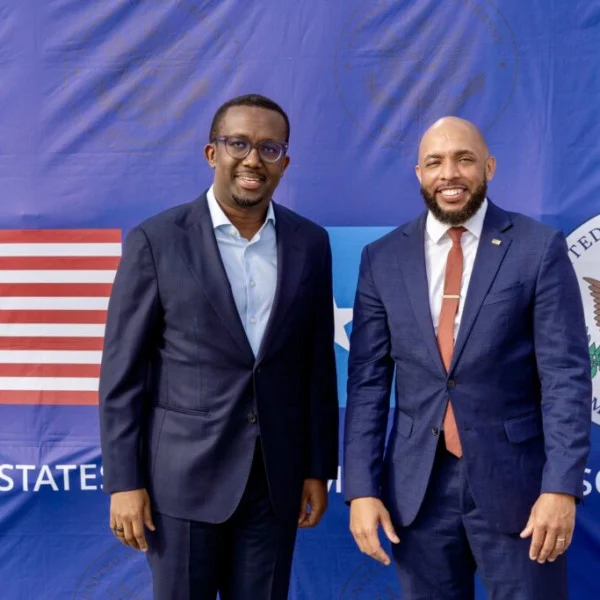
Justin Davis is ending his tenure as Chargé d’Affaires at the United States Embassy in Mogadishu as the Somalia-U.S. relationship enters a significant transition—one that may be more profound than official statements acknowledge.
- Advertisement -
In recent months, I have spoken with American diplomats in Mogadishu, Nairobi, New York, Washington and other locations about the direction of U.S. policy towards Somalia. Some remain in government, while others have extensive experience with the Somalia file. Their views were not identical, and some spoke more openly than others, but one question surfaced repeatedly: how prepared are Somalis to assume responsibility for their country’s future?
Davis led the US Embassy through an especially turbulent period. In Washington, the “America First” approach reshaped the administration’s foreign policy. In Somalia, tensions widened between the Federal Government and several Federal Member States, political divisions hardened, and Al-Shabaab and Daesh remained serious security threats. Across Somalia and the wider Horn of Africa, foreign competition for influence also intensified.
One American diplomat described Davis’s central task as reconciling “America First” with “Somalia First”.
Asked to explain “Somalia First”, the diplomat offered a clear definition: Somalia for Somalis, effective Somali institutions and political leaders willing to take responsibility for their own country. Several diplomats expressed concern that foreign interests had become deeply woven into Somalia’s domestic political contests—and that Somali politicians were sometimes inviting that involvement.
“Somalia’s future is not for sale,” one diplomat told me.
That position did not amount to a call for Somalia to abandon its international partners. The country needs those partners, a point none of the Americans I interviewed disputed. Their argument was that Somalia cannot defend its sovereignty while allowing internal political disputes to become attached to rival foreign agendas. Somali politicians, they said, must resolve more of their differences without continually turning to foreign capitals.
Another diplomat put it just as plainly: “Somalia is not a child. Somalia is a partner.” The United States was ready to work with and support Somalia, he said, but the relationship needed to be based on partnership—with Somalia accepting responsibility for its decisions and its future.
Under the current US policy, Washington’s interests in Somalia are narrower and more explicitly defined. Three priorities appeared repeatedly in my discussions: counterterrorism, law enforcement cooperation and immigration coordination. These are increasingly the core interests shaping the U.S. relationship with Mogadishu.
Still, the American view of Somalia was not uniformly bleak. Diplomats recognised meaningful progress in law enforcement cooperation and immigration coordination and described the working relationship with Somali authorities in those areas positively. They also noted that Mogadishu is far more peaceful than it once was, an achievement several regarded as significant and too easily overlooked.
Their frustration became more apparent when the discussion turned beyond the capital. American diplomats were dissatisfied with the pace of counter-offensive operations against Al-Shabaab elsewhere in the country. They had expected more movement and more durable battlefield gains. Their concern was not merely whether operations were being launched, but whether they were delivering lasting results and keeping sustained pressure on Al-Shabaab.
Political disputes inevitably formed part of that assessment. Several diplomats believed the extended confrontation involving the federal government, Federal Member States and opposition politicians was diverting attention from the security campaign. In their view, political unity and the fight against Al-Shabaab cannot be treated as unrelated matters. When national leaders are absorbed in disputes with one another, maintaining a coherent security strategy becomes far more difficult.
Washington’s reduction of humanitarian and development assistance reflects the same broader shift. When I described the change as a retreat from humanitarian engagement, one diplomat objected, preferring the term “reorganisation of assistance”, with greater emphasis on priorities, accountability and results. Others were more frank, acknowledging that America’s wider interest in Somalia had diminished and that Washington was reassessing the money and political attention it was willing to devote.
Some also conceded that Washington had spent years struggling to define its overriding national security interests in Somalia. American involvement had gradually expanded to cover counterterrorism, security assistance, humanitarian relief, state-building, democratisation and political mediation. The present approach is considerably less ambitious.
The message is now more straightforward: America will assist Somalia, but Somalia must also assist itself.
That principle is especially evident in the way American diplomats assess Somali politics. They see fragmentation across much of the political landscape. Inside the federal government, the executive, parliament and other state institutions appear increasingly aligned. Relations between Mogadishu and several influential Federal Member States, however, remain deeply damaged—particularly those with Puntland State and Jubaland.
The Americans do not place the entire responsibility on Villa Somalia. They are also critical of the opposition. In separate conversations, several diplomats used precisely the same word to describe it: “fragmented”. They questioned the level of trust among opposition leaders and wondered whether their alliances reflected a shared political programme or merely the temporary convenience of opposing the current leadership.
One diplomat raised a difficult question: if opposition to one administration is the force holding everyone together, what happens after that administration leaves office?
What stood out in these discussions was that the Americans seldom questioned the ability of Somalis themselves. They spoke of capable politicians, professionals, entrepreneurs, civil society leaders and a population notable for its resilience. Their frustration was that this considerable talent had not yet generated enough political cohesion around a basic national interest.
One senior diplomat pointed to the U.S. as an example. He invoked “American exceptionalism”, not as a claim that American politicians agree, but to make almost the opposite argument. U.S. politics can be intensely polarised, he said, yet Americans retain a sense of national identity and continue to rally around certain shared interests.
His question was: what is the Somali equivalent?
Interestingly, American diplomats saw a possible answer in the controversy surrounding Somalia’s renowned referee Omar Artan.
A senior diplomat said calls to the US Embassy in Mogadishu became incessant after Artan was returned from the U.S. and denied entry into the country. President Hassan Sheikh Mohamud was among those who sought an explanation, according to the diplomat. Yet American officials were even more interested in the public response that followed.
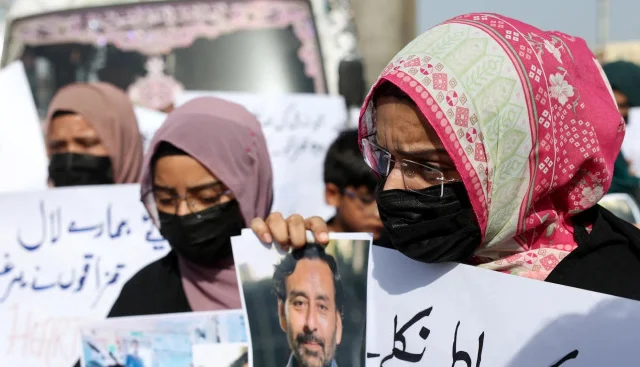
Diplomats in Washington, Mogadishu, Nairobi and elsewhere watched closely as large numbers of young Somalis gathered at Mogadishu Stadium. They saw people who would normally stand on opposite sides of political divisions unite around a common issue. For some observers, the episode raised an obvious question: if Somalis could mobilise so strongly behind Omar Artan, why could the same national solidarity not be channelled towards Somalia itself?
To some diplomats, the incident showed that national feeling is present. The challenge is transforming it into a political culture capable of surviving elections, clan calculations, disputes between governments and pressure from foreign powers.
There is an evident contradiction in parts of this American argument, and the diplomats recognise it. For years, the U.S. was among the most influential outside actors in Somali politics. During major crises, Somali leaders and international partners turned to Washington. American officials convened meetings, applied pressure, persuaded political rivals and helped move them towards compromise.
That America is less visible now.
Some Somali politicians and international partners view the shift as a weakness. They argue that Washington has stepped back too far from political engagement and that its reduced presence has created a vacuum at a particularly sensitive moment. In their view, America retains political influence few other countries can equal, and Somalia sometimes needs that influence when its leaders cannot reach agreement.
American diplomats increasingly respond with a question of their own: why should the U.S. always be responsible for bringing Somali politicians together?
The issue is especially sensitive because Washington is becoming more selective just as other powers are expanding their involvement.
China’s presence is increasingly prominent. Beijing has widened its engagement through frequent diplomatic contacts, visits and programmes across several sectors. It also speaks consistently and forcefully in support of Somalia’s sovereignty, unity and territorial integrity. Its growing role is difficult to overlook while Washington narrows the areas in which it is prepared to take the lead.
Türkiye has an even longer-established presence. Its partnership with Somalia spans military training, security, trade, infrastructure, energy and diplomacy. Ankara has made a long-term investment and developed relationships that extend well beyond conventional development assistance. Its political and economic importance continues to increase.
The United Arab Emirates (UAE) offers a more complicated picture. Its relationship with the Federal Government has deteriorated, even as it maintains closer ties with Puntland State and Jubaland, significant interests and longstanding relationships in North Western State of Somalia, and connections with certain Mogadishu-based politicians. Many Somali political actors also strongly believe that Abu Dhabi supports North Western State of Somalia’s agenda.
Somalia is therefore operating in an increasingly crowded geopolitical environment. Foreign governments have interests in the country, and those interests do not always align. There is nothing unusual about states pursuing their own strategic goals. The central question is whether Somalia has a sufficiently strong conception of its national interest to manage those relationships, rather than allowing competing foreign agendas to become entangled in internal political disputes.
That may be the broader story of Justin Davis’s time at the helm of the US Embassy. His tenure may not be defined by a single dramatic agreement or diplomatic breakthrough. Instead, he managed the relationship while Washington was determining what America still wanted from Somalia—and what it expected Somalis to do for themselves.
America has not abandoned Somalia. It remains an important security partner, and counterterrorism cooperation continues. Diplomats point to progress in law enforcement and immigration cooperation and recognise the greater peace and security now evident in Mogadishu. At the same time, they remain frustrated by the slow progress of counter-offensive operations outside the capital and deeply concerned that political divisions are complicating the security challenge.
As Davis departs Mogadishu, his own record also deserves recognition. He assumed leadership of the US mission during a difficult period and kept America engaged and the relationship with Somalia moving forward despite political tensions in both countries and a shifting agenda in Washington. He maintained access to a range of Somali political actors and continued urging them to seek common ground. In that respect, Davis leaves having performed an important task: holding together a difficult relationship while reminding Somalia’s leaders that the country is ultimately theirs and that its future must be determined by them.
After my conversations with American diplomats, their message can perhaps be expressed simply: America is ready to work with Somalia, but Somalis must decide what they want Somalia to become.
That position also presents a challenge for Washington. If the United States reduces its political role more quickly than Somali institutions can occupy the space, the gap will not remain vacant. Foreign powers have strategic and economic interests of their own, and they will continue pursuing them.
As Justin Davis leaves Mogadishu, the larger question is not merely what America will do next. It is whether Somalia’s leaders can reach a minimum national understanding that endures through changes of government, disputes between Mogadishu and the Federal Member States, opposition politics and competing relationships with foreign powers.
The Americans I spoke with appeared convinced that Somalis can achieve that. They are simply becoming less convinced that America should achieve it on their behalf.
By Omar Faruk Osman, Secretary General of National Union of Somali Journalists (NUSOJ).