
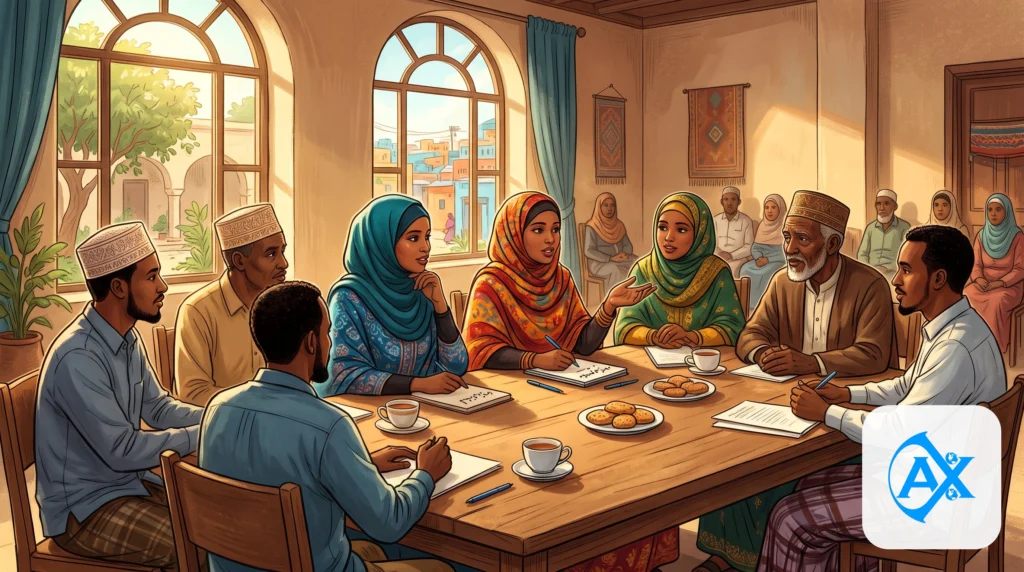
Somali women have historically played an important role in building families, preserving culture, and protecting communities during difficult times. As the world progresses today, the role women play in national decision-making and political leadership has become a subject of extensive debate and is increasingly seen as a key to the country’s development and stability.
This article examines the political role of women, why it is important, the main factors influencing it, and the challenges that remain to be addressed.
What is the role of women in Somali politics?
Women’s role in politics refers to their direct participation in governing the country, drafting laws, and making decisions of national importance that affect all citizens. This includes various levels of leadership, such as:
-
- Serving as members of parliament at the federal and federal member state levels.
-
- Holding ministerial, director-general, and senior administrative positions in government.
-
- Participating in reconciliation, peacebuilding, and political dialogue efforts.
-
- Advocating for human rights and community development through civil society organizations.
A brief history and the broader context
Somalia’s history shows that women were at the forefront of the struggle for independence and the country’s reconstruction. When state institutions collapsed, women became the backbone of household economies and leaders of community peacebuilding in various cities, including Mogadishu, Hargeisa, Kismayo, Baidoa, Jowhar, Bosaso, Garowe, and Zeila.
However, when it comes to formal politics, their participation has faced challenges linked to the clan-based power-sharing structure. Nevertheless, successive efforts by civil society organizations and lawmakers have led to agreements promoting the allocation of reserved seats to women so that their voices can be heard.
The importance of women’s participation
Women’s participation in decision-making bodies is not only a matter of fairness but also a fundamental societal need. The main benefits include:
-
- Promoting Peace: Women often focus on reconciliation and conflict resolution, as they are among those most severely affected by conflict.
-
- Inclusive Leadership: When women have a say in decision-making, the laws enacted are more likely to address the needs of children, families, and vulnerable people.
-
- Economic Growth: Policies supporting small businesses and education are often given greater priority, improving the overall well-being of society.
-
- Building Strong Institutions: Women’s participation strengthens public confidence in government institutions at the federal and federal member state levels, including Puntland, Jubaland, Galmudug, Hirshabelle, and South West State.
Key issues
When analyzing the situation of women and politics in Somalia, several central issues shape the debate:
-
- Reserved Seats: The quota system has become the most important avenue enabling women to become lawmakers, although its implementation sometimes faces challenges.
-
- Traditional Structures: The clan-based system often places political power in the hands of men, reducing women’s opportunities to compete openly.
-
- Empowerment Through Education: The growing number of women studying political science, law, and public administration has increased their ability to engage in effective debates about the country’s future.
-
- Public Awareness: Public understanding of women’s leadership is gradually changing, particularly in major cities and in the North Western State of Somalia and southern parts of the country.
Frequently Asked Questions (FAQ)
1. What is the main obstacle to women’s full participation?
The main obstacle is the clan-based power-sharing structure, which assigns clan leaders and traditional elders the responsibility of selecting lawmakers, while tradition often gives preference to men.
2. Do women have a constitutional right to compete for public office?
Yes. The country’s laws and the international conventions to which it is party guarantee every citizen the right to vote and stand for election without discrimination based on gender.
3. How can the number of women in politics be increased?
It can be increased by implementing clear laws that protect reserved seats, strengthening education and leadership training, and promoting public awareness and support from traditional elders.
Ultimately, women’s participation in Somali politics is not limited to the number of seats they obtain. It also concerns the quality of the decisions they make and their impact on building a peaceful, prosperous, and just country.