In a landmark judgment with implications reaching far beyond Southeast Asia, the International Court of Justice ruled that Myanmar committed genocide against its Rohingya minority—the first time the court has found a state responsible for the crime.
The verdict came seven years after The Gambia filed the case and marked only the fourth time since the Nazi Holocaust that an international court has determined the legal standard for genocide was satisfied.
It was also the first ruling in which the court held a state accountable for genocide.
“The court finds that Myanmar’s security forces killed thousands of Rohingya civilians, perpetrated widespread acts of sexual violence as well as acts of extreme violence against children and attacked fleeing Rohingya,” presiding Judge Yuji Iwasawa said while reading the decision.
Judges concluded that Myanmar’s military conducted mass executions of men and boys, carried out widespread rape and sexual violence against Rohingya women, and destroyed or burned hundreds of villages during so-called clearance operations.
They also found that the military deliberately promoted hate speech aimed at the Rohingya population.
The judgment is final and cannot be appealed.
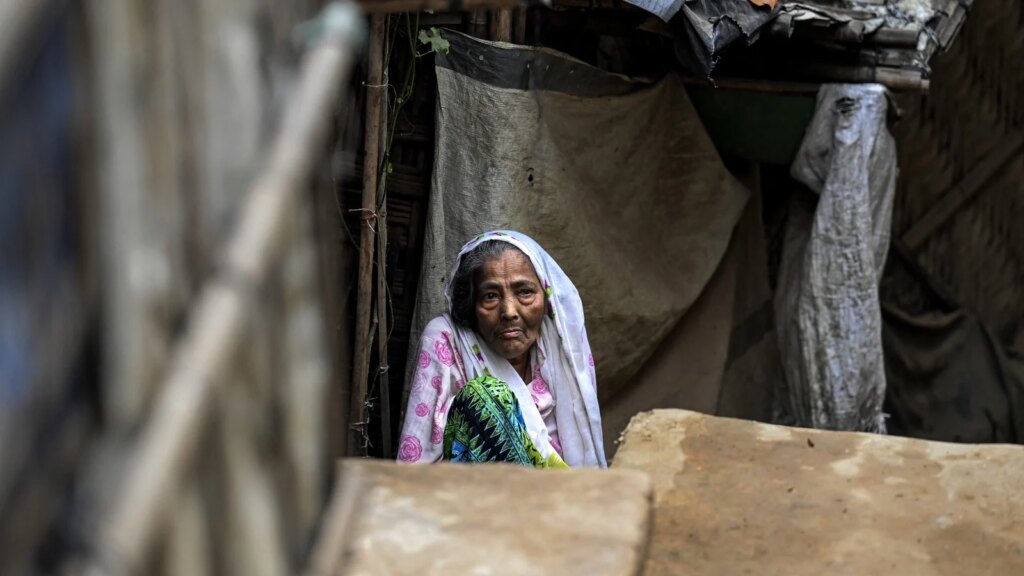
In Bangladesh, a leader of the Rohingya refugee community welcomed the ruling and voiced his “deepest gratitude.”
“We express deepest gratitude to Bangladesh, The Gambia and the OIC (Organisation of Islamic Cooperation) who have been with us through all these years,” Sayed Ullah told AFP at the Cox’s Bazar refugee camp. “We request everyone to be with us till we return home.”
Genocide has seldom been proven before international tribunals because prosecutors must establish a specific intent to destroy, in whole or in part, a national, ethnic, racial or religious group.
The judgment by the International Court of Justice, also known as the World Court, is likely to resonate well beyond Myanmar, including in South Africa’s 2023 case alleging that Israel committed genocide in Gaza.
The case has been brought by The Gambia under the 1948 UN Genocide Convention
The court’s first major ruling in more than a decade concerning the 1948 Genocide Convention is expected to draw intense scrutiny from legal experts seeking insight into how judges evaluated state responsibility for alleged international crimes.
Israel and Myanmar both reject allegations of genocide, maintaining that their forces acted lawfully in response to attacks by armed groups.
For The Gambia, the decision represented a major legal victory. The court found Myanmar responsible for genocide linked to a military campaign that forced at least 700,000 Muslim Rohingya to flee Buddhist-majority Myanmar.
Lawyers and members of the Myanmar delegation listen to the ruling delivered at the ICJ
A panel of 15 judges said “the only reasonable inference that can explain Myanmar’s actions is an intention to destroy a substantial part of the protected group namely the Rohingya population in Northern Rakhine state,” a finding that met the legal threshold for genocide.
The court said Myanmar was required to compensate the Rohingya for the violations it committed, with the amount to be determined later.
It also ordered Myanmar to facilitate the “safe and dignified return to their place of residence and the reunification of families for the Rohingya displaced as a result of Myanmar’s wrongful acts,” the ruling said.
Before this decision, international courts had recognised genocide only in connection with the 1994 genocide in Rwanda, the 1995 Srebrenica massacre in Bosnia and atrocities committed by Cambodia’s Khmer Rouge in the late 1970s.
Although ICJ judgments are final—the court resolves disputes between states and rules on alleged violations of international treaties—it has few practical means to enforce its decisions.
The ICJ is separate from the International Criminal Court, which prosecutes individuals for war crimes, crimes against humanity and genocide and may impose prison sentences.