

Fisheries Minister Dismisses DG Amid Allegations Over Maritime Deals and Forged Documents
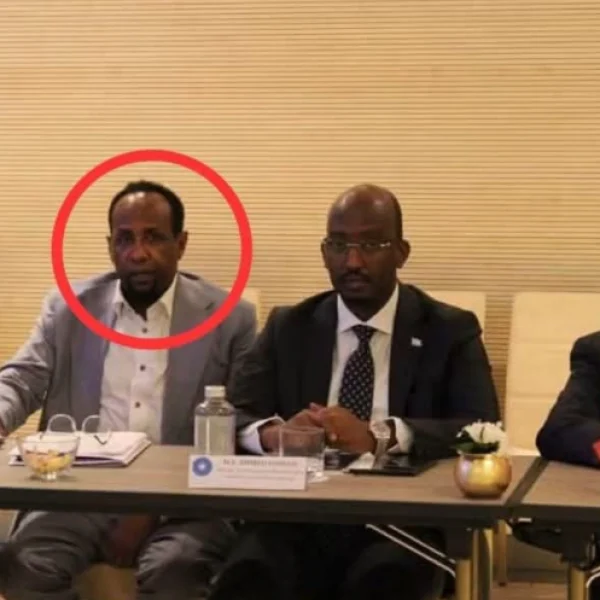
Mogadishu — Fisheries and Blue Economy Minister Ahmed Hassan Adan has suspended the ministry’s Director General, Abdi Ciise Dirshe, in what sources describe as an attempt to contain mounting allegations of administrative misconduct, forged documents and questionable maritime agreements.
The dismissal order, reference number WKDHB/XW/869/26 and dated November 9, 2026, was sent by the minister’s office to key oversight institutions, including the National Civil Service Commission, the Prime Minister’s Office, the Ministry of Finance, the Auditor General and the Accountant General.
The ministry has presented the decision as a measure to restore institutional discipline. However, sources within the ministry said Dirshe’s removal is linked to alleged forgery and illicit documentation, as well as wider financial and administrative misconduct. Legal analysts and sector insiders described the move as a political effort to shift responsibility onto a subordinate while shielding senior officials from scrutiny over alleged corruption, fraudulent paperwork and the unauthorized exploitation of Somalia’s marine resources.
In the order signed by Minister Ahmed Hassan Adan, Dirshe’s suspension is justified under Article 102 of Somalia’s Federal Constitution and Article 23 of the Civil Service Law, Law No. 11. The directive accuses him of exceeding his authority by taking operational decisions without the knowledge or formal approval of the ministry’s executive leadership. It also alleges insubordination, citing repeated failures to follow verbal and written instructions from senior officials, and operational negligence, including failure to carry out core administrative duties while engaging in forgery and other fraudulent administrative actions that damaged the ministry’s performance. Raisa Maxamed Maxamuud, director of the Blue Economy Department, has been appointed to serve as acting Director General.
Although the order portrays Dirshe as an administrator who acted independently, critics say the wider deterioration of Somalia’s Blue Economy raises questions about whether he could have undertaken major actions alone. Multimillion-dollar fisheries agreements with foreign parties, including arrangements brokered through the Turkish Embassy, would ordinarily require ministerial-level political approval. Likewise, the transfer of important regulatory and licensing responsibilities to private entities such as Hope Labs Group could not have occurred without authorization and backing from senior ministry officials, they argue.
By removing Dirshe, Minister Ahmed Hassan Adan appears to be presenting himself as a reformer determined to overhaul the ministry. Yet the dismissal does not resolve questions surrounding opaque commercial agreements, private regulatory contracts that allegedly lacked proper vetting, or foreign industrial fishing access in Somalia’s Exclusive Economic Zone.
Genuine accountability, critics say, cannot be secured by assigning blame to one official or concealing alleged forgery that may have involved senior levels of the department. If the Federal Government of Somalia is serious about safeguarding its marine sovereignty and rebuilding donor confidence, independent anti-corruption institutions should investigate the minister’s office as well. Until foreign maritime agreements are made public, private regulatory contracts are reviewed or revoked, and transparent procedures are enforced, the removal of a Director General risks being viewed as a political diversion rather than a solution.