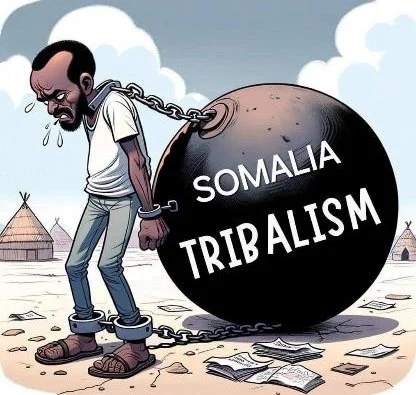
Modern Somalia’s political history is inseparable from the relationship between clan organization, pastoral society, and the development of the state. In A Pastoral Democracy, published in 1961, I. M. Lewis portrayed Somali pastoral society as a political order built on lineage, clan affiliation, contractual solidarity, and negotiated authority. He did not reduce Somali society to a collection of rival tribes. Instead, Lewis described a complex system in which kinship, alliances, and contractual ties distributed political obligations, while the dispersion of power among lineage groups placed limits on authority.
That system offered important forms of protection and social organization, but it also created difficulties when applied to a modern state. Clan identity could provide security, welfare, and mechanisms for settling disputes in the absence of effective state institutions. However, once access to ministries, military commands, parliamentary seats, public-sector employment, and economic resources became tied to control of the central government, lineage solidarity could turn into a contest for state power.
The founding of the Somali Republic in 1960 was a major attempt to replace localized political structures with a unified national system. Nationalism, Islam, and a common Somali identity offered an alternative to narrow lineage loyalties. Yet the parliamentary period exposed the challenge of building centralized institutions within a decentralized society. Political parties spoke in national terms, but regional, lineage, and clan loyalties continued to influence competition, contributing to defections, factionalism, and succession disputes that weakened democratic rule.
The Irir Alliance’s confrontation with the Majeerteen government between 1960 and 1967, led by Sheikh Ali Jumale Barale and Mohamed Haji Ibrahim Egal, never developed into a lasting political bloc. Its momentum was overtaken by a negotiated settlement led by Ismail Nahar, which altered the political balance and prevented the alliance from consolidating. The later revival of the Abdirashid–Egal alignment, culminating in their victory in the 1967 presidential race, effectively brought that phase of political contestation to a close. The episode showed how negotiation and accommodation could overcome efforts to organize national politics around rival clan alliances.
The assassination of President Abdirashid Ali Shermarke in October 1969 produced the immediate crisis that enabled military intervention. On 21 October 1969, army units seized strategic sites in the capital and overthrew the civilian government. Major General Mohamed Siad Barre later emerged as the head of the Supreme Revolutionary Council. Political parties were prohibited, parliament was dissolved, and the constitution was suspended.
The paradox of the revolutionary state
The military government initially claimed that it would rescue Somalia from clanism. Its political language denounced qabyaalad—tribalism or clanism—as well as corruption, nepotism, and political disorder. In its place, the regime promised a modern, centralized state committed to social transformation.
The regime’s record, however, revealed a deep contradiction. While the state publicly declared war on clanism, it increasingly relied on clan-based political networks as a means of preserving power.
After the failed military coup of 1978, particularly associated with Majeerteen officers, the government’s approach to clan politics shifted sharply. Officials increasingly interpreted political opposition through a clan-based lens. Repression first fell heavily on Majeerteen communities before widening to include other groups regarded as threats to the regime.
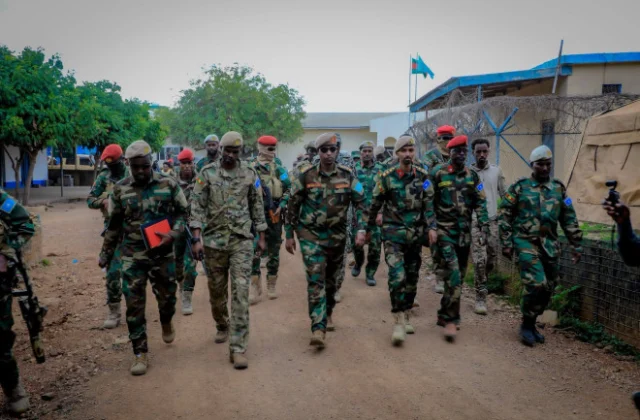
Against this backdrop, the ruling coalition commonly identified as MODH—Marehan, Ogaden, and Dhulbahante—became linked to the regime’s political and security establishment. The acronym referred to three Daarood clan groups: Siad Barre’s own Marehan clan, the Ogaden, and the Dhulbahante. Selected members of these groups gained disproportionate access to senior roles in the bureaucracy, military, intelligence services, diplomatic corps, and economy through a clan-based patronage structure.
MODH’s historical importance lies less in the claim that all members of those clans supported or benefited from the regime than in the political construction of a ruling coalition around selected kinship networks. From above, clan identity became progressively politicized. A system once used mainly for solidarity and dispute resolution was repurposed to distribute patronage, define enemies, and organize coercive authority. The concentration and abuse of state power along perceived clan lines ultimately helped bring down the regime in 1991, triggering widespread violence, displacement, and clan-based reprisals that fundamentally altered Somalia’s political landscape.
The ouster of Mohamed Siad Barre in 1991 by wider opposition forces, including the Somali National Movement (SNM) and United Somali Congress (USC), did not lead to an agreed political settlement. Instead, the regime’s collapse opened a struggle over control of the Somali state’s institutions and resources. The principal figures emerging from the USC and the broader Hiraab political landscape—particularly Ali Mahdi Mohamed and General Mohamed Farah Aideed—could not agree on how authority should be reorganized after Barre’s fall.
Their confrontation reflected more than personal rivalry. It also involved wider disputes over representation, access to state institutions, territory, and control of Mogadishu.
For more than two decades after the state’s collapse, repeated attempts to rebuild central authority failed to establish a durable political settlement. The lack of agreement within the victorious Hiraab made it difficult to create a broadly accepted centre of power, while rival factions repeatedly treated control of Mogadishu as the foundation of national authority. From the Aideed–Ali Mahdi era through the transitional governments, competition among Hiraab constituencies gradually moved away from direct armed confrontation toward greater cohesion and influence over key appointments, institutions, elections, federal relations, and public resources.
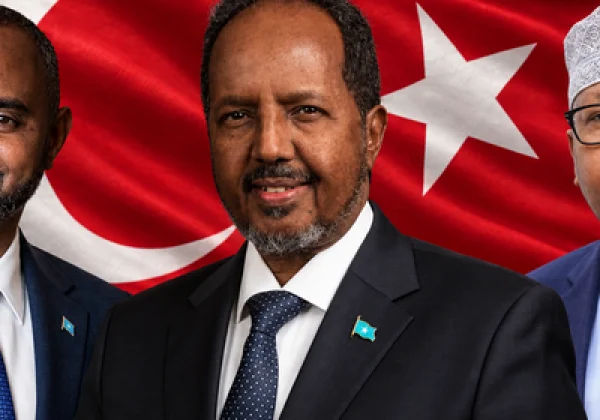
The creation of Somalia’s Federal Government in 2012 marked a significant shift. Hassan Sheikh Mohamud’s election represented the move from transitional rule toward a permanent federal political framework, while competition increasingly focused on state institutions rather than armed struggle. One interpretation is that an informal accommodation among influential Hiraab politicians slowly took shape—a politics of reciprocal exchange in which cooperation offered greater benefits than the factional warfare associated with the Aideed–Ali Mahdi period. The continuing prominence of Hiraab politicians in important cabinet posts and state institutions is cited as evidence of this pattern.
Hassan Sheikh’s return to the presidency in 2022 strengthened that interpretation. The Hiraab pact should not be viewed as a formal chain of command, but as an evolving network of accommodation, influence, and reciprocal interests. Critics contend that comparable dynamics can be seen in Southwest State, where Hiraab representatives have reportedly pursued the deputy presidency despite being a demographic minority.
Somalia’s federal structure was intended to prevent the excessive concentration of authority that helped destroy the centralized state. Yet federalism has also become a field of contest between Mogadishu and the federal member states. The central issue is how political, security, and economic authority should be divided between the federal centre and the country’s periphery.
The suggestion that a Hiraab-centred political configuration is taking shape points to the potential significance of control over the presidency, major ministries, security bodies, intelligence services, and administrative appointments. Such control could give the centre growing political leverage. This comparison does not mean that a possible Hiraab system and the former MODH arrangement are identical. The concern is instead that a similar mechanism could develop: control of the centre brings influence over resources, appointments, security, and foreign relations, thereby strengthening a coalition’s ability to remain in power.
Such an arrangement could outlast MODH because it might become rooted in federal institutions rather than tied to a single military ruler. Electoral systems, ministries, security agencies, project and business networks, donor funding, and foreign partnerships could all give the arrangement continuity beyond individual leaders.
As this institutionalization deepens, political competition could become increasingly zero-sum. Losing control of the centre may come to mean losing access to state resources and security. That perception would risk producing a political struggle more prolonged, entrenched, and bitter than the earlier MODH experience.
Ending Winner-Takes-All Politics
The central danger is the return of a system in which every major coalition believes that survival depends on controlling the centre. That logic helped concentrate power under Siad Barre, contributed to the violent struggle for Mogadishu after 1991, and can re-emerge today under the language of federalism, constitutional reform, and democratic elections.
Somalia’s fundamental task is not to decide which clan should control the state, but to create a state that no clan must control in order to feel secure. The country will not escape its historical pattern by replacing an idealized MODH-style system with another winner-takes-all coalition, whether it is described as Hiraab-centred, Darod-centred, Hawiye-centred, Isaaq-centred, or anything else. The goal must be to make the state larger than the coalition occupying the presidential palace, federal member states, major ministries, or the capital. Achieving that requires meaningful federalism rather than federalism in name, transparent and predictable intergovernmental transfers, fair public appointments, professional security institutions, independent judicial mechanisms, credible elections, and constitutional safeguards that prevent the presidency and Mogadishu from becoming tools of permanent political capture.
The North Western State of Somalia (Isaaq) argument concerns more than historical identity or territorial sovereignty. It is also shaped by a political experience in which the Somali state came to represent insecurity, centralization, and the failure to provide a settlement that North Western State of Somalia (Isaaq) regards as sufficiently protective of its interests. From that perspective, the pursuit of recognition can be seen partly as an exit strategy from a system viewed as winner-takes-all: if the centre cannot be trusted to share authority fairly, why should a peripheral political community remain subordinate to it? The question is uncomfortable because it moves the North Western State of Somalia debate beyond a purely constitutional dispute and toward an assessment of the credibility of Somali state-building itself.
A national government that repeatedly persuades peripheral communities that their political survival depends on capturing or resisting Mogadishu will inevitably create pressure for political exit. Somalia’s political history is too fluid to treat any clan as permanently victorious or permanently defeated, and no community should bear collective blame for institutional failures.
Most importantly, Somalia needs a political culture in which losing national office does not amount to losing a community’s future. The country’s historic problem was never simply the existence of clans; clan identity long predates the modern state. The crisis began when clan became the currency through which people accessed the state, and the state became the prize over which clans competed. The shift from MODH to a possible Hiraab-centred political architecture should therefore not be read as proof that one community has permanently conquered Somalia. It should be treated as a warning that the country’s most destructive political mechanism may be returning under new institutional and geopolitical conditions.
The pattern remains painfully familiar: exclusion generates resistance; resistance leads to militarization; militarization produces fragmentation; fragmentation brings reconciliation; reconciliation enables reconstruction; reconstruction encourages centralization; and centralization creates renewed exclusion. Breaking that sequence is the true test of Somali state-building. A durable Somali state must belong equally to the centre and the periphery, to every clan and to no clan. Until political victory no longer means institutional domination—and political defeat no longer means existential insecurity—Somalia will remain vulnerable to reproducing the winner-takes-all politics that has repeatedly prevented the state from becoming larger than the factions seeking to control it.