
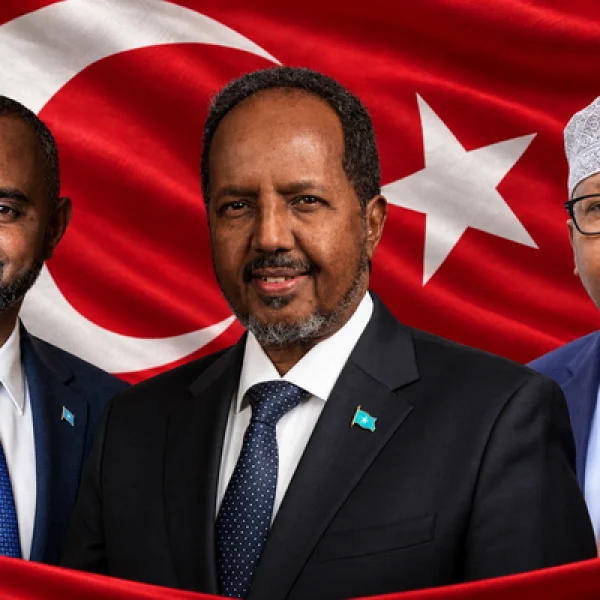
What Is Driving the Coordinated Defence of Somalia–Turkey Relations?
AX — MOGADISHU A coordinated campaign by Somalia’s term-expired federal leadership to defend Turkey has intensified after protests in several federal member states, raising questions about the depth of Ankara’s influence in Mogadishu.
- Advertisement -
Term-expired President Hassan Sheikh Mohamud, the term-expired Speaker of the House of the People, Abdulkadir Mohamed Nur, and several federal ministers have released closely matching statements backing Turkey and condemning those who criticise Ankara’s role in Somalia’s internal affairs.
The statements came after demonstrations in parts of Puntland State, Jubaland and South West State, where Turkish flags were burned. The protests followed allegations that Turkish drones had been involved in attacks in Doolow and other locations.
Turkey and Somalia’s term-expired federal government have rejected claims of political interference. No independent investigation has established the allegations linked to the disputed strikes.
Coordinated messaging
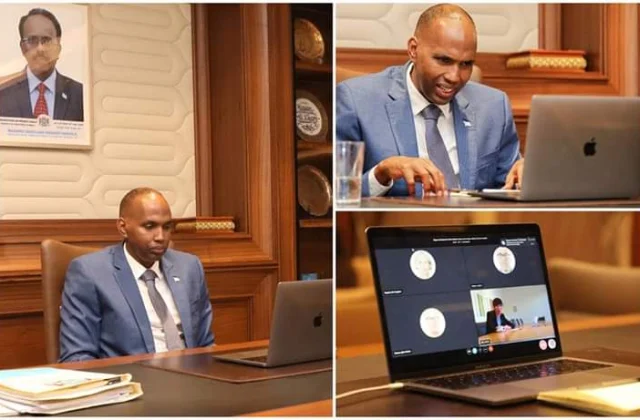
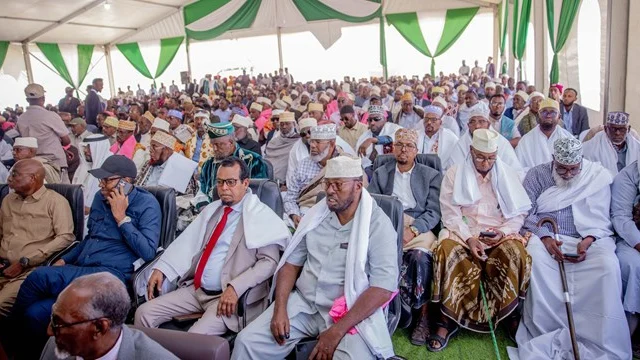
The clearest indication of institutional coordination came at a forum in Mogadishu on September 10, although some reports on the gathering were published on September 12.
The Turkish Presidency’s Directorate of Communications organised the event, which was opened by Speaker Abdulkadir Mohamed Nur.
Somalia’s Information Minister Abdulfatah Kasim Mohamud called for permanent cooperation between Somali and Turkish institutions to track media narratives, assess information and quickly respond to what both governments call “disinformation.”
He said Somalia’s Strategic Communication Department and the office tasked with countering disinformation were prepared to cooperate with their Turkish counterparts.
Among those attending were Deniz Demir, coordinator of the Turkish Presidency’s Centre for Combating Disinformation, as well as Somali and Turkish officials and academics. Turkish presidential communications chief Burhanettin Duran delivered remarks by video.
The forum demonstrates institutional coordination between Mogadishu and Ankara. It does not, by itself, show that Turkey drafted every statement later issued by Somali officials, ministers or political leaders.
The speaker’s Ankara connections
Abdulkadir Mohamed Nur studied at Ankara University and worked for roughly eight years at Somalia’s embassy in Turkey. In his capacity as defence minister, he signed the countries’ defence and economic cooperation framework in 2024.
Analysts such as Horn of Africa specialist Rashid Abdi have portrayed Nur as closely connected to Ankara and as an official well placed to promote Turkish interests in Somalia.
His career and prominent role in initiatives involving Turkey have strengthened the perception that he is among the leading Somali officials advancing the bilateral relationship.
The Warsheikh facility and the satellite claim
Turkey’s interests also extend to the planned space-launch facility in Warsheikh, which Ankara says it intends to use in developing an independent satellite-launch capability.
During his farewell ceremony, outgoing Turkish Ambassador Alper Aktaş said Somalia was expected to send “its first satellite” into space in 2027.
Previous reports, however, characterised the planned mission as the launch of a Turkish satellite from Somali territory. The Turkish government has likewise associated the Warsheikh facility with Ankara’s goal of independently launching its own satellites and spacecraft.
Describing the project solely as Somalia’s launch of its first national satellite could therefore give the Somali public an incomplete impression. Neither government has released the full terms of the agreement, identified the satellite’s owner, clarified who will control the facility or detailed Somalia’s technological and financial stake.
French newspaper Le Monde has additionally reported that the Warsheikh site could serve a dual purpose, supporting satellite launches and long-range missile testing. Turkey has not publicly released comprehensive information addressing the reported military component.
Converging interests
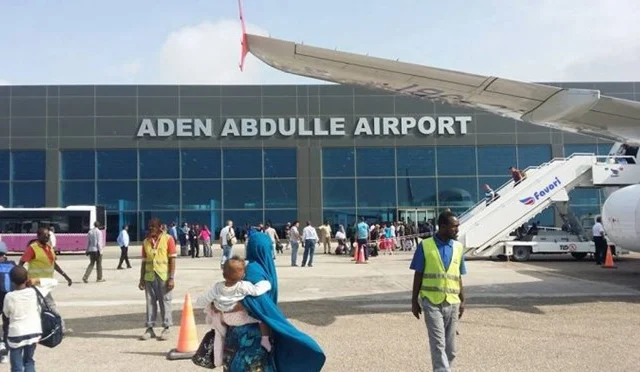
Turkey runs its largest overseas military base in Somalia, where it has trained federal forces including the Gorgor commandos. Ankara’s interests also encompass maritime operations, oil exploration, fisheries, Mogadishu’s port and airport, and the Warsheikh project.
For their part, Somalia’s term-expired federal authorities rely heavily on Turkish military and diplomatic backing as they face constitutional disputes, an unresolved electoral process and deteriorating ties with Puntland State, Jubaland and opposition groups.
The coordinated public messaging also redirects attention from unresolved questions over who authorised the disputed strikes, what legal authority supported the operations and what bilateral agreements contain. Instead, criticism is increasingly dismissed as disinformation, hostility toward a friendly state or the result of a foreign agenda.
The evidence currently shows coordinated institutional messaging and substantial shared interests between Mogadishu and Ankara. It does not establish that Turkey directly ordered or scripted every public statement issued by Somali officials.
AXADLETM