
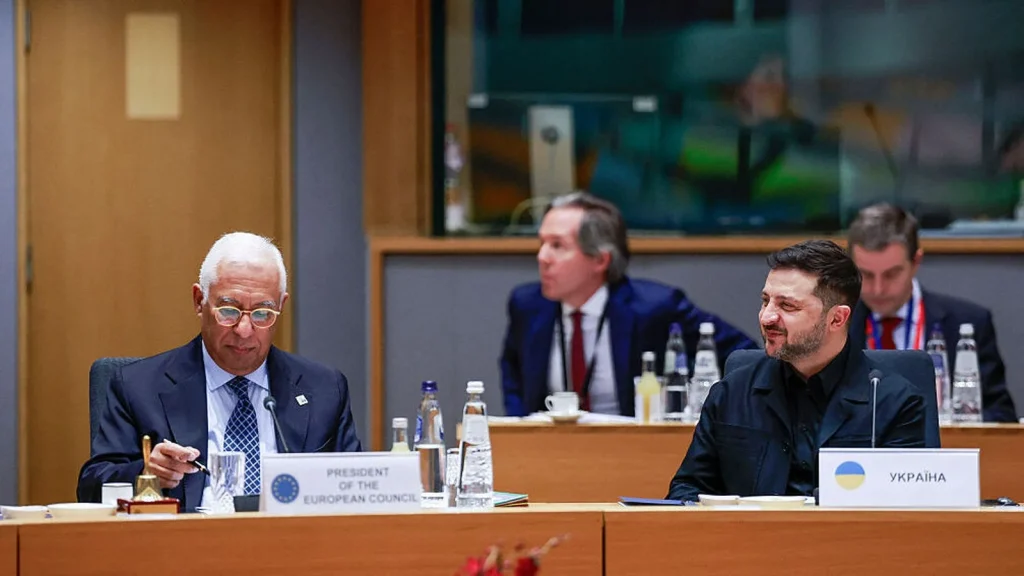
BRUSSELS — President Volodymyr Zelensky warned Thursday that Ukraine will have to significantly cut drone production next year — and halt long-range strikes on Russian energy infrastructure — if European Union leaders fail to unlock a first loan backed by frozen Russian assets at a summit in Brussels.
Ukraine faces a foreign aid shortfall of €45–50 billion in 2025 and is due to run out of money early next year, Zelensky said. “Without it, there will be a big problem for Ukraine,” he told reporters, adding he would press EU leaders directly for a decision.
At issue is whether the bloc converts up to €210 billion in frozen Russian sovereign assets — most parked at Belgian securities depository Euroclear — into a long-term loan for Kyiv, or instead borrows tens of billions against the EU budget. A clear majority of member states, including Ireland, prefer using the immobilized Russian funds, seeing it as both a financing tool and a deterrent against aggression.
Belgium, however, continues to resist, fearing that a successful legal challenge by Russia could leave it solely exposed. Prime Minister Bart De Wever told Belgian lawmakers the guarantees on offer remain “insufficient,” saying, “Belgium will not accept a solution where we are the only one bearing both the risks and the responsibility.” Brussels wants binding, enforceable burden-sharing pledges from other EU capitals, especially those holding Russian assets.
The European Commission argues Belgium cannot be held liable in Russian or international arbitration courts as long as the assets are under EU sanctions. Last week, the bloc invoked emergency powers to lock those sanctions in until Moscow pays reparations — a move designed to prevent a unilateral veto from Budapest.
Even so, Belgium has floated tapping “headroom” in the EU budget to raise joint debt — an approach that would require unanimity and is considered a non-starter given Hungary’s opposition. Arriving at the summit, Hungarian Prime Minister Viktor Orban said the Russian-assets plan is “dead,” claiming a blocking minority.
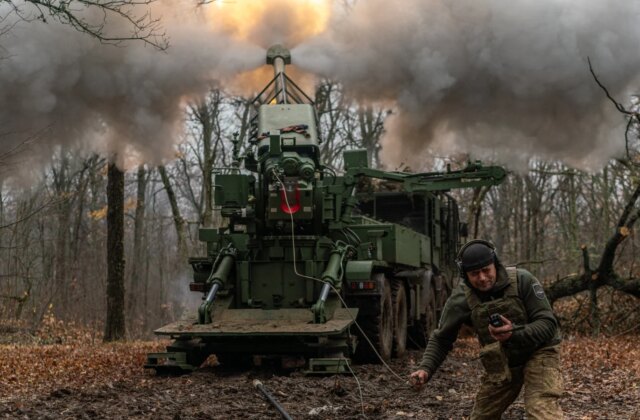
The pressure on leaders sharpened with Zelensky’s warning about Ukraine’s war-fighting capacity, particularly the drones Kyiv has used to strike deep into Russia. “We will have far fewer drones than Russia” without fresh financing, he said. Poland’s Prime Minister Donald Tusk cast the choice starkly: “money today, or blood tomorrow,” framing the decision as central to Europe’s own security.
Ireland’s Taoiseach Micheál Martin said Dublin is “very much in favor” of using the frozen Russian assets to back Ukraine financially and militarily in the coming years. “There has to be a deterrence against countries violating the U.N. Charter,” he said, arguing aggressors “cannot simply destroy another country and expect others to pay for all of the reconstruction.”
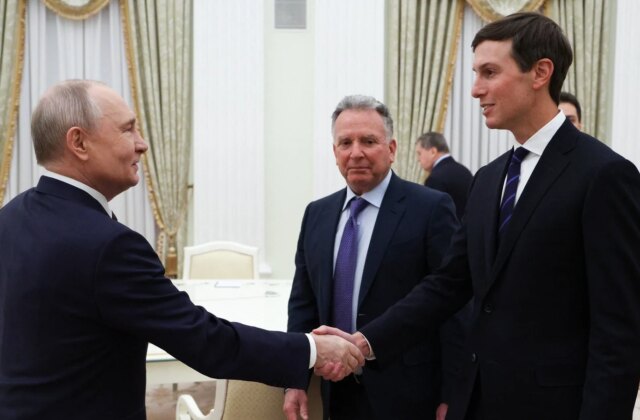
Officials say an agreement would send a strong signal — to Moscow and to Washington — that Europe is prepared to sustain Ukraine. Zelensky said Ukrainian and U.S. delegations will hold new talks Friday and Saturday in the United States aimed at ending the war. U.S. President Donald Trump has been pushing for a quick deal, according to Ukrainian and European officials, and negotiating teams have proposed draft plans. Russia has yet to respond, and President Vladimir Putin has repeated Moscow’s maximalist aims.
The high-stakes summit also touches on the Middle East, enlargement, security and defense, and combating antisemitism. Martin said he would press for increased humanitarian assistance for Gaza and reaffirm support for advancing Ukraine’s EU membership bid. “Our meeting is an opportunity to send a clear message that EU enlargement will happen,” he said.
For Kyiv, the immediate question remains whether Europe can overcome legal and political hurdles to convert immobilized Russian state wealth into a lifeline. Failure, Zelensky warned, would be “a serious challenge” — one that could be felt on the front lines within weeks.
By Abdiwahab Ahmed
Axadle Times international–Monitoring.