
Three months after Nepal’s devastating summer floods, authorities have begun the legal process of declaring thousands of missing people dead.
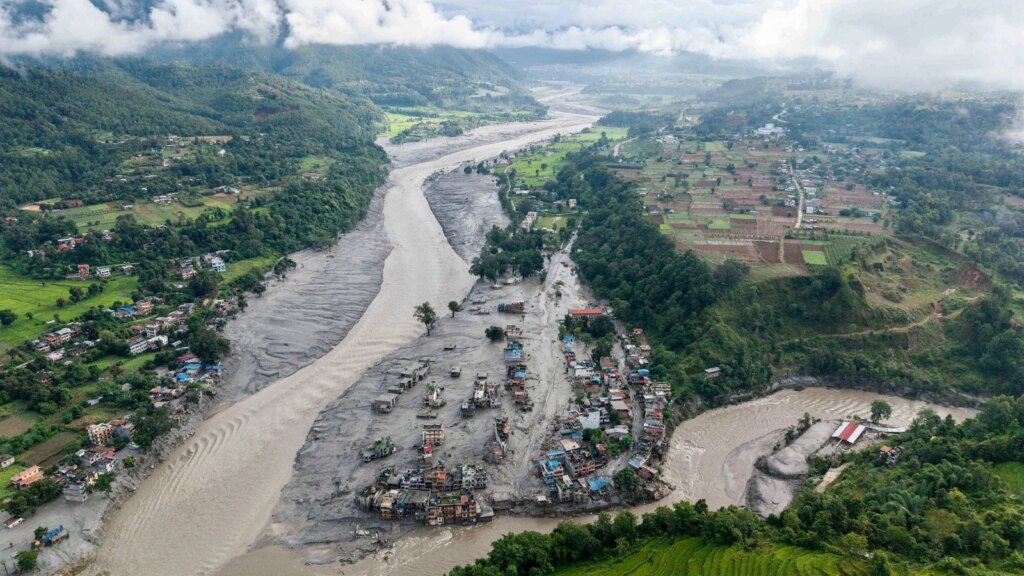
The disaster began on 26 August, when a high-altitude glacier along the Nepal-China border collapsed, sending a destructive surge of water, ice, rock and debris down into populated areas.
More than 1,400 people were killed in Nepal, while over 5,500 others were reported missing.
Those unaccounted for included two Irish citizens, 46-year-old Santosh Sahu and 18-year-old Spandan Sahu, who were travelling as part of a tour.
Drone footage from September shows Nepal flood zone bried in mud
Public notices have now been issued naming about 4,000 missing people, among them 623 foreign nationals. Authorities are seeking objections and corrections before the names are formally confirmed.
Further names may be added as officials complete additional checks, after which the government is expected to issue death declarations in accordance with the law.
The process follows a change to Nepal’s legislation last month that cut the required waiting period for declaring disaster victims dead from 12 years to roughly six weeks.
The floods rank among the deadliest disasters in the Himalayan nation’s history.
Read more:Hope and horror: Families in Nepal await news of missing’Everything is lost’ – Inside Nepal’s devastated flood zone
Hundreds of workers spent weeks searching through vast fields of mud and debris during rescue operations, but only a small number of missing people were found alive.
So far, just 112 bodies have been identified and returned to their families.
Without death certificates, many relatives have been unable to access compensation, transfer property or resolve other legal affairs.
In some cases, families have already conducted symbolic cremation ceremonies for loved ones whose remains were never recovered.