Are Regimes Linked to the Muslim Brotherhood Facing Collapse in 2027?
A widening campaign to designate the Muslim Brotherhood and its affiliated organisations as terrorist entities is putting new pressure on political-Islamist networks—and raising questions over the future of governments linked to them in the Middle East.
- Advertisement -
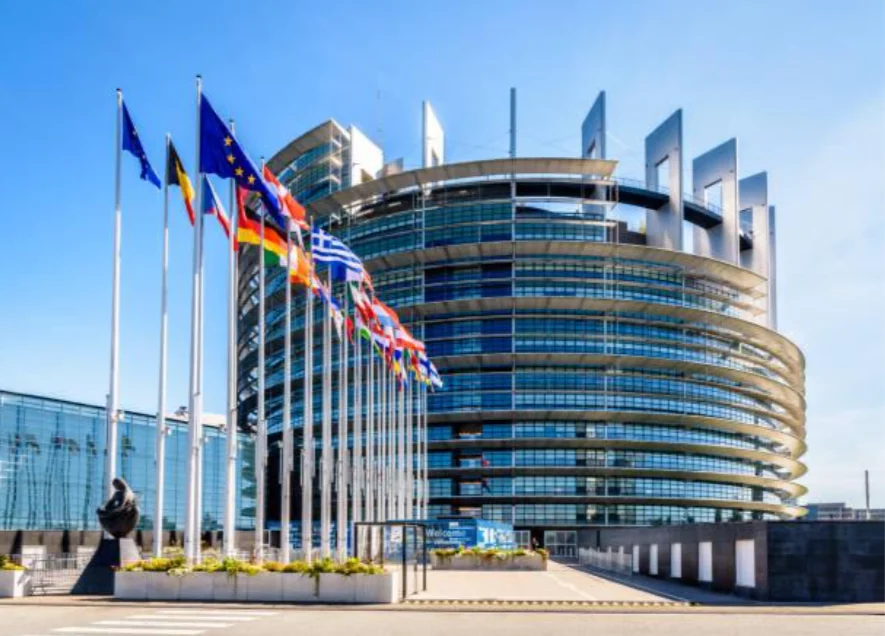
The debate intensified after the European Parliament urged governments across the continent to assess whether the Muslim Brotherhood and its affiliates could legally be designated as a terrorist organisation. The move has implications beyond Europe, particularly for regimes associated with political Islam.
On 13 January, US President Donald Trump’s administration formally designated the Muslim Brotherhood branches in Egypt, Jordan and Lebanon as terrorist organisations. It also imposed sanctions on the groups and their members. Further designations are expected in other countries, while pressure continues for the organisation to be classified as a terrorist entity across the United States.
A Comprehensive Designation in 2027
Dr Walid Phares, who advised Donald Trump on foreign relations during the 2016 election campaign, wrote on X that “the full designation of the Muslim Brotherhood by the European Union and the Trump administration in 2027 will systematically and ultimately lead to the collapse of many Brotherhood-linked regimes in the Middle East”.
US Representative Nancy Mace has taken an equally forceful position. In a post on X, she said, “the Muslim Brotherhood does not merely support terrorism; it inspires it”. Mace argued that the group should be described plainly and designated according to what it is: “They are terrorists.”
She added: “We introduced the Muslim Brotherhood Terrorist Designation Act to designate the group as a Foreign Terrorist Organisation, target its activities through sanctions, asset freezes and travel bans, and activate law enforcement tools.”
The Economist has described the Brotherhood as facing “unprecedented division and weakness”. It reported that “2025 was particularly harsh for the Muslim Brotherhood”, after Trump directed his administration in November to classify the organisation’s various branches as terrorist entities. On 13 January, the US administration placed the Egyptian and Jordanian branches on its list of Specially Designated Global Terrorists, while formally designating the Lebanese branch as a Foreign Terrorist Organisation.
The magazine also reported that, in May, a new US counterterrorism strategy listed the Muslim Brotherhood alongside Al-Qaeda and ISIS as a source of contemporary jihadist ideology. Jordan had already banned the organisation entirely in April 2025 and has since moved to constrain its political arm, the Islamic Action Front Party.
A Trojan Horse
Europe has also begun to address what critics describe as Islamist influence within civic and political institutions. In a report published by the Middle East Forum, researcher Jules Gomez wrote that “days ago, the European Parliament voted in favour of a historic resolution opposing Islamist infiltration”. The resolution specifically referred to the Muslim Brotherhood and its affiliated organisation, the Forum of European Muslim Youth and Student Organisations (FEMYSO).
Gomez said lawmakers backed measures to “identify the phenomenon of Islamist infiltration and its networks”, strengthen scrutiny of EU funding and ensure that money is not channelled to organisations linked to political Islam. The resolution also warned that separatist tendencies, narratives centred on victimhood, conspiracy theories, challenges to secularism and the use of religion to oppose gender equality could indicate Islamist influence.
The European Parliament resolution, he noted, describes an Islamist current operating through a connected web of associations and institutions. Its reach includes cultural, educational, religious, charitable, university and youth organisations, as well as groups focused on combating discrimination or advancing social justice. Gomez identified the Muslim Brotherhood as the most prominent example of these transnational Islamist networks.
According to his account, the resolution details how Islamist networks may adopt the language of fundamental rights, intercultural dialogue and opposition to racism and discrimination while also promoting separatism, social pressure or challenges to democratic principles. Gomez characterised this strategy as a “Trojan horse” designed to secure institutional legitimacy while presenting itself as a defender of Muslim minorities.
In his Middle East Forum report, Gomez also cited the European Parliament’s concerns over the alleged use of EU funding by Brotherhood-linked entities. Among the organisations named in connection with participation in EU-funded projects were FEMYSO, the European Network Against Racism, the East Forum, Islamic Relief Worldwide and Gaziantep University. The report said these entities had alleged ties to the Muslim Brotherhood or to the wider political-Islam movement.
The report further quoted Belgian legislator Sophie Wilmès, who called the Muslim Brotherhood “a high-level, priority threat because of its capacity to generate anti-democratic behaviour, polarisation and violations of fundamental rights”. Wilmès said those findings were based on assessments by Belgian security and intelligence agencies.
Questions over the Brotherhood’s cohesion have also emerged from its differing positions on regional conflicts. In an analysis published by the Hufryat platform, Jordanian researcher Mohammad Sabti wrote: “The divergence in the Muslim Brotherhood’s positions on the Iran war confirms one fact: the group is no longer a single organisation, but rather a network of conflicting interests. While the Brotherhood in Yemen and Sudan sells its countries’ sovereignty to Iran in exchange for military survival, the Muslim Brotherhood in London and Istanbul seeks to preserve its funding and safe havens through muted rhetoric.”
Sabti concluded that “the Iran war has revealed that the Brotherhood’s compass does not point towards the interests of Arab peoples or the security of the Gulf. Instead, it always points towards narrow organisational interests, even if this comes at the expense of Arab capitals and the blood of innocent people”.