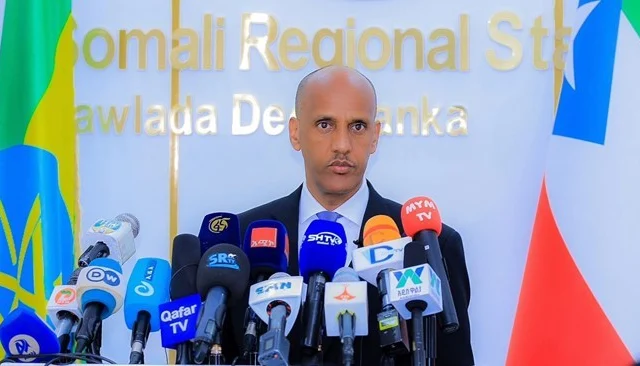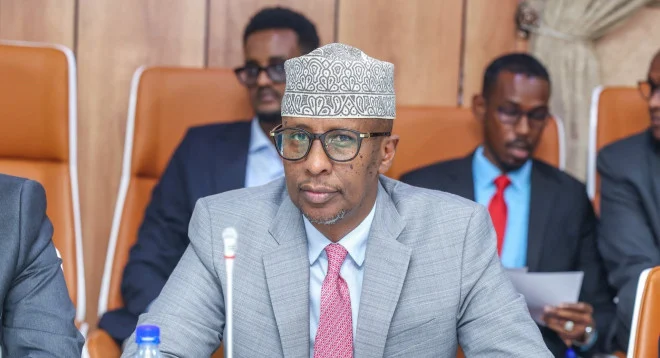
Mogadishu (AX) — Almost 7,000 water wells along Somalia’s riverbanks could be damaged or rendered unusable by flooding during the approaching Deyr rainy season, the minister of energy and water resources said Saturday.
Minister Abdullahi Bidhan warned that wells inundated by floodwater or clogged with sediment could be difficult to rehabilitate, threatening water supplies for communities in areas vulnerable to flooding.
- Advertisement -
He said forecast Super El Niño conditions demanded thorough preparations as Somalia approaches the October-December Deyr season, when heavy rains and flooding are possible.
“if these wells become submerged or silted up by the floods, restoring them to operation could prove difficult,” Bidhan said, cautioning that communities relying on the wells could face serious consequences.
At the same time, Bidhan warned that some parts of Somalia could experience drought if the Deyr rains fail. The threat is especially acute after the Gu rainy season delivered limited rainfall across much of the country. He urged authorities to coordinate efforts to avert humanitarian emergencies linked to both flooding and drought.
“The federal government is now in place and is expected to demonstrate the difference effective governance can make, particularly in addressing the challenges facing the public,” he said.
Bidhan said the government’s performance should be judged by the practical results of its response, rather than by the number of conferences or meetings it organizes.
He urged the federal government, regional administrations and the public to jointly map the areas facing the greatest risks and establish how government agencies and humanitarian organizations can provide assistance without delay.
The Somali Disaster Management Agency (SoDMA), has separately warned that the 2026 Deyr season could bring a heightened risk of flooding, naming 29 districts across 14 regions as especially exposed to riverine and flash floods.
SoDMA said Super El Niño conditions are expected to influence the October-December rains and called on people living in high-risk areas to make preparations before floodwaters arrive.
“The purpose of this warning is not to alarm the public, but rather to provide people with the opportunity to prepare in advance, thereby minimizing potential loss of life and property damage caused by flooding,” the agency said.
According to SoDMA, Somalia faces two principal forms of flooding. Riverine floods could affect communities along the Juba and Shabelle rivers as rainfall in Somalia and Ethiopia’s highlands drives up water levels.
Flash floods, meanwhile, can develop when heavy rain falls over a short period, putting cities, villages, roads, waterways and low-lying areas at risk.
The districts identified by SoDMA as vulnerable are Doolow, Luuq, Baardheere, Bu’aale, Beledweyne, Buulo Burde, Jowhar, Mogadishu, Hargeisa, Garowe, Bosaso, Qardho, Baidoa, Galkayo, Kismayo, Afgoye, Buur-dhuubo, Jilib, Afmadow, Diinsoor, Qansaxdheere, Jamaame, Ceel-Barde, Sablaale, Kuntiwaarey, Marka, Baraawe, Dhusamareb and Balcad.
The alerts underscore Somalia’s exposure to two opposing weather threats. Severe rains could displace residents, destroy infrastructure and pollute or wipe out water sources, while weak Deyr rainfall could worsen drought in areas already affected by poor rains during the Gu season.