
Somalia’s 2012 Constitution promised a gradual shift toward a federal democracy in which citizens would eventually choose their representatives directly. The system was intended to give Somalis the opportunity to exercise their political rights through elections held every four years.
Fourteen years on, however, the country remains caught in a cycle of indirect elections.
Indirect voting was initially introduced as a temporary solution. Instead, it has repeatedly become Somalia’s political norm. Citizens—who should provide the foundation of political legitimacy—have too often been excluded from the decisions that determine the country’s leadership.
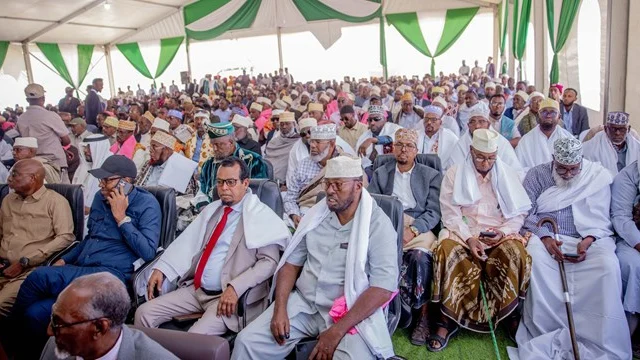
When electoral authority is placed in the hands of a small group of delegates, the political influence of the broader population is inevitably weakened. Such arrangements also sustain concerns over the role of money, bribery and private interests in determining electoral outcomes.
The central issue, then, extends beyond the mechanics of voting. It concerns who exercises political power and who is ultimately answerable to the public.
A leader selected through a process that excludes most citizens may lack a direct mandate from the population. In that environment, organized factions and narrow interests can gain disproportionate influence, while ordinary Somalis are left watching from the sidelines.
Disputes over electoral timelines present another familiar challenge. As each political term nears its conclusion, Somalia again debates who will organize the vote, which electoral model will apply and who will supervise the process. Both the Federal Government and the Federal Member States have a responsibility to help end this recurring cycle.
How, then, can Somalia move beyond it?
The solution cannot be another short-term political agreement reached whenever an electoral deadline draws near. Somalia needs a lasting political settlement that defines the rules in advance: when elections are held, who administers them, who is entitled to vote, how ballots are counted and what follows when an official’s term expires.
The citizen must be placed at the heart of Somalia’s electoral system.
Political leaders should recognize that their authority does not ultimately derive from a small circle of delegates, but from the people they serve. Citizens, meanwhile, must be able to select their leaders, remove them when necessary and demand accountability.
If Somalia is to build a government that truly belongs to its people, it must establish an electoral system that gives citizens a meaningful voice in determining who leads them.
Fourteen years of indirect elections have delivered a clear warning: as long as citizens remain outside the electoral process, Somali politics will continue to revolve around elite negotiations and power-sharing arrangements.
Somalia’s political future depends on an electoral system that restores citizens to the role assigned to them by democratic principles and the country’s constitutional vision: the center of political decision-making.
[email protected]